Houthis hit Abha airport, declare end of Yemen de-escalation as Qatar backs Riyadh
Yemen's Houthi movement said it struck Saudi Arabia's Abha airport in retaliation for Saudi air strikes on Sanaa International Airport, formally ending the country's de-escalation phase. Qatar publicly backed Riyadh within hours.
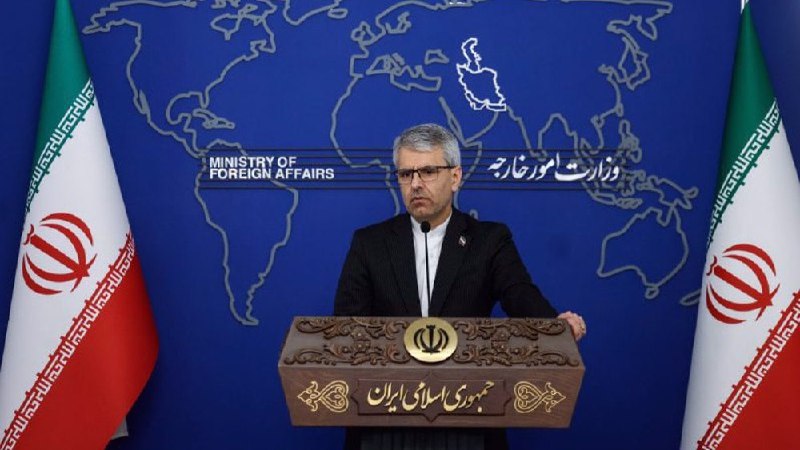
Yemen's Houthi movement claimed a missile strike against Saudi Arabia's Abha airport in the early hours of 14 July 2026, framing the attack as direct retaliation for what the group described as Saudi air strikes on Sanaa International Airport the previous day. In a statement carried by Al Jazeera, the movement said it had targeted the Saudi facility in response to strikes on Sanaa and formally declared the end of the country's de-escalation phase.
The episode, the first major Houthi escalation against Saudi territory since the de-escalation arrangement took hold, is the clearest sign yet that the informal calm between the kingdom and the Yemeni armed group has broken down. It also drags Qatar into a regional posture it has spent two years carefully avoiding: Doha publicly backed Riyadh within hours, signalling that the Gulf states intend to close ranks against further cross-border fire. The risk is that a bilateral retaliation loop now locks in, with civilian air infrastructure on both sides of the northern border inside the firing line.
What the Houthi statement actually says
Al Jazeera's breaking-news wire on 14 July 2026, at 04:10 UTC, reported the Houthi claim that Abha airport had been struck in retaliation for a Saudi-led strike on Sanaa's international airport. The group's media arm framed the action as defensive and proportionate, the language of a movement that wants the diplomatic register to read as reciprocity rather than aggression.
Three hours earlier, on the same date, Middle East Eye reported that the Houthi movement had declared the end of Yemen's de-escalation phase and "vowed retaliation," alleging that Saudi Arabia had carried out air strikes on Sanaa International Airport. The wording matters: "de-escalation phase" is a Houthi diplomatic category, not a formal bilateral agreement, which means the group retains the political space to walk it back without a breach of any signed text. Sanaa International Airport has been a recurring flashpoint in the long war, intermittently closed to commercial traffic by Saudi-led air operations and repeatedly rebuilt.
The Houthi claim of a successful hit on Abha could not be independently corroborated from the available reporting. Saudi state media had not, as of the Middle East Eye dispatch at 03:59 UTC, issued a public confirmation or denial of damage. That asymmetry is itself part of the story: the Houthi side tends to amplify strike claims in real time, while the Saudi side typically releases an after-action statement hours later, once the political framing is set.
Qatar steps in, and why that is significant
The most consequential line in the Middle East Eye live blog on 14 July, timestamped 08:37 UTC, is the brief note that Qatar backs Saudi Arabia after a missile attack by the Houthis. Doha's public alignment with Riyadh is not a routine gesture. Qatar and Saudi Arabia spent most of 2017–2021 in open rupture, mediated (and eventually settled) at the January 2021 Al-Ula summit. The two states have rebuilt coordination since, but Qatar has consistently resisted being drawn into the military frame of the Yemen war. Publicly endorsing Riyadh on the same morning the Houthi strike is claimed is a deliberate act of political signalling, and a warning to Tehran and to the Houthi leadership that the Gulf consensus on Yemen's territorial integrity is intact.
For Riyadh, the Qatari move does three things at once. It demonstrates that the kingdom is not diplomatically isolated after a cross-border strike. It pushes any future de-escalation channel back into a Gulf-to-Gulf format, marginalising the Houthi claim to bilateral dealing. And it sets a marker for the United States and other external actors that GCC unity on Yemen is, for now, operational rather than rhetorical.
The structural backdrop
What this episode is really about is the question of who sets the tempo of the Yemen war in 2026. The Houthi movement has, over the past eighteen months, projected a widening operational reach: commercial shipping in the Red Sea and Bab el-Mandeb, drone and missile exchanges inside Israel, and a domestic posture in northern Yemen that allows it to absorb Saudi-led air strikes without conceding political ground. Striking an airport on Saudi territory is a step up from that pattern. It is also an announcement that the de-escalation language of 2024–2025, when regional intermediaries floated phased confidence-building measures, is over.
Read against that backdrop, the Qatar statement is a quiet piece of regional architecture. Doha has the standing to act as a back-channel node between Tehran, the Houthis, and the Saudis. By choosing to stand with Riyadh publicly on the morning of the strike, Qatar withdraws that role for the duration of the escalation, and forces the diplomatic track back into the Saudi-Iranian channel that has, episodically, held the Yemen war below the temperature of a full regional war. Whether that channel still has bandwidth is a separate question.
What the sources do not yet settle
The available reporting leaves three things genuinely open. The first is the operational outcome of the Houthi claim: whether Abha airport was actually hit, whether the strike was intercepted, and whether there were casualties on the ground. The Houthi media arm and Saudi state media have a long history of contradicting each other on strike outcomes, and the truth usually lands somewhere between the two claims. The second is the legal and political character of the Saudi strike on Sanaa, which the Houthi side alleges and the Saudi side has not, in the available material, confirmed. The third is the question of what comes next. A Houthi declaration of the end of de-escalation is a political commitment, not a military one, and Riyadh's response options range from a calibrated counter-strike to a quiet diplomatic holding pattern. Which one it chooses will tell readers more about the trajectory of the war than the Houthi statement itself.
The diplomatic room left to manage this is narrow. A GCC-wide posture against further Houthi escalation is now on the record, anchored by Doha. Whether that posture hardens into coordinated military action, or whether it serves as a pressure tool to pull the de-escalation track back from the brink, will be the question that the next 72 hours of regional reporting answer.
Desk note: Monexus frames the Houthi statement as a contested claim rather than a confirmed strike, and treats the Qatari endorsement of Saudi Arabia as the lead political fact of the morning. The available wire material is dominated by the Houthi and Gulf-aligned sources; independent on-the-ground confirmation from inside Yemen remains thin in the public record.
Wire provenance
This editorial synthesis draws on the following public wire/social posts:
- https://t.me/middleeasteye/2076721139703762945