The Hormuz Toll: How a US Blockade and Iranian Missiles Reshaped the Oil Corridor in 36 Hours
Within hours of Washington reimposing a naval blockade on Iranian ports, Iranian cruise missiles hit two UAE-flagged tankers in the Strait of Hormuz, killing one crew member. The episode is already rewriting ship routing, insurance pricing, and Gulf state strategy.
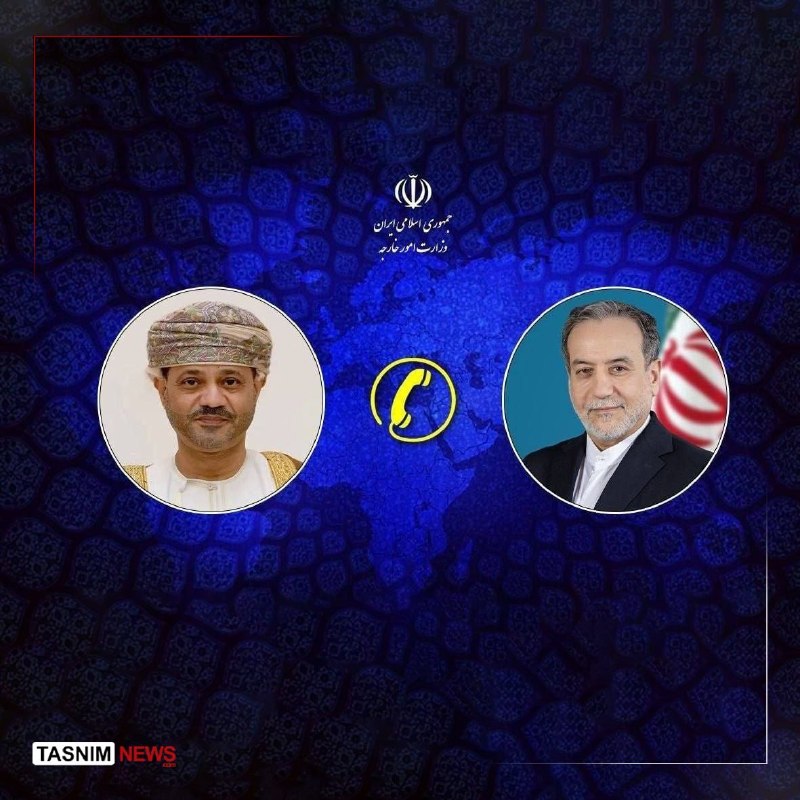
Two UAE-flagged tankers were struck by Iranian cruise missiles in the Strait of Hormuz on the evening of 13 July 2026, killing one crew member, according to a Reuters report filed at 23:05 UTC the same day. The strike came hours after US President Donald Trump announced the reimposition of a naval blockade on Iranian ports and a 20 percent toll on all cargo transiting the strait, a policy the BBC reported at 19:17 UTC citing the White House. Within minutes, Iran's Tasnim news agency and IRGC-adjacent Telegram channels including Clash Report, GeoPolitical Watch, and wfwitness carried claims that "several vessels violating regulations" had been targeted inside the waterway.
The pattern matters more than any single salvo. What unfolded between 19:16 and 23:05 UTC on 13 July 2026 was the most acute test of the Persian Gulf's shipping corridor in two decades: a US blockade pitched as universal in application, an Iranian response framed by Tehran as enforcement of its own maritime rules, and a Gulf state now publicly absorbing the cost. By midnight Dubai time, the emirate was reportedly planning a new east-coast port designed specifically to bypass Hormuz altogether, according to a Polymarket-flagged post on X at 22:06 UTC. The geography of Gulf energy is being redrawn in real time, and the rulebook that governed it for the previous quarter-century is being treated by both Washington and Tehran as optional.
The blockade, restated
The White House's framing of the blockade, as the BBC reported, is uncompromising in scope. The US Navy statement that opened the day's news cycle held that the blockade applies to all ships regardless of flag. The accompanying commercial instrument, a 20 percent toll on cargo moving through the strait, is the more novel element. Tolls on transit through international waterways are not new in principle, but a unilateral US-imposed levy on third-flag shipping through a chokepoint that Iran considers its own territorial sea has no close precedent in modern maritime practice. The closest analogue is the colonial-era droit de passage, which European powers abolished under UNCLOS III in 1982.
The political logic is straightforward enough. The Trump administration's bet is that Iran cannot afford a prolonged shutdown of its own exports and that Gulf monarchies, whose sovereign wealth funds and refining complexes depend on Hormuz remaining open, will press Tehran to comply. The commercial logic is more complicated. Insurance markets had already begun repricing war risk for Hormuz transits in the days before the announcement; the addition of a US-imposed transit tax raises the question of whether shippers will route around the strait altogether or absorb the levy as a cost of doing business. The Dubai east-coast port plan reported by Polymarket at 22:06 UTC on 13 July suggests that at least one major Gulf actor has already begun to vote with its hulls.
The Iranian response, in its own words
Iranian state media and IRGC-aligned channels did not describe the strikes as a counter-blockade. Tasnim's reporting, amplified on Telegram at 19:16-19:17 UTC by Clash Report, wfwitness, and Tasnim Plus, used the language of "vessels violating Iranian maritime restrictions" and "offending ships." The terminology is deliberate. By framing the action as enforcement of domestic Iranian regulation rather than as a retaliatory military strike against a US-imposed blockade, Tehran preserves the legal posture that the strait falls within its sovereign jurisdiction, an argument Tehran has advanced at the International Court of Justice and in successive rounds of correspondence with the IMO.
Geopolitical Watch reported at 19:16 UTC that IRGC missiles had been used against the vessels. Reuters, citing UAE official sources at 23:05 UTC, identified the targets as two UAE tankers struck by Iranian cruise missiles. The reports do not yet specify which company owned the tankers, what cargo they were carrying, or which flagged entities had issued their registries. The sources do not reconcile the count: Tasnim and the Telegram channels speak of "several" vessels, while Reuters confirms two. The gap is small but matters, because the legitimacy of any enforcement action depends on the specific behaviour of the specific ship at the specific moment of interception.
What is unambiguous is that a crew member died. Reuters reported one fatality. The nationality of the dead sailor has not been disclosed in the source material; UAE authorities had not issued a public casualty attribution by the time of writing.
Why Dubai, and why now
Dubai's reported pivot to an east-coast port is the under-reported story of the past 36 hours. Jebel Ali, the largest port in the Middle East and the anchor of Dubai's transhipment economy, sits inside Hormuz. Any extended closure, or any sustained Iranian campaign of selective targeting, cuts directly into the emirate's throughput volumes and the rents that fund its sovereign wealth.
The east-coast alternative is not a wholly new idea. A port at Fujairah has existed since the 1980s, and the Abu Dhabi-aligned Fujairah pipeline has long allowed crude to bypass Hormuz entirely. What the Polymarket-flagged X post of 22:06 UTC on 13 July implies is something more ambitious: a dedicated Dubai-controlled east-coast facility capable of handling containerised cargo at Jebel Ali-scale volumes, rather than the current arrangement in which Fujairah serves primarily as a crude-export terminal. The economic case for such a facility has existed for years; the political case, until this week, did not.
The structural read here is plain enough. Gulf states spent the post-2014 period hedging against exactly this kind of corridor breakdown, building bypass pipelines, sovereign storage, and refining capacity in India and East Africa. What changed between Monday and Tuesday is the velocity. The bypass infrastructure is no longer insurance; it is becoming the primary route.
What the sources do not tell us
A word on what remains genuinely uncertain. The number of vessels struck is reported variously. Tasnim and the Telegram channels speak of "several"; Reuters confirms two UAE tankers. The flag-state of the second vessel, its ownership, and the cargo manifest are not in the source material. The Reuters report identifies the weapon used as Iranian cruise missiles; the Telegram reporting cites IRGC missiles generically, without specifying the system.
It is also worth flagging that the Iranian-aligned Telegram channels (Clash Report, GeoPolitical Watch, wfwitness, Tasnim Plus) and Iranian state media (Tasnim) constitute a single information ecosystem on this story. They should be treated as one source, not four. Their claims about the legal basis for the strikes, that the vessels were violating Iranian maritime restrictions, are not independently corroborated in the Western wire reporting available so far. The Reuters confirmation of two UAE tankers is solid; the broader Iranian narrative is a Tehran-side account of events that only ship-borne AIS data, oil major statements, and insurer filings will fully verify in the coming days.
The stakes for the next 72 hours
Three things to watch over the next three days. First, whether the US Navy moves from announcing the blockade to physically intercepting a non-compliant vessel. A blockade is only a blockade when ships are stopped, not when statements are issued. Second, whether any Gulf state other than the UAE acknowledges a casualty or material damage; the current count is one dead, but the count on previous Hormuz incidents has a habit of rising as ships reach port and crew are accounted for. Third, whether Dubai's east-coast port plan moves from a Polymarket-flagged rumour to a formally announced capital programme. The speed of that announcement will be the cleanest single read on whether the Gulf's hedging has matured into a permanent rerouting of Gulf energy.
The deeper pattern is older than any single news cycle. When the incumbent order and a regional power both treat a single chokepoint as negotiable, the chokepoint stops being a chokepoint. What replaces it is a longer, more expensive, more redundant route network, and the bills for that redundancy are paid in the end by every consumer of Gulf crude. The 36 hours between 19:16 and 23:05 UTC on 13 July 2026 are when that transition became operational rather than theoretical.
How Monexus framed this: the wire led with Trump's blockade announcement and the UAE strike; we treat the episode as a structural realignment of Gulf energy routing rather than a one-day skirmish, and we foreground the Iranian legal framing as an Iranian position rather than dismissing it as rhetoric.
Wire provenance
This editorial synthesis draws on the following public wire/social posts:
- https://t.me/ClashReport
- https://t.me/GeoPWatch
- https://t.me/wfwitness
- https://t.me/tasnimplus
- http://reut.rs/4vvPa6H