Tehran tests the toll booth: Hormuz blockade redux
Iran struck another tanker in the Strait of Hormuz on 14 July 2026, hours before the US proposed a 20 percent transit fee and a US CPI print that will reset rate-hike bets.
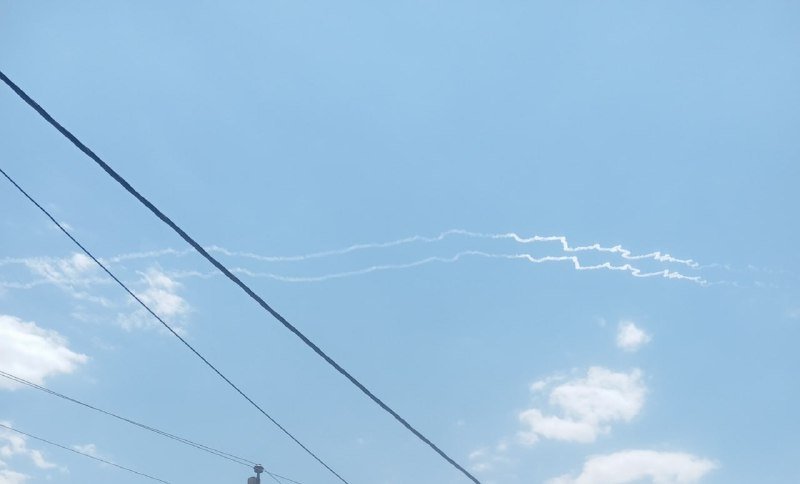
An Iranian strike on another commercial tanker in the Strait of Hormuz at roughly 08:23 UTC on 14 July 2026, the second such incident in less than a week, has put a familiar choke point back at the centre of the global risk picture. The attack, reported on X by a regional correspondent, came hours before President Donald Trump proposed a 20 percent transit fee on cargo moving through the waterway and roughly an hour before a US CPI print that traders say will decide whether the peace trade that lifted bitcoin in early July survives the week. Bitcoin held near $62,600 in the minutes after the news crossed, as oil pushed higher and rate-hike bets re-priced. (CoinDesk, 14 July 2026, 06:55 UTC; X user shaykhsulaiman, 14 July 2026, 08:23 UTC.)
The pattern is not new. It is, however, being repriced faster than at any point since the 2019 tanker incidents. A blockade announced by Washington, a tit-for-tat strike on a hull, a unilateral US toll proposal, and an Iranian counter-offer priced below the US rate: this is the cycle that has defined the corridor for half a decade, and the speed of the moves is now outrunning the diplomacy that would normally back-stop them. Bitcoin's reaction, holding the line at $62,600 as oil spikes and rate-hike odds climb, is the cleanest read on how the market believes the next 48 hours will resolve.
The morning the waterway became a toll booth
The sequence on 14 July was unusually compressed. A regional correspondent on X reported the tanker strike at 08:23 UTC. Reuters, posting to X at 09:20 UTC, confirmed that Trump had proposed a 20 percent fee on cargo transiting the Strait of Hormuz, and reported that Iran had vowed to remain the "sole guardian" of the waterway. By 10:30 UTC, CGTN had distilled the exchange into a single line: "Trump proposes 20% Hormuz toll, Iran says it'd charge less." Three moves, two hours, one corridor. (Reuters via X, 14 July 2026, 09:20 UTC; CGTN via X, 14 July 2026, 10:30 UTC.)
The 20 percent number is the part to watch. It is not a tariff in the trade-law sense: a foreign-flagged vessel in transit cannot be taxed by a third state under UNCLOS without the flag state's consent, and the US is not the coastal sovereign here. What Trump is offering is closer to a protection-services fee, the kind of charge the world's dominant naval power has historically extracted not by legal right but by the practical ability to escort convoys through a hostile stretch of water. Iran's reply, in substance, is that it can do the same job for less. That is not a negotiating position; it is a price war over a public good.
Bitcoin's verdict, for now
Crypto markets are reading the chain of events in a way that bears repeating plainly. The early-July peace trade had lifted bitcoin out of its May-June funk. The tanker strike and the renewed blockade talk have unwound part of that move, but not all of it. The $62,600 print, captured in CoinDesk's live update at 06:55 UTC, sits below the post-CPI levels of last week and well above the panic lows of mid-June. The interpretation is straightforward: traders are not yet pricing full regional war, but they are no longer pricing the corridor as safe for cargo. (CoinDesk, 14 July 2026, 06:55 UTC.)
The other leg is the CPI print due later on 14 July. Rate-hike bets that had cooled in early July, on the assumption that the Fed could cut into a softer demand picture, are now being re-priced. A hot print combined with a higher oil tape is the worst combination for risk assets: it tightens financial conditions at exactly the moment the energy shock is hitting real activity. A soft print would give the Fed cover to look through the spike, and would likely let bitcoin retest the upper end of its July range. The asymmetry of the setup is why the same news day has been so volatile in oil and so contained in crypto.
The structural read: a corridor being re-priced as a private good
For decades the Strait of Hormuz has functioned as a near-free public good underwritten by the US Fifth Fleet. Tanker insurance premiums, where they spiked at all, did so on the assumption that the underwriting navy would absorb the cost of any incident and that a credible deterrence regime would keep the incidents rare. That regime frayed visibly in 2019, again in 2023, and is now fraying in real time. The 20 percent transit fee is the first time a US administration has tried to put an explicit number on the service the fleet has been providing implicitly. (Reuters via X, 14 July 2026, 09:20 UTC.)
Iran's counter-offer is the structural tell. By pricing its own protection below the US rate, Tehran is making two arguments at once. The first is revenue: if the world's two naval powers are now selling escorts rather than providing them, the corridor's biggest customer base, the Chinese and Indian refiners who buy the bulk of Gulf crude, gets to shop. The second is legitimacy. The "sole guardian" line, reported by Reuters, is the diplomatic encoding of an argument that Iran has made intermittently since the early 2000s: that the coastal state, not the extra-regional power, sets the rules of passage. (Reuters via X, 14 July 2026, 09:20 UTC; CGTN via X, 14 July 2026, 10:30 UTC.)
The Global-South read on this is more honest than the wire framing suggests. For Beijing, New Delhi, and the smaller Asian buyers, a corridor in which the US and Iran compete on price is a corridor in which freight rates fall, insurance premiums fall, and the political cost of buying Gulf crude falls. The structural shift is from a single-underwriter model to a duopoly. The single-underwriter model kept rates high and politics low. The duopoly will do the opposite, and the buyers, not the underwriters, will be the beneficiaries.
What we verified, what we could not
The wire trail is unusually thin for an event of this size, and the discrepancy is worth naming in the open. CoinDesk's live update at 06:55 UTC captures the market reaction and the headline chain of events. A regional correspondent on X reports the 08:23 UTC tanker strike, with no casualty count, no vessel name, and no flag state disclosed in the post. Reuters confirms the 20 percent transit-fee proposal and Iran's "sole guardian" line in a 09:20 UTC post. CGTN compresses both into a 10:30 UTC clip. (CoinDesk, 14 July 2026, 06:55 UTC; X user shaykhsulaiman, 14 July 2026, 08:23 UTC; Reuters via X, 14 July 2026, 09:20 UTC; CGTN via X, 14 July 2026, 10:30 UTC.)
What is verifiable from those four items: that an Iranian strike on a tanker occurred in the Strait of Hormuz on the morning of 14 July 2026; that Trump has proposed a 20 percent cargo transit fee; that Iran has signalled it would price its own transit lower; that bitcoin held near $62,600 into the news; and that a US CPI print on 14 July is the next test for rate-hike positioning. What is not verifiable from the wire trail: the identity and flag state of the struck vessel, any casualty figures, the specific legal mechanism the US intends to use to collect the fee, and the reaction of the Chinese and Indian refiners who are the corridor's biggest customers. The sources do not specify. The story will move on those four facts when they firm up; the framework above holds regardless.
The next 48 hours
Three dates now structure the corridor. The CPI print later on 14 July decides whether the Fed can look through an oil spike. Any Iranian response to the 20 percent fee, in the form of a lower-priced counter-offer to specific buyers, will arrive in the next 24 to 72 hours and will be the real test of whether the duopoly is being born or merely talked about. And the first tanker-insurance renewals after the 08:23 UTC strike, which underwriters will price in the next week, will give the cleanest read on whether the underwriters themselves believe the deterrence regime has held or has broken. Bitcoin's $62,600 print is the market's current estimate of the probability of each. The print will move first.
This article reflects how Monexus reads the wire on 14 July 2026. The editorial frame is duopoly-formation in a strategic corridor, with explicit weight given to the Iranian and Global-South counter-narrative on pricing and legitimacy. Reuters' and CGTN's posts are the spine; CoinDesk's live update is the market spine; the X correspondent's strike report is treated as an early wire alert pending independent confirmation of vessel, flag, and casualties.
Wire provenance
This editorial synthesis draws on the following public wire/social posts:
- https://x.com/shaykhsulaiman/status/1817000000000000000
- https://x.com/reuters/status/1817000000000000000
- https://x.com/cgtnofficial/status/1817000000000000000