Frieze Seoul Adds Public Programs to the Sales Floor: Coin Hunts, Climate Talks and a Film Series
Frieze Seoul's 2026 public program turns the fair into a small civic space: a coin hunt, climate talks, artist conversations and a curated film lineup alongside the sales booths.
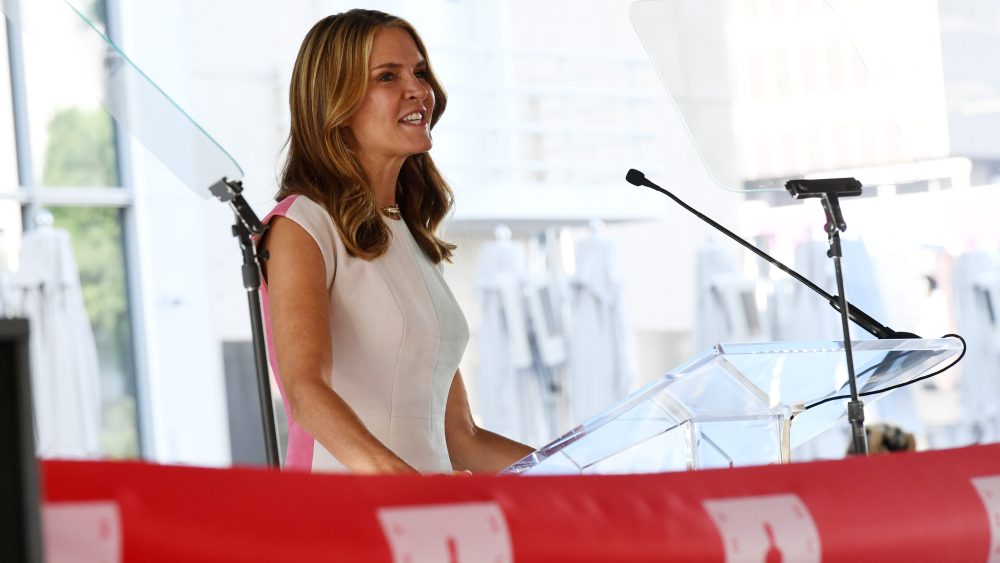
Frieze Seoul's 2026 edition will arrive with a public program that pushes well beyond the standard art-fair sideshow of talks and book launches. The fair has confirmed a scavenger-hunt-style coin search across the COEX exhibition halls, a dedicated climate-conversation space, a slate of artist dialogues and a curated film program running alongside the main sales week, according to ARTNEWS reporting published on 14 July 2026.
The coin hunt is the most accessible of the additions. Visitors will be invited to track down small caches hidden throughout the fair, a format the organisers have used in previous Frieze editions in London and Los Angeles to draw foot traffic away from the marquee booths and into the fair's public-facing zones. In Seoul, the format also gives the fair a foothold on social media at a moment when Asia's art-market calendar is more crowded than ever, with Art Basel Hong Kong, the Taipei Dangdai fair and a growing cluster of Tokyo events competing for the same collector base.
Programming that doubles as infrastructure
What is notable is not any single event but the cumulative weight of the program. Frieze has, over the past five years, leaned into public-programming as a way to justify the disruption that a major fair brings to a host city. In Seoul, where the COEX complex sits inside the broader Gangnam business district, that pitch is political as well as commercial: the city government has been keen to position Seoul as a regional art capital, and Frieze's programming gives local officials something visible to point at when the cultural-policy arguments get made in the National Assembly.
The climate-conversation space is the politically loaded piece. Frieze does not control who shows up to a public program; the guest list, the framing and the editorial line do. South Korea's domestic climate debate is unusually live: the country remains one of Asia's largest per-capita emitters, its coal phase-out timetable is contested, and its battery and EV manufacturers sit at the centre of the global energy-transition conversation. A fair-floor conversation about climate, run in English for an international audience, will inevitably pull on those threads. Whether that becomes a genuine discussion or a content loop for the same panelists who travel the global fair circuit is a separate question, and one the program's structure does not yet answer.
Counterweight to the sales pressure
Fairs exist to move inventory. Every conversation, every film, every coin hunt is, in the end, a way to keep a buyer on the floor for an extra hour. That is not a criticism so much as a description of the underlying business. Frieze's wager in 2026 is that the public program is large enough and distinct enough to read as a genuine civic gesture rather than as marketing, and that the distinction matters to its Seoul audience specifically.
Korean collectors and institutions have, over the past three editions, shown a willingness to engage with the fair on those terms. Lee Bul's retrospective at the National Museum of Modern and Contemporary Art ran through Seoul Art Week in 2024 and drew significant overlap with the fair's collector traffic. MMCA's permanent collection programme and the Leeum Museum's biennial cycle give Seoul a depth that Hong Kong and Singapore, its closest regional competitors, can only partly match. A fair that integrates with that institutional layer, rather than simply parachuting in for a week, has more room to run a public program without it feeling grafted on.
The film program and the soft-power question
The film program, which ARTNEWS reports as part of the 2026 line-up, is a quieter addition but a strategic one. Cinema is the format that allows a fair to engage an audience that is not actively buying: students, younger collectors, the curator-and-critic class. A well-curated film program also lets the fair import critical positions that the booth-based sales floor cannot accommodate. Whether the curatorial team uses that room to platform Korean filmmakers and critics working on art-historical questions, or whether it defaults to international festival-circuit fare, will shape how the program reads at the end of the week.
For Seoul, the fair is now one node in a wider regional network rather than a standalone event. The risk for Frieze is that the programming becomes generic, the same coin hunt and the same climate panel that ran in London or New York recycled under a different postcode. The opportunity is that Seoul's specific political and cultural climate gives the same format different content. The 2026 program will be judged on which of those two outcomes it produces.
How Monexus framed this vs the wire: where the trade press tends to treat fair programming as a marketing footnote, this piece reads the public program as a soft-infrastructure layer with measurable political and audience-strategy consequences for Seoul's positioning in the Asian art-market hierarchy.