France opens the factory door to Ukraine's arms industry
Paris has cleared Kyiv to manufacture French cruise missiles, guided bombs and air-defense interceptors on Ukrainian soil, a first for the wartime relationship.
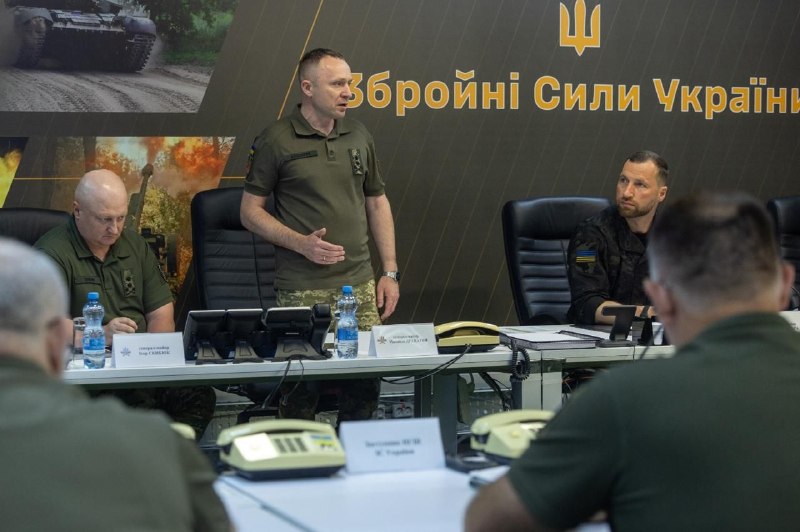
On 14 July 2026, Ukraine's TSN newsroom flagged a headline that, in wartime industrial terms, amounts to a category change: "Nightmare for the enemy," the broadcaster wrote, reporting that Paris will hand Kyiv a manufacturing licence for a powerful French weapon system. Six hours earlier, the prediction market account @polymarket had telegraphed the same development in a single post: France will, for the first time, allow Ukraine to produce French cruise missiles, precision-guided bombs and air-defense interceptors on Ukrainian soil.
The arithmetic of the war shifts when a partner stops shipping boxes and starts shipping blueprints. For the first three years of the full-scale invasion, French contributions to Ukraine's arsenal ran through the usual NATO channel: deliveries of Caesar self-propelled howitzers, VAB armoured vehicles, and a tranche of older Mistral surface-to-air missiles in the early months. Useful, finite, and ultimately consumable. A licence transfers something different: production know-how, a tooling chain, and the right to restock from a factory floor that sits thirty kilometres from the front rather than three thousand kilometres across European freight.
What Paris is actually approving
The TSN item and the Polymarket post converge on a three-category package. Cruise missiles give Kyiv a deep-strike option against Russian logistics hubs and air bases, replacing, at least in part, the dwindling stockpile of Western-supplied long-range munitions that has constrained Ukrainian targeting since 2024. Precision-guided bombs extend the range and accuracy of Ukrainian tactical aviation, historically a weak link in the air force's kill chain. Air-defense interceptors are the most operationally urgent category: Russian Shahed-type drones and cruise-missise strikes against Ukrainian cities have run at industrial tempo, and ground-based intercept capacity has been the binding constraint on what gets through.
Each of those three lines solves a problem the war has been re-diagnosing for twelve months. Cruise-missile stockpiles forced Kyiv to ration strikes against high-value targets in occupied Crimea. Guided-bomb inventories tied Ukrainian pilots to a narrow set of release parameters. Interceptor burn rates meant that even Western-supplied Patriot and SAMP/T batteries spent more time reloading than shooting. Production on Ukrainian soil does not just add units; it adds them at the cadence Ukraine's own planners set, against a threat picture Ukraine's own radar chain sees.
Why a licence, and not another shipment
The standard objection to Western arms deliveries since 2022 has been stockpile math. Germany cleared Leopard 1 transfers, then watched its own armoured force thin. The United States shipped air-defense interceptors to Ukraine while US-based production scaled slower than anyone publicly predicted. France has run the same constraint with its own defence industrial base: a state-owned champion in MBDA sitting upstream of the cruise-missile line, and a separate interceptor-production chain feeding both French and allied customers. Shipping rounds out of that pipeline always meant shipping rounds out of someone else's.
A licence sidesteps the question by relocating the production line. Ukrainian state enterprises, which already maintain a Soviet-derived but steadily modernising aerospace sector, become a second source for French-designed ordnance. The political risk profile also changes. A transfer of finished weapons can be tallied, photographed, and used in Moscow's information offensive against European publics. A licence is a regulatory document with a parts catalogue; it does not photograph well and does not produce a viral image of crates being loaded onto an Il-76. The TSN framing, deliberately punchy, plays into that: the story sells best in Kyiv as industrial capacity, not as another aid package.
The counter-narrative, and why it does not hold
Moscow's expected line, previewed in the framing of previous French arms decisions, is the familiar two-step: that Western-supplied weapons risk escalation, and that licensed production drags NATO formally into the war by blurring the line between donor and combatant. The first claim has lost purchase with each successive escalation cycle since the Leopard deliveries of 2023; the second depends on a doctrinal reading of NATO participation that no European capital currently endorses. Read more skeptically, the harder counter-narrative is an industrial one: that Ukraine lacks the machine-tool base, the qualified workforce, and the certification regime to produce French-designed munitions at scale, and that the licence is therefore symbolic rather than operational.
That is the version the evidence so far cannot confirm. Ukrainian defence production has, by every public account, scaled substantially since 2024 in drones, in 155-millimetre ammunition, and in some categories of missile. The first production runs of a licensed system will be slow; the war's clock runs faster than a factory commissioning curve. But the counter-narrative that the licence is purely a headline requires ignoring the comparative advantage France has in handing over tooling rather than finished product. Tooling amortises across years of output; finished rounds depreciate on launch.
What to watch next
Three markers will tell whether the licence becomes production. First, a public identification of the Ukrainian enterprise(s) receiving the line transfer; France's defence-procurement agency DGA historically discloses manufacturing partners in licence arrangements, even when the operational details stay classified. Second, a first delivery date for Ukrainian-made interceptors to the air force, which is the most time-sensitive of the three categories. Third, the political reaction at the Elysee when the first French-designed cruise missile rolls out under a Ukrainian serial number; whether Paris frames it as an industrial milestone or as a quiet footnote will set the template for future transfers.
The longer arc is harder to read. A successful Ukrainian production line would convert France's relationship with Kyiv from a donor-recipient model into something closer to a joint-venture one, with the political weight that implies inside EU defence planning. That outcome is not yet certain. The headline from TSN on 14 July is the announcement of a permission, not the appearance of a stockpile. But permission is the rare input that does not run out.
This publication framed the announcement as an industrial inflection point rather than as a humanitarian aid story, on the view that licensed production reshapes the strategic geometry of the war more than a delivery tranche does.
Wire provenance
This editorial synthesis draws on the following public wire/social posts:
- https://t.me/TSN_ua
- https://en.wikipedia.org/wiki/MBDA
- https://en.wikipedia.org/wiki/Caesar_self-propelled_howitzer