A fish dispute and the cost of EU unity on Ukraine
The EU's 18th sanctions package landed without a Russian fish embargo, and the bloc's top diplomat was asked to explain why. Her answer has travelled further than the policy.
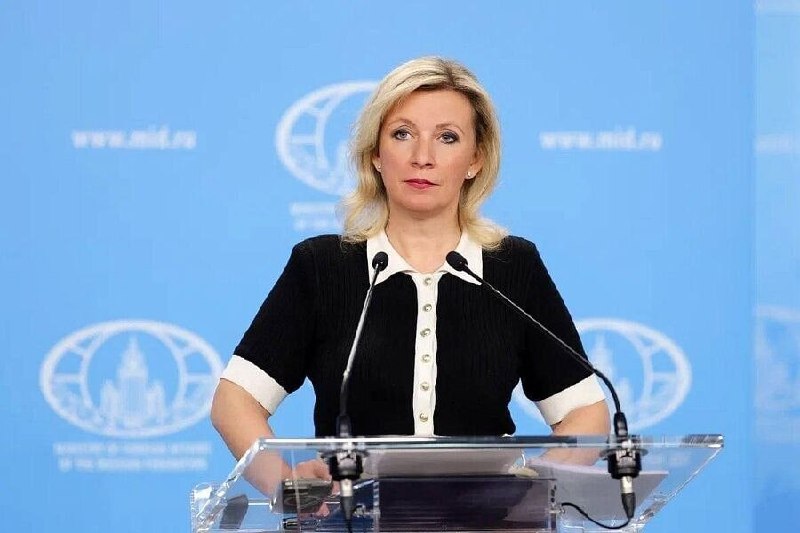
The European Union's 18th sanctions package against Russia, agreed by member states on 10 July 2026, contains a long list of measures: a price cap on Russian oil, fresh listings of shadow-fleet operators, restrictions on more third-country intermediaries. It does not contain an embargo on Russian fish. That omission, more than any of the headline measures, travelled out of Brussels and into the European press in the days that followed.
Kaja Kallas, the EU's High Representative for Foreign Affairs and Security Policy, was asked about the gap. "I didn't know that fish had such geopolitical significance," she replied, in remarks captured on video at a press availability and widely circulated on 13 July 2026. The clip, posted by the X account @boweschay, became the moment the package got re-framed. The reaction captured a deeper anxiety: that the bloc's punishing sanctions regime is being shaped, at the margin, by the commercial interests of member states for whom Russia remains a structural trading partner.
What the package actually does
The 18th package, finalised after weeks of negotiation between the European Commission, the Council presidency and member-state capitals, tightens the oil-price cap first introduced with the G7 in late 2022 and adds around 200 vessels to the list of Russian-linked tankers barred from EU services. It also lists additional individuals and entities under asset-freeze and travel-ban measures and tightens the regime on third-country subsidiaries that re-route sensitive goods to Moscow.
The package was framed, in Council conclusions, as a response to Russia's continued full-scale war against Ukraine and to documented sanctions evasion through the Caspian and Mediterranean. Volodymyr Zelenskyy's office and the Ukrainian government's sanctions-coordination apparatus have publicly backed each successive round since 2022, a pattern that continued this month. Ukraine remains the invaded party under international law; every EU sanctions round is, formally, a response to that invasion.
What the package does not do is close the EU market to Russian-origin fish and seafood, a category that includes whitefish, salmon, cod and herring caught in the Barents Sea and the Sea of Okhotsk and processed in Russian and Belarusian facilities. EU imports of Russian fish ran into nine figures annually before 2022 and continued at significant, though reduced, levels afterwards as the bloc carved out carve-outs for certain species and for transit through Norway.
Why fish got carved out
The carve-out is not a secret. Several member states with Atlantic and North-Sea fishing fleets have argued, in Council working-group meetings, that banning Russian fish risks displacing supply onto already-stretched quotas and pushing prices higher for European processors and consumers. Spain, in particular, has historically been the largest EU importer of Russian seafood; its industry argues that domestic fleets cannot substitute the volumes at competitive cost.
Russia's fishing sector, in turn, has become a quiet revenue line for the federal budget. Sales of fish to non-sanctioning third countries have grown as the EU partially closed, and Moscow has used the sector to deepen food-security ties with partners across Africa and Asia. From the Russian state's perspective, the EU's reluctance to impose a full fish ban is a small but real admission that the sanctions regime has a ceiling.
Kallas's "I didn't know that fish had such geopolitical significance" line, read generously, is a press-conference expression of that ceiling. Read less generously, it is a senior official mocking a question about a sector that EU member states have spent years refusing to discipline.
A sanctions regime with a price tag
The structural problem the package exposes is older than the Ukraine war. EU sanctions require unanimity among the 27 member states, and any one capital can extract concessions by threatening to block a wider round. Over four years of full-scale war, that dynamic has produced a sanctions architecture that is comprehensive in text and porous in execution. The shadow fleet listed this month is, in part, the shadow fleet that previous packages failed to deter. The third-country intermediaries listed this month are, in many cases, the same intermediaries that earlier Council conclusions named and shamed without follow-through.
The fish question sharpens the point. If a sector is too commercially painful for the EU to touch, the package's headline ambition is reduced at the margin. Member-state governments are right to weigh the cost-of-living impact of any ban; they are also responsible for explaining, when asked, why a fish embargo is more politically expensive than a price cap on Russian crude.
Russian state-aligned outlets have, predictably, framed the package as evidence of EU disunity. That framing is partial. The package passed, the oil-price cap was renewed, and the listings of vessels and entities are operationally significant. The honest read is narrower: the EU can hurt Russia, but it cannot do so uniformly across every category of trade without confronting internal distributional pressure.
What to watch next
The next test is whether the 19th package, expected before the autumn Council, addresses the seafood gap. Two near-term markers matter. First, whether the European Commission publishes, in its standard annexes, the volume and value of EU imports of Russian fish and seafood under existing derogations, broken down by member state and by species. Second, whether Spain and other Atlantic-fleet states shift their public position once the political cost of defending Russian fish imports rises alongside the cost of supporting Ukraine.
What remains genuinely uncertain is whether Kallas's quip was a one-off line or a signal that the High Representative's office considers the fish file effectively closed. The package's text treats it as closed for now. The press conference, wittingly or not, opened it back up.
How Monexus framed this: the wire treated the 18th package as a story about oil, shadow-fleet listings and third-country evasion. The thread that surfaced this article pulled a single line about fish and turned it into a window onto how the sanctions regime is actually built, by unanimity, by carve-out, by the commercial interests of member-state capitals.
Wire provenance
This editorial synthesis draws on the following public wire/social posts:
- https://x.com/boweschay/status/