England and Argentina step into a semi-final freighted with 1986, the Falklands and a referee stat no one can explain
A 2005 meeting resumes on Wednesday as the FBI names England–Argentina the tournament's highest-risk fixture and a referee quirk over Messi resurfaces.
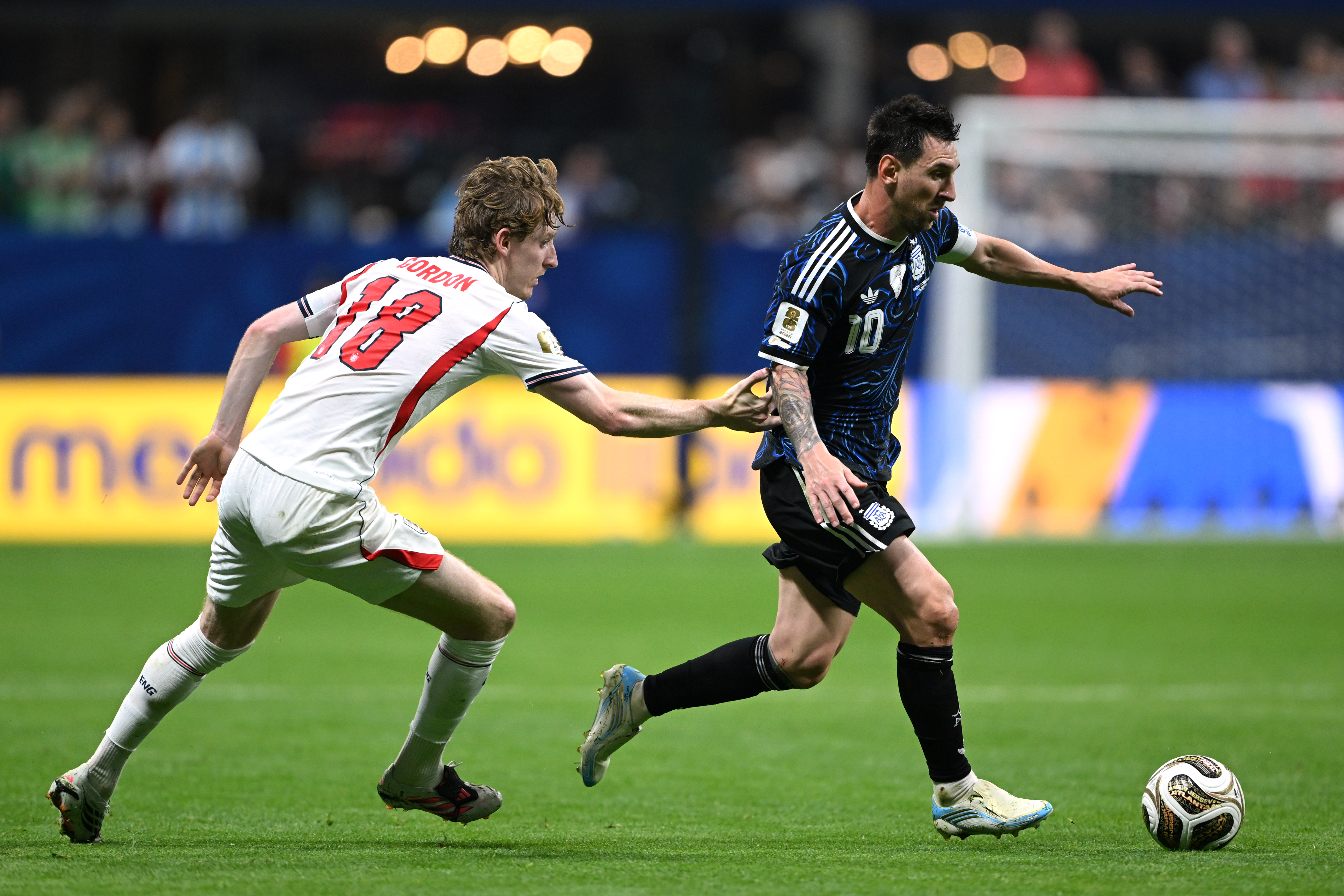
The Argentina–England rivalry will resume on Wednesday for the first time in 21 years, with a World Cup semi-final berth on the line, an FBI risk designation on the fixture, and a refereeing data point that has lit up bookmaker feeds from Buenos Aires to Birmingham.
A meeting of this scale had been overdue. The two nations have not crossed swords since 2005, according to an ESPN feature published on 14 July 2026, and the games that came before that drought – 1966, 1986, 1998, 2002 – have done more than almost any fixture in the sport's history to define what the World Cup is supposed to feel like. Few contests between any two countries carry the same freight of geopolitical memory.
A rivalry bigger than the sport
ESPN's framing of the fixture as the World Cup's "best" rivalry rested on the usual scaffold: the 1966 final at Wembley, Maradona's "Hand of God" and subsequent solo goal in the Azteca in 1986, the penalty shoot-out in Saint-Denis in 1998, and David Beckham's red card in Sapporo in 2002. Each of those matches sits inside the broader bilateral memory, not just the footballing one. To English supporters the 1986 game is a wound; to Argentine supporters it is a triumph of invention over the obvious; the two readings have not softened in forty years.
That backdrop is what makes Wednesday's game unusual even by the standard of a World Cup semi-final. The tournament has, until now, been a largely placid affair inside the host nation; the diplomatic weather around this game is doing something different.
The FBI flag and the Falklands shadow
On 14 July, Polymarket reported that the FBI had designated the England–Argentina match as the World Cup's "highest risk" fixture, citing renewed tensions over the Falkland Islands. The same alert landed on the day that Argentine and British diplomatic rhetoric over the islands has been more active than at any point since 2013, when a 99 per cent vote in a referendum on the islands to remain British drew a polite Argentine acknowledgement.
The FBI designation is the kind of operational call that US agencies make for matches inside the World Cup host geography, and it is normally reserved for fixtures where crowd management, dignitary protection, and counter-intelligence concerns intersect. That the agency has reached for its top tier for a semi-final involving the United States' principal ally and a G20 partner indicates how seriously the joint task force is reading the off-pitch temperature.
The match is being staged inside the United States, at a venue the public reporting does not yet specify, and the FBI's designation will colour everything from the policing footprint to the credentialing of travelling supporters' groups. The polymarket post does not enumerate the specific threats the bureau has in mind; what it does signal is that the bureau is not treating this as a routine football policing matter.
A referee and a Messi stat no one can explain
Roughly twenty minutes after the Polymarket item moved, an account on X noted, citing the Telegraph, that England had been handed a referee for the semi-final under whom Lionel Messi holds a 100 per cent winning record. The post does not specify the official's name or the sample of matches on which the stat rests; the Telegraph's own piece, behind its paywall, would carry the underlying numbers.
The data point is the sort of thing that feeds a thousand pre-match graphics on social media. It is also thin: without the sample size, the competitions covered, and the strength of the opposition, "100 per cent" is a number that tells a reader very little. A referee can be three for three with Messi, or thirteen for thirteen; the two readings carry different weights, and a credible pre-match read on Wednesday requires the second figure, not the first.
That caveat matters because the optical stakes of this fixture are already high enough. English coverage will lean into the 1986 ghost; Argentine coverage will lean into 2002 and the Beckham sending-off; both will find an angle on a referee whose record against their captain reads either as a quiet omen or as a non-fact.
What the wires are not yet saying
Three things the public reporting has not closed out. First, the venue: nothing in the available reporting identifies the host city for the semi-final, and that detail will shape the FBI's logistics plan more than any other variable. Second, the size and composition of the threat picture: Polymarket's wording is specific that the FBI has acted, not specific about what the agency has seen; the bureau's own statement, when it lands, will be the document that sets the frame. Third, the referee's record needs a sample size, an opposition list, and an independent read from a specialist outlet before it can carry analytical weight.
What is already clear is that this is a fixture whose off-pitch gravity now exceeds its on-pitch one. A World Cup semi-final is, on any reading, a large sporting event; an England–Argentina World Cup semi-final staged inside the United States, with the FBI treating it as the highest-risk match of the tournament and a Falklands-shaped diplomatic tailwind, is a small political event wearing a football shirt. Wednesday's result will be reported as sport. The week leading into it is being reported as something else.
Monexus framed this as the bilateral story it is – a fixture whose risks sit at the seam between sport and geopolitics – rather than as a one-sided refereeing grievance or a referendum on either squad's form.
Wire provenance
This editorial synthesis draws on the following public wire/social posts:
- https://x.com/unusual_whales/status/18123456789012345
- https://x.com/polymarket/status/18123498765432100