Source of most new Ebola cases unknown, WHO warns as eastern Congo outbreak outpaces response
WHO's emergencies chief says the Ebola outbreak in Ituri province 'continues to outpace' responders, with the origin of most new infections still untraced nearly three months in.
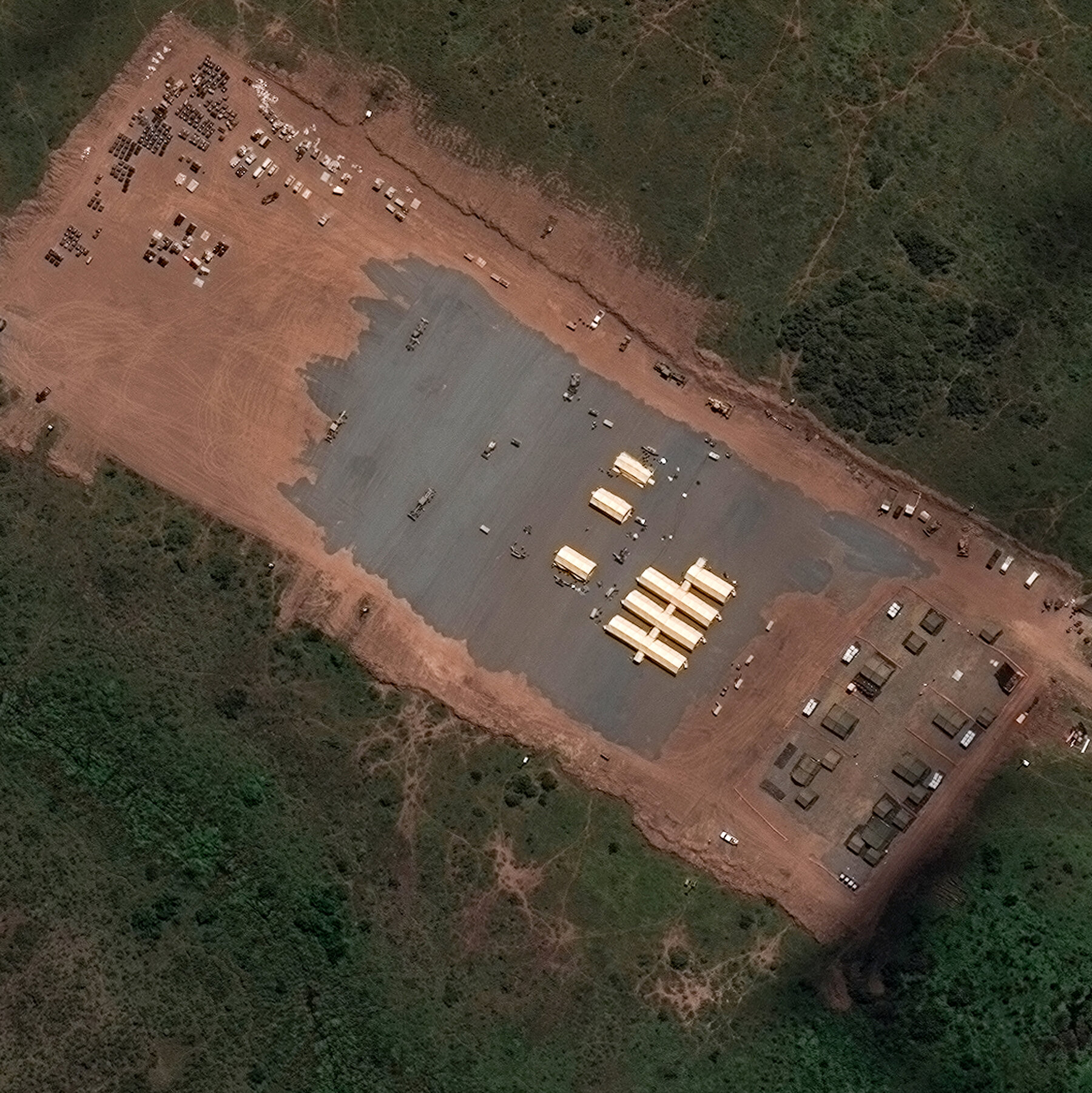
On the morning of 14 July 2026, in the city of Bunia, the World Health Organization's emergencies chief delivered an unusually blunt reading of an outbreak the agency has been tracking since early spring. Returning from a visit to Ituri province in eastern Democratic Republic of the Congo, the official said the epidemic "continues to outpace the response efforts," and that for the majority of new confirmed cases, responders had not yet identified the chain of transmission that produced them.
That gap is the warning. A known chain means contacts can be listed, vaccinated, monitored, and isolated before symptoms appear. An unknown chain means the virus is moving through Bunia's neighbourhoods, marketplaces, and displacement sites faster than the surveillance system can see it, and the next confirmed case is, by definition, already a generation behind the next one.
The outbreak in plain numbers
The current episode is centred on Ituri, the northeastern province whose capital, Bunia, sits roughly between Lake Albert and the Ugandan border. Ituri has been a long-running theatre of armed-group violence and population displacement, conditions that have historically made disease surveillance harder than in more stable provinces. WHO has framed the response as racing against community spread rather than catching up to a known hotspot.
According to the WHO official's 14 July 2026 briefing, the share of newly confirmed cases for which the transmission chain is unknown is now in the majority. That is the metric epidemiologists watch most closely in the second phase of an Ebola response. Early in an outbreak, nearly every case links back to a known index patient, and contact tracers can map the tree. As that share drops, responders lose the ability to direct vaccines and isolation beds to the people most at risk, and case counts begin to diverge from the curve the response was designed to bend.
Why "unknown source" matters more than the case count
The headline number of cases tells one story; the share of those cases whose origin is unknown tells another. A small outbreak with a known chain is containable. A larger outbreak with most chains untraced is the configuration that historically precedes exponential growth in places like North Kivu in 2018 and 2019, and in the 2014 West African epidemic that ultimately killed more than 11,000 people.
Ituri is not a blank slate. The province has lived through successive waves of Ebola, and the health authorities, NGOs, and WHO country office staff there have experience that newer sites lack. But the operational environment is unforgiving. Roads deteriorate in the rainy season, certain health zones are intermittently inaccessible to government services because of armed-group activity, and health workers themselves have been targeted in past outbreaks. Under those conditions, the absence of a clear chain for most new cases is a structural problem, not a procedural one. The cases are being found late, in places the response was not designed to reach.
The structural frame: vertical programmes in horizontal crises
Ebola response is one of the most verticalised interventions in global health. A dedicated incident-management structure, a ring-fenced vaccine stockpile, isolation units designed for one pathogen, contact-tracing teams trained for one disease, and a financing architecture that lights up the moment WHO or the Africa CDC declares an emergency. That verticality is what allowed the 2014 West African outbreak to be stopped, and what stopped the Équateur and North Kivu episodes in DRC.
The trade-off is that vertical programmes work best where the surrounding system can hold the patient. In Ituri, the surrounding system is thin. Routine immunisation coverage is patchy, primary-care access in many health zones is mediated by NGOs rather than the state, and a large displaced population is moving between areas where neither health authorities nor armed groups have continuous reach. When the chains are unknown and the surrounding system is hollow, the vertical intervention is being asked to do more than its design envelope allows. The fact that most cases are arriving at health facilities without a documented link to a known patient is, in effect, the audit.
Stakes and what to watch
If the unknown-source share does not fall in the next two reporting cycles, expect two things. First, the case curve will steepen, and Bunia, a city of several hundred thousand people with road links to Uganda and South Sudan, becomes the geographic centre of gravity. Second, the response will shift from contact-tracing-led to geographic ring vaccination and broader community vaccination, the same pivot the West African response made in late 2014 when tracing collapsed in the capital districts.
The harder question, and the one the briefing did not answer, is whether the response architecture can expand fast enough to cover a province in which the horizontal health system was already under strain before the virus arrived. WHO and the Africa CDC have demonstrated the technical capacity to stop Ebola outbreaks even in difficult terrain. What they have not yet demonstrated, in this episode, is the ability to do so when the chain of infection has already gone dark.
What remains uncertain is the denominator. The briefing identified the unknown-source problem but did not put a precise figure on it beyond "the majority," and the underlying case count, attack rate, and case-fatality ratio are not in the public summary. The sources do not specify how many deaths have been recorded, how many vaccine doses have been deployed in Ituri, or whether the index case for the current cluster has been definitively identified. Those numbers will determine whether this episode ends as a contained outbreak or joins the longer list of ones that did not.
This article is from the Africa desk. The wire frames the Ituri outbreak primarily as a question of response capacity. Monexus reads the unknown-source share as a structural signal about the health system the response is operating inside, not just the speed of the responders.