Delhi riots court ruling puts Tahir Hussain’s role back in the frame, six years on
A Delhi court has held AAP councillor Tahir Hussain guilty in the 2020 murder of IB staffer Ankit Sharma, describing a “savage and relentless assault” during the northeast Delhi riots.
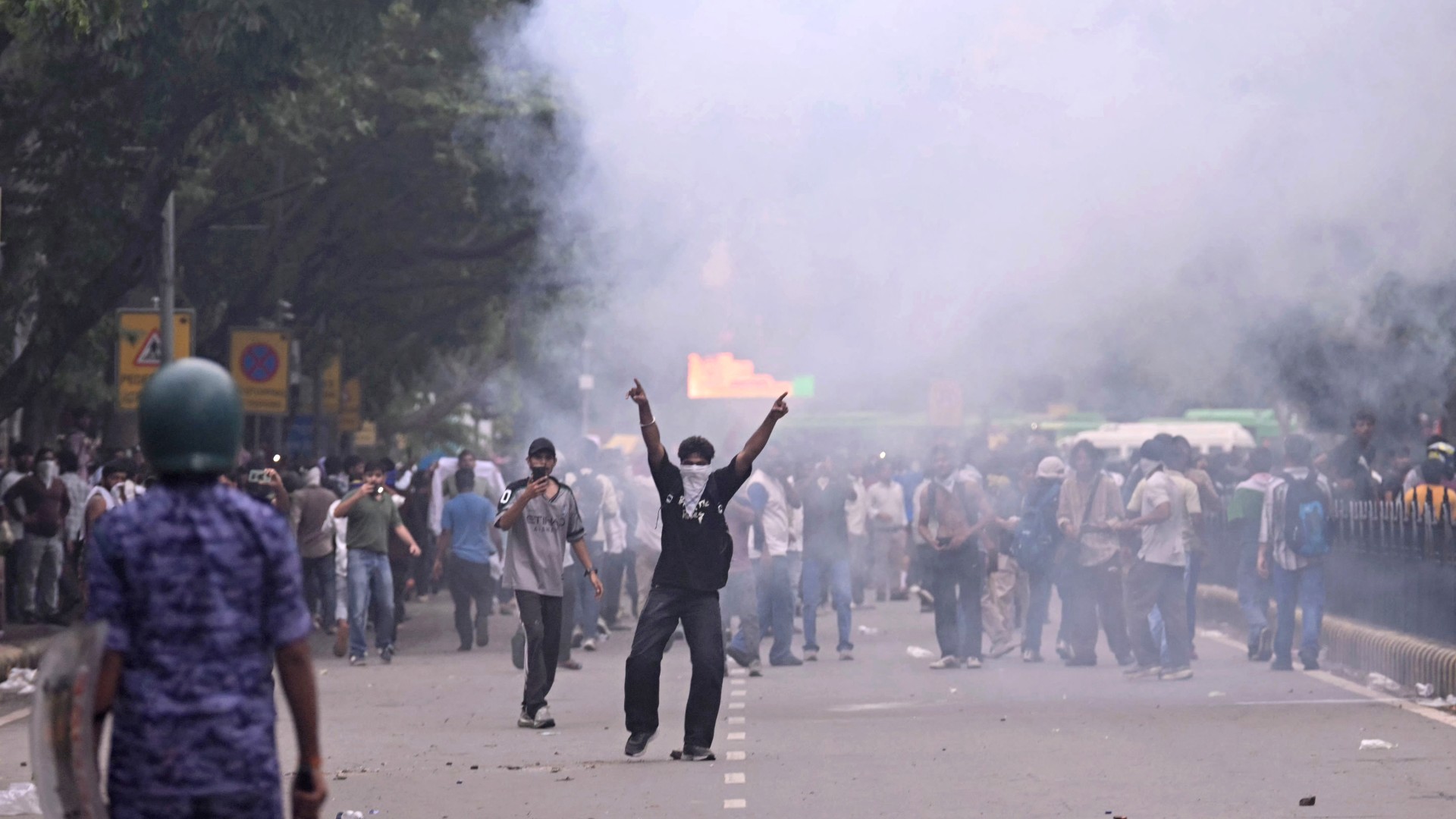
A Delhi court has held Aam Aadmi Party councillor Tahir Hussain guilty in the February 2020 murder of Intelligence Bureau staffer Ankit Sharma, describing the assault as "savage and relentless" and detailing a chain of beatings, throat-slitting and a final push into a drain. The verdict, delivered on 14 July 2026, closes one of the most-watched prosecutions to emerge from the northeast Delhi riots and revives an unresolved national argument about who, exactly, directed the violence that killed 53 people over four days.
The ruling is more than a criminal conviction. It reopens the political ledger of a city government that has spent six years defending one of its elected representatives against the most serious charges in the riot aftermath, and it lands weeks before municipal-level political manoeuvring in the capital. The court's reasoning, not just its verdict, will now be tested on appeal.
What the court found
According to The Indian Express, Special Judge Pulastya Pramachala held Hussain guilty of murder, criminal conspiracy and several offences under the Indian Penal Code and the Arms Act, alongside co-accused Mohammad Ikram, Mohammad Sohail and Mohammad Akil. The court accepted the prosecution's case that Sharma, on his way home from work, was pulled from a lane near his house in Chand Bagh on the evening of 24 February 2020, beaten with rods and sticks, his throat slit, and his body pushed into a nearby drain.
The judgement described the assault as "savage and relentless", a phrase likely to echo in subsequent appeals and in political coverage. The court found that Hussain was present at the scene, helped identify Sharma as a "non-Muslim" and participated in the attack. The Indian Express reports that the prosecution argued the assault was part of a broader pattern of targeted violence against Hindu residents and police and IB personnel in the area.
Sentencing is to follow. The conviction itself carries a maximum of life imprisonment or the death penalty under the relevant murder provisions.
The riots in context
The northeast Delhi riots of 23–26 February 2020 unfolded in the immediate aftermath of the Lok Sabha election campaign that had elevated communal polarisation around the Citizenship (Amendment) Act and the National Register of Citizens. Fifty-three people were killed, the majority Muslim, and several hundred were injured, with destruction concentrated in Chand Bagh, Maujpur, Jaffrabad, Babarpur and Yamuna Vihar. The violence was widely characterised as communal, with both Hindu and Muslim mobs documented as perpetrators in different pockets.
Hussain, then an AAP councillor from Chand Bagh ward, was arrested on 2 March 2020 after video and testimony placed him at scenes of violence. The Delhi Police charged him under the stringent Unlawful Activities (Prevention) Act, an anti-terror statute, alongside murder and rioting charges. That UAPA framing was later pared back by courts, which found insufficient basis for its application, though the murder and conspiracy charges survived. AAP leader Arvind Kejriwal publicly suspended Hussain from the party's primary membership shortly after his arrest.
The case has been delayed repeatedly. A trial court discharged some UAPA provisions in 2021; the Delhi High Court examined and largely upheld the remaining charges; and the trial itself ran across multiple witnesses and forensic reports before the verdict. The Indian Express's account of the judgement emphasises the court's reliance on eyewitness testimony, CCTV footage and forensic evidence placing Hussain at the scene.
The political fault line
The verdict lands on a long-running fault line in Delhi politics. The Bharatiya Janata Party has, since 2020, framed the riots and the subsequent investigations as evidence that the AAP government failed to protect Hindu residents and that the party tolerated, or worse, individuals implicated in the violence. The AAP has consistently argued that law and order in Delhi is a Union subject under the existing administrative arrangement, that the Delhi Police reports to the central government, and that any lapses rest there.
This administrative split is real and predates 2020, but it has been eroded in public discourse by the political stakes. The court's characterisation of the assault as "savage and relentless" now feeds directly into that debate. It also complicates AAP's long-standing defence of its councillor. While the party can, and has, pointed to the suspension of Hussain's membership and to the UAPA discharge as evidence that it did not shield him, a murder conviction with the language the court used is harder to bracket as a "political case."
The BJP is likely to press for a wider net of accountability, including any remaining accused absconding abroad, and to use the verdict to question the AAP's vetting of candidates. The AAP's defence will lean harder on the jurisdictional argument and on the eventual sentencing, where mitigating factors are typically argued. The Indian Express has not, in its published account, indicated whether the court addressed either party's broader political framing; the judgement reportedly focused on the specific acts and the evidence against the named accused.
What remains contested
A murder conviction at trial is not a final word in the Indian system. Hussain and the three co-accused are entitled to appeal to the Delhi High Court and, ultimately, to the Supreme Court. The legal questions on appeal are likely to include the sufficiency of eyewitness identification, the chain of custody on forensic evidence and the precise weight given to video footage showing Hussain at or near the scene.
The Indian Express account does not address several elements that broader public discourse has repeatedly raised: the alleged role of organised WhatsApp groups in coordinating mobs; the alleged failures of police reinforcement during the four days of violence; and the status of parallel investigations into the larger riot conspiracy. Whether those threads yield further prosecutions is an open question, not answered by this verdict.
There is also the matter of proportionality. The same violence that killed Sharma killed Muslim residents in other neighbourhoods, and the prosecution record across the riots has been uneven. Reporting in 2020 and after from a range of Indian outlets documented Hindu mobs in Maujpur and elsewhere attacking Muslim homes and businesses. Whether the justice system delivers comparable convictions on those counts is a separate test, and one the present ruling does not itself answer. The verdict in the Sharma case is, on its own terms, narrow. Its political weight, however, is wide.
This publication treated the ruling as a criminal-justice event first, and located it inside the longer dispute over Delhi's administrative status and the 2020 riots as secondary context.
Wire provenance
This editorial synthesis draws on the following public wire/social posts:
- https://en.wikipedia.org/wiki/2020_Northeast_Delhi_riots
- https://en.wikipedia.org/wiki/Tahir_Hussain_(politician)
- https://en.wikipedia.org/wiki/Citizenship_(Amendment)_Act,_2019