Caracas buildings tagged green, yellow and red as repair crews sweep the capital
Repair teams across Caracas are marking damaged structures with green, yellow and red placards. The colour-coded triage reads as both public-works logistics and political theatre in a country where the state of every wall is contested.
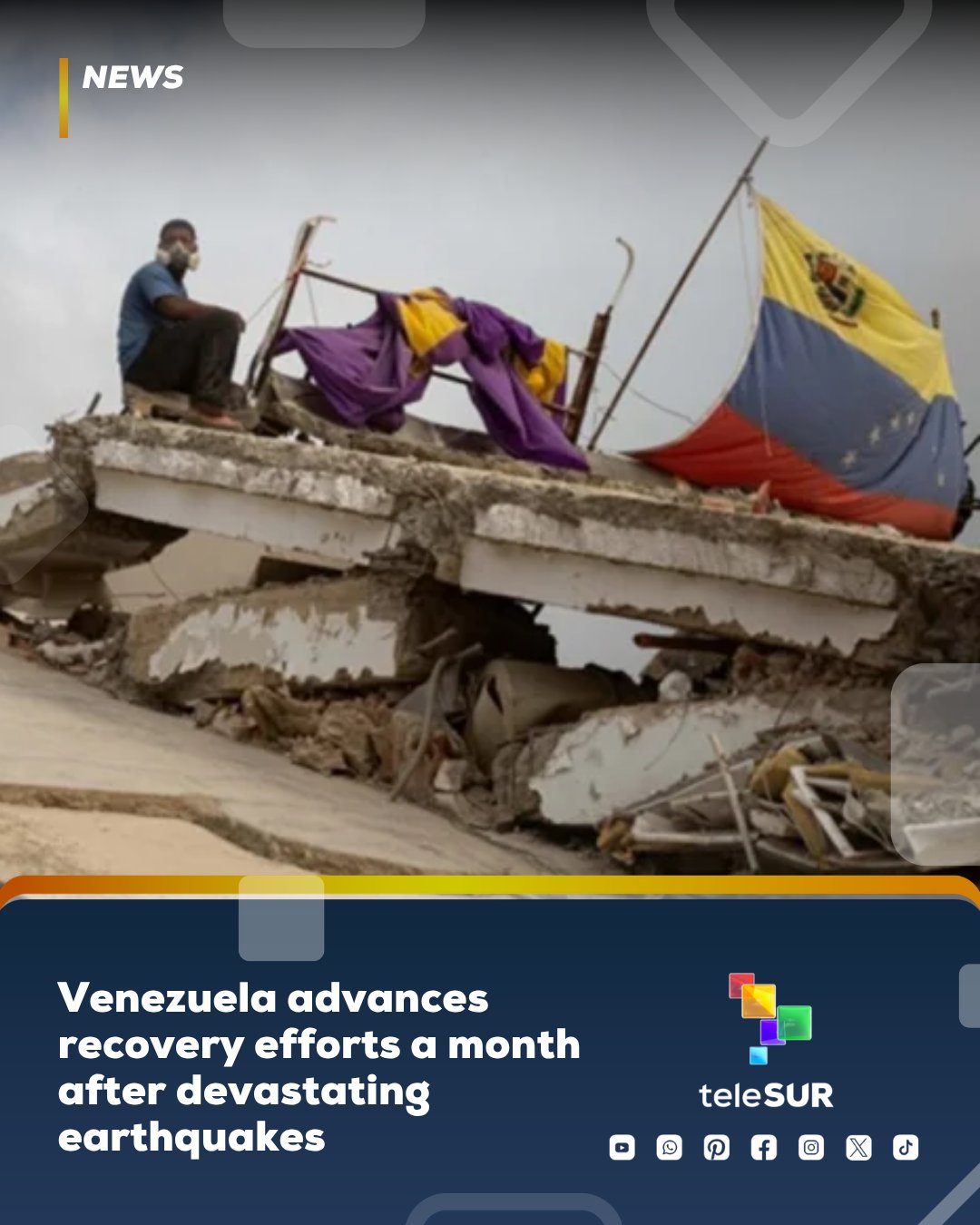
On a Caracas church roof at midday local time on 14 July 2026, a Telesur English correspondent pointed at the building next door and walked viewers through a colour code that, in the span of a single afternoon broadcast, became the clearest public accounting the Bolivarian Republic has offered of how many of its own walls are still standing safely. Green, yellow, red: each placard taped to a façade is doing triage on the capital.
The repairs underway across Caracas are unusual for what they admit. A government that has spent two decades insisting the city functions is now formally posting signs on its own buildings that say, in effect, do not enter, enter cautiously, or use with confidence. The colour-coded sweep is the most visible infrastructure programme the administration has rolled out in years, and it is also an inadvertent inventory of decay.
A capital counted in three colours
According to the Telesur English report filed from the church roof on 14 July 2026, repair teams are moving block by block through Caracas affixing green, yellow and red signs to buildings they have inspected. The scheme functions as a structural triage: green for structures judged safe, yellow for those requiring caution or limited use, red for buildings judged unsafe and off-limits. The broadcast framed the work as an active, ongoing civic campaign rather than a post-disaster response, suggesting the inspection drive is preventive in name even if the underlying condition of the housing stock is plainly degraded.
The choice to communicate the assessment through placards rather than a registry or a digital portal is itself revealing. Caracas is a city of roughly three million residents inside a metro area of more than four million, and a paper-and-paint triage system is exactly the kind of low-bandwidth, high-visibility intervention that travels through word of mouth and neighbourhood WhatsApp groups faster than any ministry press release. It is also legible to the international press, which has spent years reporting on the deterioration of Venezuelan public infrastructure under sanctions, currency collapse and mass outmigration. The signs are a public argument, not just a maintenance log.
What the signs do not say
The Telesur English framing presents the inspection drive as straightforward statecraft: identify, mark, repair, repeat. The reading holds at the level of a city services briefing. It does not hold once you ask what the colour code is measuring against, and against whom the count is being made visible.
A green tag on a Caracas apartment block is not the same instrument as a municipal habitability certificate in Bogotá or Lima. There is no published engineering standard attached to the colour in the public-facing communications, no named cohort of structural engineers, and no appeals mechanism visible to residents whose buildings are tagged red and who then have nowhere to go. A colour-coded placard on the wall of a family that has lived in a building for three generations is, in practice, a unilateral classification by the state of whether that family can stay in its home. The optics of transparency and the substance of due process are not the same thing, and the gap between them is the story.
A repair programme as political theatre
The placement of the signs is also a campaign artefact. Caracas has municipal elections on the horizon in the Bolivarian Republic's electoral calendar, and any visible construction activity reads differently in a year when the ruling United Socialist Party needs to demonstrate competence to a population that has lost roughly a quarter of its pre-2015 size to emigration. A paintbrush on a wall is cheaper than a new building, and a red sign on a competitor's property is cheaper still than a campaign ad.
This is not a uniquely Venezuelan calculation. Governments from Ankara to Buenos Aires have discovered that triage aesthetics travel well on television: a clipboard, a hard hat, a colour swatch, a camera operator. The format flatters the executive and disciplines the local opposition. Whether the work behind the placards produces structurally sound buildings on a multi-year horizon is a different question, one that the colour code itself is designed to forestall by substituting visibility for verifiability.
Stakes and what to watch next
For Caracas residents, the immediate stakes are concrete and personal. A red placard means displacement without compensation; a yellow placard means a building whose safety is contingent on the next tremor or the next rainy season, in a country where hyperinflation, sanctions and currency controls have gutted the household budget for routine maintenance. For the government, the stakes are political: the colour code is a low-cost way to claim visibility over a problem whose underlying causes, from decades of currency intervention to the loss of construction-sector capacity to emigration, are not addressed by signage.
The structural pattern here is not unique to Caracas. Across the Bolivarian Republic, the state has alternated between denial of infrastructure decay and highly visible remediation campaigns timed to political moments. The colour-coded sweep fits the second pattern. What changes the read is whether the placards are followed by an engineering registry, an appeals process and an actual budget line for the red-tagged buildings, or whether they remain what they currently are, a televised inventory that runs out of paint before it runs out of problems.
What remains uncertain, and what the available reporting does not yet resolve, is the share of buildings in each colour across the city, the criteria engineers are using to assign them, and the fate of residents in red-tagged structures. Telesur English is also not a neutral observer: it is a state-aligned outlet, and its framing should be read alongside independent Venezuelan reporting and engineering assessments that this article could not source in time for publication. Until that triangulation lands, the colour code is best read as a claim by the Venezuelan state about its own capital, written in paint on the walls of the buildings it governs.
Desk note: the wire on Caracas infrastructure leans heavily on state-aligned regional outlets; Monexus framed the colour-coded sweep on its own terms, citing the official classification system while flagging that the underlying engineering standard and appeals process are not yet visible in public reporting.
Wire provenance
This editorial synthesis draws on the following public wire/social posts:
- https://x.com/telesurenglish/status/2076997895782387712