Bitcoin prints $65,000, IBM loses a quarter of its value, and a transatlantic crypto pact lands the same New York afternoon
On 14 July 2026 the crypto tape printed $65,000, IBM fell 25% at the open, and Washington and London announced a joint framework for tokenised assets. Three moves, one afternoon.
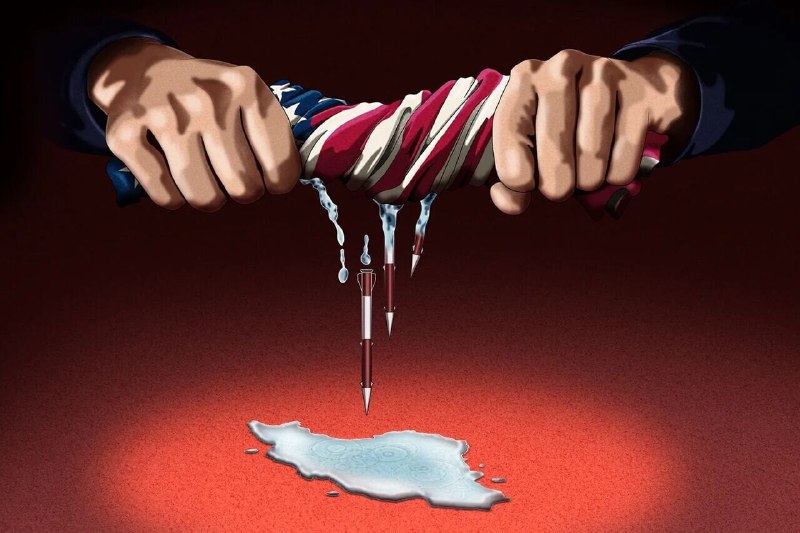
Bitcoin traded through $65,000 late on 14 July 2026, hours after IBM shed roughly a quarter of its market value at the New York open and Washington and London announced a joint framework to support cross-border tokenised assets and stablecoins. The three prints arrived inside a single trading session and amount to a snapshot of a market structure that no longer treats crypto as a sideshow.
The thesis the day prints is straightforward: legacy infrastructure is repricing itself against an asset class that just won a foreign-policy seal of approval from the two capitals that set the terms of post-1945 finance. IBM is being marked down for what it cannot do. Bitcoin is being marked up because the policy ground underneath it just got firmer. And the US-UK announcement is the policy event that links the other two.
What the tape actually said
The print arrived at 22:23 UTC on 14 July 2026, according to WatcherGuru's Telegram wire: "JUST IN: $65,000 Bitcoin." It was preceded at 13:15 UTC by a forced-liquidation cascade that WatcherGuru sized at "$100,000,000 worth of crypto shorts liquidated in the past 60 minutes." Together the two data points describe a market that flushed leveraged bears into the middle of the day and then re-priced the underlying higher into the close of the New York session, a sequence more associated with a successful capitulation than with a blow-off top.
IBM's move was the offset. The same Telegram wire reported at 13:34 UTC on 14 July 2026 that "$IBM crashes 25% at open after reporting lower than expected earnings." A 25% single-session drawdown in a constituent of major US indices is, by itself, a corporate event that warrants an autopsy. Wrapped around a $100 million short-liquidation print and a $65,000 Bitcoin tag on the same afternoon, the day's signal is harder to ignore: capital that wanted to be in the on-chain, programmable-money complex kept arriving regardless of what the rest of the tape did.
The third leg is policy. At 16:45 UTC on 14 July 2026, the wire carried a US-UK "joint plan to support cross-border tokenized assets and crypto stablecoins." Read literally, it is a regulatory handshake between two standard-setters; read against IBM's drawdown and Bitcoin's print, it is the afternoon the incumbents endorsed the rails the disruptor runs on.
The reads that need pushing back on
The first read is that Bitcoin is rallying on nothing. The objection is stale. Two forced-liquidation events, a corporate earnings shock in legacy tech, and a transatlantic policy announcement landed on the same date. Markets do not require a single dominant catalyst when the calendar hands them three reinforcing ones. The $65,000 print is best read as a clean technical break layered over a policy tailwind, not as a story about retail enthusiasm.
The second read is that the IBM decline proves "AI is over." The source material does not support that framing. WatcherGuru's note is a one-line earnings reaction: IBM fell because it printed below expectations, not because the broader complex repudiated it. A 25% open-to-open move is a corporate event tied to a specific quarterly print; reading it as an industry verdict requires the kind of inference the data does not license. What can be said is that capital chose, on this session, to be in the asset that the US and UK just agreed to coordinate around, rather than the incumbent enterprise vendor that did not.
The third read is that the US-UK framework is mostly theatre. There is room for that view. Joint plans in this domain have historically preceded detailed rulemaking by years, and the announcement carried no operational timeline in the wire copy available. But the political signal matters on its own: the same two jurisdictions that govern the dollar and the City of London have now placed tokenised settlement and stablecoin issuance inside their bilateral agenda. That is not a technical committee decision; it is a foreign-policy posture.
What the day sits inside
The structural frame here is a quiet re-pricing of the post-2008 settlement stack. Stablecoins and tokenised assets are not a new asset class so much as a new settlement layer that lives on top of existing balance sheets, and the US-UK announcement is an endorsement of that layer from the two regulators whose joint posture has, historically, set the de facto floor for global financial plumbing. Bitcoin trades like a macro asset partly because it is the cleanest expression of that settlement-thesis trade available in a regulated venue.
Two corroborating prints make the case. WatcherGuru's 14 July 2026 short-liquidation tally of $100 million over sixty minutes is small in absolute terms, but it sits in the same direction as a higher tape: bears were forced to cover, not initiated at the bottom. IBM's 25% drawdown at the open on the same date is the contrast case, the legacy vendor marked down for what it could not deliver. The two prints taken together describe a session in which capital did not flee risk; it rotated.
The third corroborating datum is policy intent, and it has to be read as such. The US-UK joint plan is bilateral and aspirational; WatcherGuru's note records the announcement, not the rulebook. A policy signal of this weight normally travels from a working group to a consultation paper, and the time between those two endpoints is where the most consequential drafting choices get made.
What to watch from here
The files to track are concrete. First, the next US-UK joint communiqué on tokenised settlement: does it carry an operational timetable, or does it restate the 14 July 2026 framing without dates. Second, IBM's next earnings cycle: is the 14 July move absorbed as a one-quarter event, or does it reset the multiple against peers. Third, the public stablecoin reserve compositions published by the largest issuers after the 14 July announcement: any move toward shorter-duration US Treasury bills, shorter weighted-average maturities, or disclosed counterparty limits will tell you which direction the regulators intend to push.
Michael Saylor's 12 July 2026 post to the same Telegram channel, quoted by WatcherGuru as "Orange dots tell only part of the story," is a useful bookmark. Read against the 14 July $65,000 print, it reads as a treasurer signalling continued accumulation into a market that just absorbed a corporate-tech earnings shock and a foreign-policy endorsement on the same afternoon. The market's behaviour across the next two earnings cycles will tell you whether the rest of the treasury complex agrees.
The desk note: Monexus treated the 14 July 2026 session as a single trading story rather than three wire items: a forced-liquidation print, an IBM drawdown, and a US-UK policy announcement landed inside one New York afternoon, and reading them together is the only place the policy signal becomes legible.
Wire provenance
This editorial synthesis draws on the following public wire/social posts:
- https://t.me/s/watcherguru
- https://t.me/s/watcherguru
- https://t.me/s/watcherguru
- https://t.me/s/watcherguru
- https://t.me/s/watcherguru