Banks caught between Abu Dhabi and Riyadh as Gulf capital rivals its own principal
A Bloomberg dispatch on 14 July 2026 flags an emerging bind for global investment banks: choose the Emirati sovereign, or the Saudi one, as the two Gulf power centres harden into distinct financial poles.
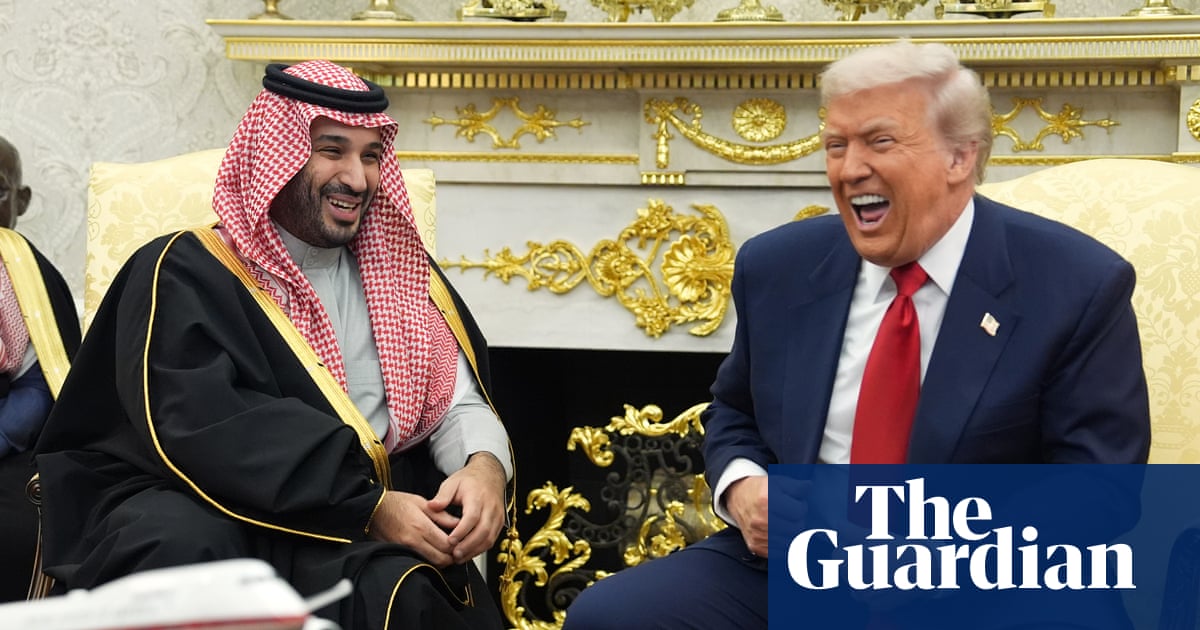
On 14 July 2026, Bloomberg reported that several global investment banks are bracing for an unwelcome choice: deepen ties with Abu Dhabi, or with Riyadh, as the two Gulf capitals pull further apart as financial centres. The framing is unusual because, until recently, Western banks have treated the United Arab Emirates and Saudi Arabia as a single Gulf pool of sovereign-linked deal flow. That pool is splitting.
The Gulf has spent the last decade marketing itself as a single, interchangeable destination for capital. The pitch worked. Western banks poured resources into both Riyadh and Abu Dhabi, building advisory franchises in parallel and treating mandates from Mubadala and the Public Investment Fund as adjacent lines on the same balance sheet. The current bind, as Bloomberg describes it, is that the two sovereign clients are no longer aligned in appetite, in regulatory posture, or in which foreign partners they want seen at their side.
How the pool split
Saudi Arabia's pitch is scale. The Public Investment Fund, chaired by Crown Prince Mohammed bin Salman, is funnelling tens of billions of dollars into megaprojects: Neom, the Qiddiya entertainment city, the line-and-tower schemes stacked along the Red Sea coast. The underlying ask of any global bank that wants a piece of that flow is institutional loyalty: participation in the marquee deals, co-arrangement of bond and sukuk issuance, and visible presence on Saudi-hosted forums. That is the price of admission.
Abu Dhabi's pitch is different, and increasingly distinct. The emirate is leaning into its reputation as the Gulf's quieter, more conservative financial anchor. Mubadala and ADQ, the two principal sovereign vehicles, have grown into global asset managers rather than domestic capital spenders, taking minority stakes in Western funds, infrastructure platforms, and technology groups. Their demands of Western banks are narrower and more technical: clean execution, discreet co-investment, and minimal political drag.
The two mandates, in practice, are no longer compatible. A bank that surfaces prominently in a marquee Saudi IPO this year is increasingly likely to find itself side-lined from the next Abu Dhabi vehicle, and vice versa. Bloomberg's reporting does not put a number on the affected institutions, but it describes the bind as visible inside the regional advisory franchises of the major US and European houses.
What the banks say back
Off the record, the read inside the advisory franchises is more cynical. One view inside the regional banks is that the Gulf's pooling was always a Western construction, a marketing convenience, and that the split is the natural correction. Abu Dhabi was never going to chase Saudi scale; Saudi Arabia was never going to give up its megaproject branding. Global banks, the argument runs, were simply the last to notice.
A second, more cautious view is that the bind is being exaggerated for leverage. Sovereign clients in the Gulf have long played Western banks off each other on fees, and a public narrative of a binary choice sharpens that lever. Bloomberg's framing may itself be partly an instrument of the negotiation.
A third view, harder to verify, holds that the divergence is being driven less by Riyadh or Abu Dhabi than by their respective Western partners. US banks, with deeper historical ties to Saudi Arabia via decades of Aramco-era relationships, are reportedly more comfortable in Riyadh. European and Asian houses, with older UAE relationships, have more institutional depth in Abu Dhabi. If that is the pattern, the bifurcation is partly inside the Western banking system itself.
Why the timing matters
The split lands at an awkward moment. Gulf capital is, by the numbers, the most patient pool of foreign money available to Western asset managers in 2026. Sovereign wealth assets in the GCC have grown steadily through the oil-price cycle and are now the marginal investor in private credit, infrastructure, and late-stage technology. A regional bifurcation that forces Western banks to take sides reduces the frictionless access that made Gulf capital so attractive in the first place.
It also lands as the wider Middle East is reorganising its financial architecture. Capital controls in several regional jurisdictions, post-2024, have nudged more wealth into sovereign hands rather than private ones. The UAE and Saudi Arabia are the two largest beneficiaries of that shift. Each is now big enough to set terms with global banks rather than accept them.
Stakes for 2027 and beyond
If the bind holds, the practical consequence is that Western banks will, over the next twelve to eighteen months, be forced into a quieter but more consequential sorting. Some houses will lean Saudi, surfacing in the kingdom's megaproject financings and accepting the visibility cost. Others will lean Emirati, taking co-investment from Mubadala and ADQ and accepting lower headline exposure. A handful will try to remain balanced and risk losing both ends.
The losers, in the near term, are likely to be the regional advisory franchises that have lived off the assumption that Gulf capital is fungible. The winners are the two sovereign clients, who gain negotiating leverage on fees and on which partners they put at the front of the room.
What remains uncertain is whether the divergence is a temporary tactical posture or a durable structural split. The sources for this story do not specify which global banks are most exposed, and the Bloomberg dispatch itself leans on the framing of unnamed executives. A more granular read would require a deal-by-deal tally over the next two quarters. For now, the Gulf's pooling assumption is no longer a safe one.
Desk note: the wire framing on this story treats Gulf capital as a single pool with two outlets; Monexus reads it as a deliberate split, driven as much by Western banks' own regional alliances as by any decision in Riyadh or Abu Dhabi.