Yemen strikes Sanaa airport, retaliates against Saudi airbases in major escalation
Yemen's armed forces struck Abha International Airport and King Khalid Airbase with ballistic missiles and drones hours after Saudi warplanes bombed Sanaa International Airport, the group said, framing the exchange as retaliation and thanking Iran for help lifting the airport's siege.
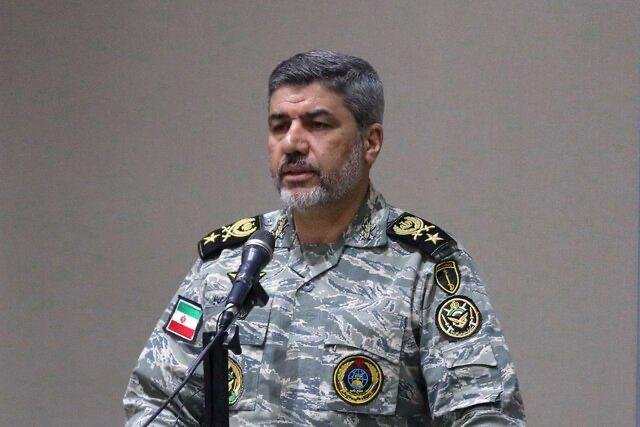
At 13:54 local time on Monday 13 July 2026, Saudi-led coalition warplanes struck Sanaa International Airport in Yemen, according to a statement issued by the Yemeni Armed Forces spokesman Yahya Saree and relayed by multiple outlets including the Qatari-owned Al Araby television channel and Iran's Tasnim News. Within hours, the Yemeni Armed Forces announced they had responded with ballistic missiles and kamikaze drones targeting Abha International Airport and King Khalid Airbase inside Saudi Arabia. The exchange marks a sharp escalation in a long-running air campaign that has repeatedly put Yemen's main civilian gateway in the crossfire.
The frame Sanaa offered was not opportunistic retaliation but a humanitarian one. The Houthis said the Saudi strikes were intended to halt humanitarian flights carrying patients and called for airlines to avoid both Sanaa and the Saudi airbases. The framing matters because it positions the airport, in Yemeni messaging, as civilian infrastructure under siege rather than as a military site, and it recasts the retaliatory strikes as a defense of humanitarian access.
A measured timeline, on Sanaa's account
The Yemeni account, as relayed by Alalam Arabi and corroborated by Clash Report and Middle East Spectator, runs as follows. At 13:54 local time on Monday, Saudi warplanes struck Sanaa International Airport in what the spokesman characterised as a blatant act of aggression carried out in defiance of appeals to end the siege. Sanaa announced the retaliation within roughly three hours. By 17:53 UTC, Fotros Resistance was circulating word that ballistic missiles and kamikaze drones had hit Abha International Airport and King Khalid Airbase. The Yemeni Armed Forces followed with an official statement via spokesman Yahya Saree, distributed by DD Geopolitics, the Iranian outlets Tasnim, PressTV, Fars, and the Beirut-based The Cradle, the latter describing a broader engagement with Saudi warplanes.
The sequencing, as Yemeni-aligned channels present it, is deliberate. Sanaa places the airport strike first, and casts the cross-border retaliation as a response. That order is contested territory: the Saudi-led coalition has not, in the available reporting, publicly confirmed the airport strike or accepted the Yemeni framing of its intent. Read the other way, the order makes the missile-and-drone attack on Abha and King Khalid an act of war initiated against civilian air infrastructure inside Saudi Arabia, regardless of what preceded it.
The humanitarian line, and who carries it
What is unusual about Monday's messaging is not the retaliation itself. Yemen's armed forces have struck Saudi air infrastructure before, including earlier cross-border attacks on Abha, and Abha airport has been a recurring target. What stands out is the explicit humanitarian framing and the naming of a foreign patron.
The statement carried by Alalam Arabi, PressTV and Fars thanked the Islamic Republic of Iran for its assistance in lifting the siege on Sanaa International Airport and re-establishing flights. PressTV carried spokesman Yahya Saree's claim that the coalition strikes had targeted humanitarian flights carrying patients. The Cradle, an outlet that has consistently given the Yemeni side extensive airtime, amplified the engagement claim and the humanitarian framing in parallel.
The patronage signal is the political payload of the day. Iran has long been the primary external backer of the Houthi movement in weapons, training and political cover. By publicly thanking Tehran for helping keep Sanaa's airport open, the Yemeni Armed Forces are putting a name on a relationship that Western and Gulf capitals usually describe obliquely. The Saudi-led coalition's stated objective in Yemen, going back to 2015, has included rolling back that relationship. Monday's statement marks the latest data point in a contest the coalition has not, by its own measure, won.
What the framing leaves out
Two big claims in the Yemeni statements are not independently corroborated in the available reporting. The first is the assertion that Saudi warplanes struck Sanaa airport at 13:54 specifically to halt humanitarian flights carrying patients. Coalition spokespeople have not, in the material in this thread, confirmed the strike or addressed the intent question at all. The second is the framing of Iran's role as a humanitarian facilitator lifting a siege on an airport; that is the Yemeni and Iranian framing, and it sits in obvious tension with Western and Gulf characterisations of Iranian involvement in Yemen.
A second reading of the same facts is also plausible. If the coalition strike did occur, it could have been a calibrated operation against dual-use infrastructure at the airport: radar, logistics nodes, drone storage, anything from which cross-border attacks are staged. Yemen's airports have been used, in prior reporting, as platforms for the missile and drone campaign that has reached Saudi territory and Red Sea shipping. Under that read, the humanitarian framing is a layer of information warfare on top of a military strike that has a defensible operational logic. Both readings can be true at once.
What the sources do not yet say
The thread is rich on Yemeni Armed Forces statements and on Iranian, Qatari and Beirut-based outlets that relay them. It is thin on the other side. The Saudi-led coalition has not been quoted in the available material confirming or denying the Sanaa strike, and no major Western wire has weighed in inside the time window of this article. There is no independent reporting yet on damage at Abha or King Khalid, no airline-by-airline read on airspace status, and no humanitarian-agency statement from the United Nations or the International Committee of the Red Cross on whether medical evacuation flights into Sanaa were disrupted on Monday. The casualty picture, in both directions, is not on the record.
Those gaps are the story's next move. Aviation authorities in Riyadh, statements from Saudi Air Navigation Services, and a confirmed picture from Sanaa airport itself will determine whether Monday is read as another chapter in a years-long attrition campaign or as the opening of a more dangerous phase. Until those answers land, the available record is one side's account of the day, relayed through channels that have a stake in how the day is read.
Desk note: Monexus framed this story from the Yemeni Armed Forces' statement as relayed by Alalam Arabi, Tasnim, PressTV, Fars, The Cradle, Clash Report, Middle East Spectator and Fotros Resistance, with an explicit sourcing caveat attached to those outlets. The coalition's own statement, and any Western wire confirmation, were not inside the thread at the time of publication; this article flags that absence in the closing section rather than paraphrasing a position that has not been put on the record.
Wire provenance
This editorial synthesis draws on the following public wire/social posts:
- https://t.me/FotrosResistancee
- https://t.me/alalamarabic
- https://t.me/ClashReport
- https://t.me/Middle_East_Spectator
- https://t.me/tasnimnews_en
- https://t.me/DDGeopolitics
- https://t.me/presstv
- https://t.me/farsna
- https://t.me/thecradlemedia