Missile fire from Yemen hits Saudi territory, with Riyadh confirming air-defense engagement
Saudi Arabia's coalition spokesman confirmed air-defense systems engaged incoming missiles from Yemen on 13 July 2026, hours after Riyadh's Interior Ministry moved to ban filming of targeted locations.
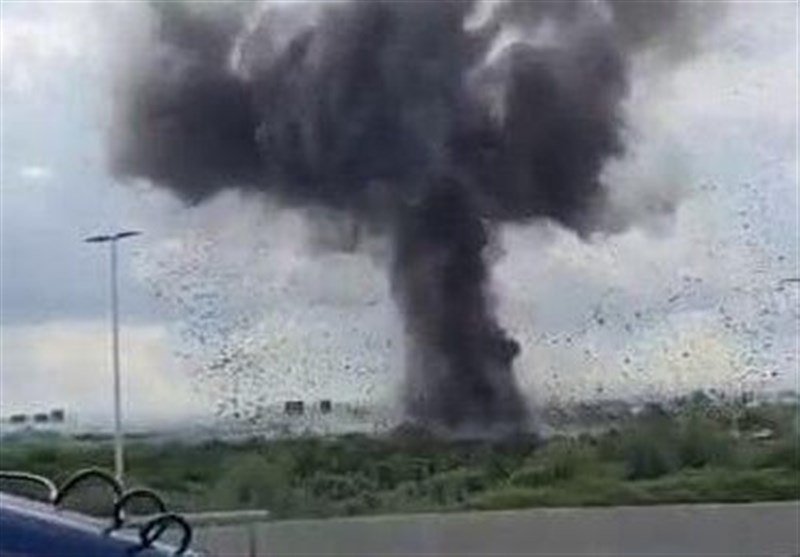
At 17:15 UTC on 13 July 2026, the spokesman for the Saudi-led military coalition acknowledged that the kingdom's air-defense systems had engaged incoming missiles launched from Yemen. The confirmation followed preliminary reports filed roughly forty minutes earlier by Beirut-based outlet The Cradle that a new batch of projectiles had been fired toward Saudi territory, and was reinforced shortly after by Iran's Tasnim News Agency, which carried a parallel statement.
The exchange illustrates a pattern that has hardened over the past two years: initial flashes routed through regional channels, near-simultaneous Saudi acknowledgment, and a tightening of information controls inside the kingdom before independent reporters can reach the impact zones. What makes 13 July worth reading closely is not just the launch itself but the speed with which Riyadh moved, after the strike, to ban the filming of targeted locations.
What was actually confirmed
Three things are on the public record. First, the Saudi-led coalition spokesman stated, at the 17:15 UTC mark, that the kingdom's air-defense systems had "faced the threat" carried by incoming missiles launched from Yemeni territory. Tasnim News Agency carried the same statement in English shortly after, at 17:29 UTC, with the same essential wording.
Second, Saudi Arabia's Ministry of Interior moved in the same window to prohibit any photography of the locations that had been targeted. Tasnim's reporting at 17:30 UTC cited the ministry's directive directly. The order functions as an information policy: it shapes what observers on the ground, including Saudi citizens, are legally permitted to circulate in the hours when outside verification of impact and interception is still possible.
Third, preliminary reporting that originated with The Cradle at 16:55 UTC flagged the launches themselves, with the same outlet updating the story at 17:38 UTC as additional reporting came in. None of the dispatches reviewed by this publication specified either the number of missiles fired, the type of munitions used, or the precise Saudi locations targeted. The Cradle's framing described the action as a "new batch" of missiles launched "towards Saudi Arabia," language that remains consistent with the pattern of fire publicised by Yemeni armed groups over recent years.
Why Riyadh moved on filming
The interior ministry's gag on filming is, in practice, where most of the story sits. Saudi air-defense engagements have been publicly confirmed often enough that the announcement itself barely moves regional markets. What consistently shapes outside understanding of these strikes is the visual record: crater size, debris scatter, the position of intercepted fragments, the smoke column from any warhead that reaches the ground. By restricting photography at the scene, the ministry narrows the gap between the official version and the operational reality.
This is not a new instrument. Saudi authorities moved similarly after Houthi strikes on oil infrastructure in 2019, and again after cross-border events in 2022 and 2024, when state-aligned outlets dominated the available imagery. The pattern matters because the absence of independently captured footage makes casualty figures, interception rates, and impact location all dependent on Saudi official communications or, in parallel, on statements released by Ansar Allah (the Houthis) or their media apparatus. Each of those sources arrives with its own narrative incentives.
The two briefings, side by side
The Saudi-led coalition statement, as carried by Tasnim, is short and procedural: air-defense systems were engaged against the threat. It is the language militaries use when they want to confirm an event without conceding any specific outcome; whether every warhead was intercepted, what was damaged on the ground, and whether there were injuries, are not addressed.
Iranian state-aligned coverage runs in a different direction. Tasnim's English coverage carries the Saudi statement alongside framing that anchors Saudi Arabia as the initiator of what it labels a "military aggressor coalition." Yemen's missile fire is presented within an existing campaign narrative rather than as a discrete tactical action. That framing will not be how the Saudi interior ministry, the coalition spokesman, or Western wire desks describe the event. The two readings sit beside each other, not in conversation with each other, and the public record is the gap between them.
What this publication can verify, on the basis of the inputs reviewed, is that a launch from Yemen occurred, that the Saudi-led coalition acknowledged air-defense engagement, and that the Saudi interior ministry moved to suppress scene photography. What this publication cannot verify is the type and number of missiles fired, the points of impact, interception success rates, and casualty figures. None of the source items in the public thread carry that granularity.
Stakes and what to watch next
A single salvo does not, on its own, alter the regional equilibrium. The pattern that matters is cadence. Each successive strike tests whether Saudi air-defense infrastructure can sustain a high rate of engagement without leaks in the information environment; each successive Saudi suppression of imagery tests how thin the publicly verifiable record becomes before Western wire desks will report a strike as "confirmed" rather than "reported."
The near-term watchpoints on 14 July 2026 are concrete. First, whether the Saudi interior ministry lifts the filming restriction after a defined window, as it has on prior occasions, or extends it past 24 hours; an extended order would suggest ground damage the coalition prefers not to be imaged. Second, whether Ansar Allah releases its own casualty-and-target briefing, and at what specificity; the group's claims frequently outpace what Riyadh confirms, but they are also the only Yemeni-side narrative that reaches global wire desks without translation. Third, whether the brief spike in cross-border fire coincides with movement on the file that actually determines pace in this corridor: the still-stalled negotiations track, whether through Omani or UN channels, on a broader de-escalation.
If the trajectory of the last two years holds, none of the immediate data points will break through cleanly. The official Saudi line will assert successful interception; the Iranian-aligned line will assert Saudi vulnerability; outside reporters will work around the filming restriction with material they cannot fully corroborate. The information environment around Yemeni missile strikes inside Saudi territory is now structured to produce exactly that stalemate. The job of any desk covering it is to mark, plainly, what is confirmed and what is not.
This publication framed the strike on the basis of the coalition spokesman's confirmation and the Tasnim-carried Saudi interior ministry directive, and flagged The Cradle's preliminary reporting as preliminary. The structural point sits in the parallel Saudi and Iranian-aligned briefings: each confirms something different, and the gap between them is where the verifiable record lives.
Wire provenance
This editorial synthesis draws on the following public wire/social posts:
- https://t.me/thecradlemedia
- https://t.me/tasnimnews_en
- https://t.me/JahanTasnim
- https://t.me/tasnimnews_en
- https://t.me/thecradlemedia
- https://t.me/TheCradleMedia