Caracas hands over keys as 200 rebuilt homes reach Venezuelan earthquake survivors
On 13 July 2026 the Venezuelan government began handing over the first 200 rebuilt homes to families displaced by the country’s worst earthquake in a generation, a milestone that doubles as a quiet stress test of Caracas’s reconstruction capacity.
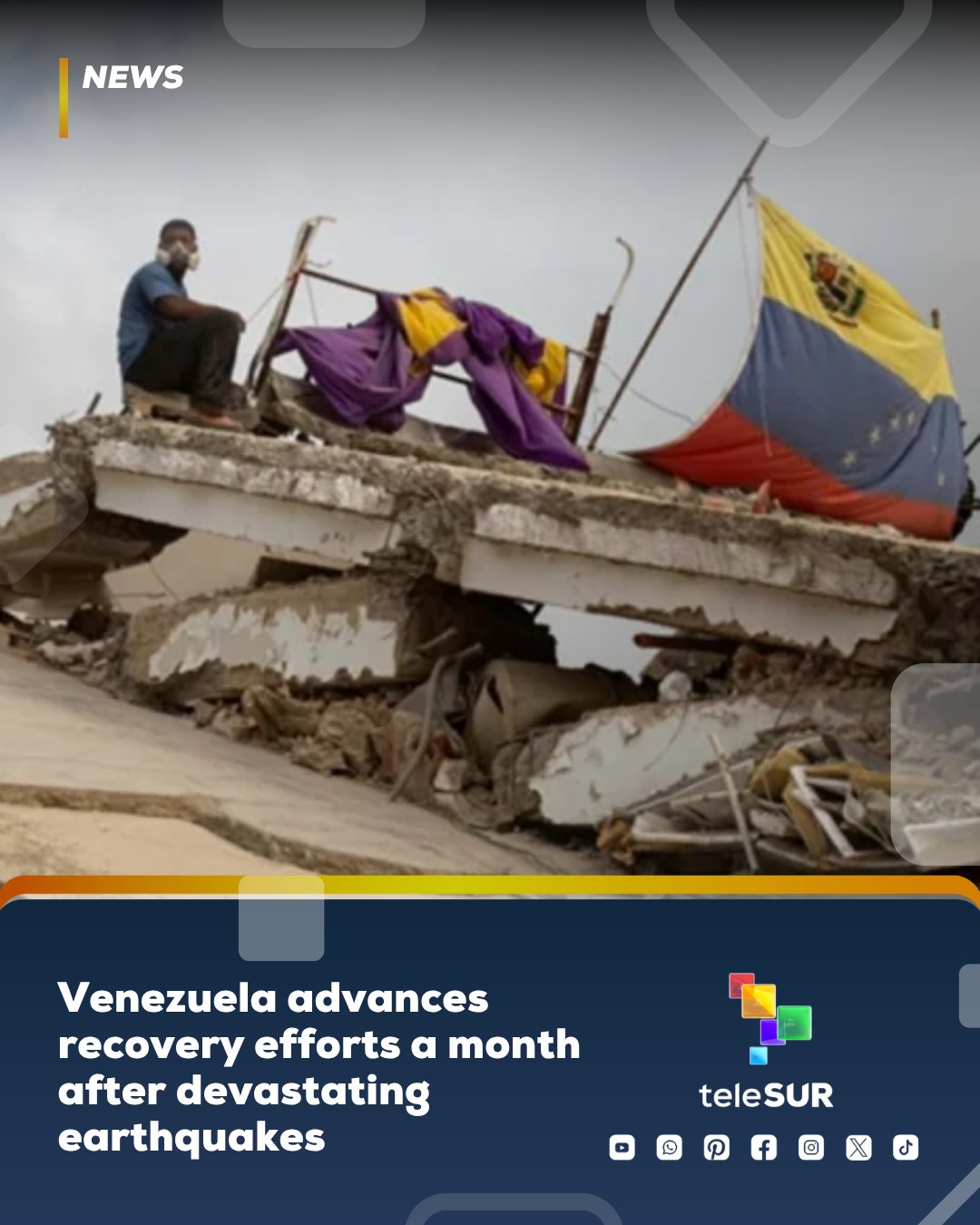
At 14:39 UTC on 13 July 2026, teleSUR English’s daily news roundup led with a single line: Caracas is handing over the first 200 reconstructed homes to families displaced by Venezuela’s worst earthquake in a generation. The figure is small relative to the housing stock the tremor destroyed, and large enough to matter politically in a country where the state’s delivery record is treated, fairly or not, as a proxy for the system’s legitimacy.
The handover is the first measurable output of a reconstruction push that has otherwise been defined by dollarised aid politics, fragmented donor channels, and a central government increasingly willing to perform competence in front of domestic cameras. What the 200 keys actually unlock, and what they leave unresolved, is the story.
A first delivery, not a final one
The homes are being transferred directly to households identified as displaced by the quake, a sequence that puts the state in the role of developer, contractor, and warranty-officer all at once. teleSUR English frames the moment as a national-government milestone, foregrounding the figure of 200 units and the symbolism of families receiving titles rather than tents.
Two things are worth holding in mind. First, 200 is a down-payment, not a settlement. Earthquake reconstruction in Latin America routinely takes between three and seven years from initial damage assessment to final rehousing, and most of that timeline is consumed by permitting, financing, and the slow grind of titling. The handover on 13 July reads more like the public unveiling of phase one than the close of a file.
Second, the political theatre matters as much as the units themselves. The teleSUR broadcast is part of a deliberate communication strategy aimed at a domestic audience that has watched opposition figures, US-based sanctions architects, and multilateral lenders argue in parallel about whether Caracas can be trusted to spend reconstruction money at all. Keys in hands are the cleanest possible answer to that argument, even if the answer is partial.
The funding question Caracas does not want to answer
Reconstruction on this scale does not run on goodwill. It runs on cement, rebar, labour, and foreign exchange, and the Venezuelan central bank’s published reserves remain under sustained pressure from secondary-sanction risk and from the operational limits of the country’s oil-revenue repatriation channels. teleSUR’s bulletin on 13 July did not detail the financing mix behind the first 200 units: whether the homes were built with treasury allocation, with resources routed through the national housing mission, with support from allied bilateral lenders, or with a combination of all three.
That silence is not incidental. Western reporting on Venezuelan reconstruction has spent the better part of a decade treating the funding question as the central question, and Caracas’s communications apparatus has spent an equivalent amount of time declining to publish a line-item accounting. The 200 units handed over on 13 July are, in effect, a counter-argument: the houses exist, they are being assigned to named families, and the ledger can be argued about later. Whether that posture survives contact with the next round of donor scrutiny is the open variable.
The frame inside the frame
A South-American state handing over social housing in the middle of a reconstruction cycle is, on its face, a routine bureaucratic event. The reason it lands as news in mid-July 2026 is that the framing apparatus around Venezuela has hardened into a near-monoculture. The default Western wire line asks whether the Maduro government can deliver, and treats every delivery as a counter-example that must be qualified. The default Caracas line asks whether the country is being denied the resources to deliver, and treats every delivery as proof that the embargo regime is gratuitous.
Both frames are partly right. The first 200 units do not settle the underlying question of state capacity, but they do narrow the rhetorical space in which that question can be raised without specifics. Conversely, the units do not settle the sanctions question either: a housing programme that runs on domestically sourced inputs and bilateral credit lines tells the reader less about the effect of external financial isolation than the government’s communicators would like.
The honest reading sits in the middle: the handover is evidence that reconstruction is moving, at a pace and scale that is politically useful to Caracas and modest by the standards of the displacement it is meant to address. Nothing in teleSUR’s 13 July bulletin establishes that the next 200 units are on a credible timeline, and nothing in the Western wire coverage of recent months establishes that they are not.
What to watch next
Three indicators will determine whether 13 July 2026 is remembered as the start of a reconstruction cycle or as a one-off photo opportunity. First, the cadence of subsequent handovers: a second tranche inside sixty days would establish tempo, a longer gap would establish that the first 200 were a curated event. Second, the geographic distribution of the next phases, because earthquake damage was concentrated in specific municipalities and a delivery pattern that does not match that concentration will read as political targeting. Third, the dollar mix, and specifically whether any multilateral or hemispheric lender is publicly attached to phase two in a way that the first 200 units were not.
For now, the data point is straightforward. On 13 July 2026, teleSUR English reported that the Venezuelan government began delivering the first 200 rebuilt homes to earthquake survivors. The article could end there, and a great deal of Western coverage of Venezuela effectively does. The more useful question is what the next 200 look like, who pays for them, and who decides which families are on the list.
This publication framed the handover as a delivery event first, and as a political signal second, because the second reading only becomes legible once the first is established.