US widens strikes into Iran as Tehran reports a fresh casualty and a long night of precision-guided munitions
Overnight precision-guided strikes hit dozens of targets across Iran after days of mutual fire, with Tehran reporting a civilian death in the southwest and the US framing the campaign as one of weakening rather than escalation.
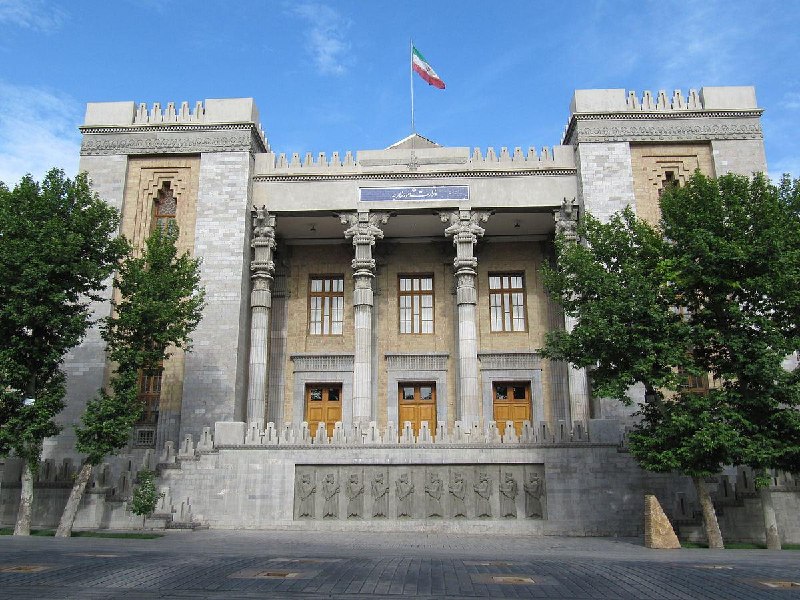
At 05:40 UTC on 13 July 2026, the US command said "dozens of targets were hit by precision-guided munitions to weaken Tehran." By that hour, Iranian state media had already reported a fresh civilian death in the country's southwest, the toll of a campaign neither capital has been willing to name a ceasefire for.
The exchange has hardened into a rhythm. Iran's army public relations announced continued drone operations against US bases in the region, framed by Tehran as retaliation for repeated "illegal attacks" by Washington. Hours later, US aircraft pressed a new wave into the Islamic Republic. The escalation is no longer a single night's operation. It is a running duel, with each side citing the other's last strike as the justification for the next.
The shape of the fight has begun to matter more than its trigger. US commanders are describing the campaign in the language of attrition: dozens of targets, precision-guided munitions, weakening rather than decisive blows. Iranian outlets are describing it in the language of survival: a civilian killed in the southwest, four others wounded, drones still in the air. Both sides are calibrating their rhetoric for a war of definition as much as of ordnance.
The American framing: weakening, not occupying
The US phrasing on 13 July was deliberately narrow. Precision-guided strikes on dozens of targets, US Central Command told reporters, were intended "to weaken Tehran," not to collapse its command structure or roll back its air defences in a single blow. That wording borrows from counter-ISIS vocabulary, where a long attritional air campaign eventually degraded a non-state adversary. Iran is a state, with the air-defence density, dispersed basing and missile stockpiles that implies. The American public case is being built around the idea of a long, slow contest in which the Iranian calculus changes through cumulative loss rather than a single knockout.
The choice of language matters. "Weaken" leaves open the question of what comes after the strikes; it also lets Washington avoid the political cost of an open-ended land campaign. CNN reporting, summarised by Al-Alam at 06:45 UTC, warned that the United States will bear the military costs of a sustained war with Iran, a calculation that frames the strikes as a budget problem as much as a battlefield one.
The Iranian framing: targets inside the country, casualties inside the country
The Iranian counter-case is built on a different geography. Iranian state media, carried in the 05:26 UTC bulletin from The Star Kenya's wire feed, reported that a fresh US strike killed one person in southwestern Iran and wounded four others. That is a small number against the scale of a country of 90 million, but the symbolism is large. Strikes inside the Islamic Republic, on Iranian soil, are no longer a possibility to be warned of. They are happening, and the dead have names that Iranian outlets are now obliged to publish.
Iran's army public relations has, in parallel, claimed continuing drone operations against US bases across the region. The Ruptly alert at 05:40 UTC noted the parallel track: a US strike wave overnight, an Iranian drone campaign against US positions around it. The Iranian message is that the campaign is reciprocal, that bases in the Gulf are in range, and that the US cannot raise the cost on Iranian soil without absorbing cost on its own. The same bulletin carried the US claim of dozens of targets struck; the Iranian claim of drones in the air against US installations. Both claims sit in the same Telegram window, twelve minutes apart.
What the strikes are actually striking
US commanders have not, in the materials available, released a target list. "Dozens of targets" is a count without a map. That gap is the most consequential uncertainty in the public record. In previous US campaigns against Iranian proxies and the IRGC, target packages have tended to combine air-defence nodes, command-and-control facilities, weapons-storage sites and, less often, the oil-and-gas infrastructure that would deliver immediate economic pain. Iranian state media's report of a southwestern casualty suggests a strike that hit, or hit near, a populated area; southwestern Iran borders the Gulf, and the Khuzestan plain contains both petrochemical facilities and the long-running revolutionary political geography of the country's oil region.
The energy consequence is structural rather than incidental. Even a single successful strike on a Gulf-side facility tends to push risk premia through the wider region. Insurers reprice war-risk cover, shippers route around the Strait of Hormuz, and refiners start to look at whether Saudi or Emirati spare capacity can compensate. The fact that the strikes are described as "weakening" rather than decisive, and that the targets remain unspecified, leaves open the question of whether the campaign is being deliberately held below the threshold that would tip Brent into a sustained move higher. That is a policy choice as much as a military one.
The counter-narrative: a slow war is still a war
The American argument is that precision, patience and target discrimination will degrade Iranian capabilities without producing the casualties or the regional blowback that an invasion would. The counter-argument is that a slow war is still a war, with its own compounding costs. Each round requires a political case at home. Each round requires a defensive posture across US bases in the Gulf. Each round gives Iran a fresh justification for its drone and proxy campaigns, and a fresh audience, inside the country and out, for the claim that the Islamic Republic is under existential attack. A campaign designed to avoid becoming a war has, by 13 July, produced a casualty count, a wave of overnight strikes, and a US commander on the record describing the operation in terms that will run for as long as the warheads last.
The CNN framing, carried by Al-Alam, is the version of that argument that is most likely to land in Washington: a long attritional campaign against a state adversary, with all the costs of basing, munitions and the political cost of patience, will compound. That is the structural risk for the White House, and it is the one Iranian state media is most keen to amplify. The contest on Telegram at 05:40 UTC, with the American "weaken Tehran" line and the Iranian "four wounded in the southwest" line sitting side by side, is in miniature the political contest for what the war means.
What remains contested
Three things are still genuinely uncertain in the public record. First, the target list. "Dozens" is not a map, and without it the distinction between a military campaign and an economic one cannot be drawn from open sources. Second, the casualty count. Iranian state media reported one dead and four wounded in a single southwestern strike on the morning of 13 July; that is the figure on the wire as of the 05:26 UTC bulletin, and the figure is, by Iranian government's own reporting, going to grow as more is published. Third, the Iranian drone campaign against US bases, which Iran's army public relations has claimed is continuing. Ruptly's 05:40 UTC alert carried the claim without independent verification.
What is not in dispute is that the exchange is now multi-day, multi-axis, and being described by both sides in the language of a campaign rather than an incident. The next test is whether the overnight strikes of 13 July mark a step-change in the US target package, or simply the latest turn of a deliberate slow wheel. The wire has not yet said. Tehran says the night has produced more dead. Washington says the night has produced more weakened. Both will be true at the same time, and the gap between the two readings is where the next decision will be made.
This publication has been more cautious than the wire in two respects: we have not adopted the Iranian state-media casualty figure as a confirmed tally, only as the figure on the wire as of 05:26 UTC on 13 July 2026; and we have not described US strikes as targeting any specific facility, since the target list has not been released in the materials we have read.
Wire provenance
This editorial synthesis draws on the following public wire/social posts:
- https://t.me/TheStarKenya/
- https://t.me/ruptlyalert/
- https://t.me/alalamfa/