Ukraine keeps pounding Russian refineries as Moscow runs low on patience and partners
Three Telegram dispatches from Tehran-aligned wires on 13 July 2026 describe Ukrainian drones hitting oil sites in Stavropol, Krasnodar and the Volga. The story underneath is bigger than one night of strikes.
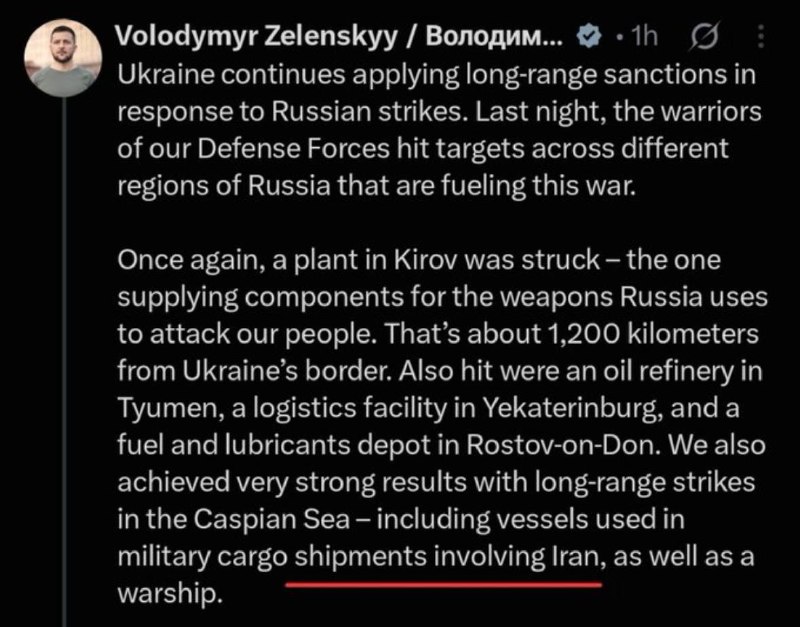
On the night of 12–13 July 2026, three separate Telegram channels with direct ties to the Iranian state press apparatus carried near-identical reporting on a single operational theme: Ukrainian drones struck oil facilities in Russia's Stavropol and Krasnodar regions, and a separate Ukrainian media report described a long-range strike against a refinery in the Volga city of Syzran. The Iranian state-aligned outlets Tasnim and Fars both pushed English-language versions of the story within minutes of each other in the early morning UTC window. Tasnim posted at 09:32 UTC; Fars followed at 09:33 UTC; a third Tasnim English thread at 09:33 UTC restated the same Stavropol and Krasnodar framing. The clustering is itself part of the story.
Ukraine's campaign against Russian downstream energy has stopped being a sideshow. What once read as symbolic retaliation now reads as a sustained effort to degrade the revenue base that funds the invasion, and the choice to surface those strikes through Iranian channels signals where Moscow is losing the information contest it thought it had won.
The strikes as the wires reported them
According to Tasnim's English service, oil facilities in the Stavropol and Krasnodar regions were targeted overnight in what the outlet described as a continuation of "Ukraine's insistence on attacking the Russian energy infrastructure." The Fars News International account, posted six minutes later, added a separate strike the outlet attributed to a "Shaban drone" against a large Russian refinery in Syzran, citing Ukrainian media including the Kyiv Independent. Syzran sits on the Volga in the Samara region, more than 800 kilometres from the nearest Ukrainian border.
The structural point is not which specific tank or column was hit. It is that three Iranian-aligned English-language wires are now amplifying Ukrainian battlefield communications inside the first ninety minutes of a strike window, faster than many Western wire services bother to file a frame. Information routing has shifted; the read-back of the war is no longer the monopoly of the side doing the bombing.
Why Moscow's downstream matters
Russian federal budget revenues remain heavily exposed to hydrocarbon export taxes, even after two years of sanctions adaptation and price-cap enforcement. Refineries that feed domestic fuel markets and process crude into exportable products are a distinct vulnerability from upstream wellheads, because each lost barrel of diesel or naphtha output is one the Treasury cannot tax at the well. Strikes on refineries therefore bite twice: they trim the volumes available for export, and they raise the political cost of fuel shortages inside Russia itself.
Stavropol and Krasnodar sit in Russia's deep south, comfortably outside the range of most first-generation Ukrainian strike drones. The geography of the overnight operation implies the use of longer-range systems or staged routing through intermediate launch points. The Syrian-routed and domestically produced long-range drone programme that Ukraine has scaled over the past year is the most plausible explanation, though the sources do not specify the airframe used.
The Iranian-channel tell
That Tasnim, Fars and a second Tasnim wire pushed the story in English, with nearly identical framing, is the kind of detail that gets filed as colour but functions as evidence. Iranian state-aligned outlets do not amplify Ukrainian battlefield claims by default; their house style during the war has been to platform Russian talking points and to underplay Ukrainian operational successes.
Three plausible explanations sit in front of this publication. First, the strike picture is dramatic enough that even Iranian editors find it newsworthy on its own merits. Second, Moscow asked Tehran to push it, presumably to harden a domestic-Russian audience that the war is being waged against Russian civilians, not Ukrainian ones. Third, the Iranian outlets are running a parallel agenda of their own: positioning themselves as alternative English-language wires for audiences in the Global South who are sceptical of the Western wire consensus.
The most likely read is that all three are partially true, and that the speed of the posting reflects how cheap drone footage has become as a viral commodity. A 30-second night-time infrared clip moves through Telegram before any verification step runs, and the wire work that follows is amplification, not reporting.
What stays uncertain
The Telegram reporting does not specify the scale of damage, the identity of the specific facilities hit, or whether any of the strikes triggered fires, shutdowns, or production losses. There is no Ukrainian General Staff briefing in the source set confirming operational details. Ukrainian media cited inside the Fars thread, including the Kyiv Independent, are reporting the strikes; Russian emergency services have not, on the basis of these sources, confirmed casualties or output losses. Until independent verification from Russian regional officials or satellite-based commercial imagery arrives, the strike claim is best treated as plausible-but-unconfirmed.
The Syzran strike is the more interesting of the two because of distance. A successful long-range strike on a Volga refinery would push the operational ceiling of Ukraine's drone campaign noticeably west and would complicate Russian air-defence allocation across an enormous interior. It would also raise, again, the question of who manufactured the airframe and how it was routed. None of those answers is in the source material in front of this publication.
Stakes
If the overnight reporting holds, the political consequence inside Russia is a slow, grinding pressure on fuel availability that compounds with every successive strike. The political consequence for Ukraine is the steady establishment of a strategic premise that Western capitals will eventually have to either fund or accept: Kyiv has the means to degrade the Russian war economy without Western-supplied long-range missiles, and is choosing to use those means. The choice to keep doing so, week after week, is itself a signal about Kyiv's negotiating posture.
Watch the next 72 hours for two things: a Russian federal emergency-services statement that names specific facilities and casualty figures, and the first Ukrainian General Staff evening summary that confirms or denies the strikes. If both line up, the overnight reporting will turn into the next entry in a long ledger. If only the Iranian wires carry the story by Wednesday, treat it as the kind of fog-of-war artefact that drone footage has made routine.
This piece was framed by the desk as a war-economy story, not a battlefield dispatch. The interesting question was not the night-time footage but the routing of the story through Iranian channels and what that tells us about the shifting map of who counts as a credible English-language wire in 2026.
Wire provenance
This editorial synthesis draws on the following public wire/social posts:
- https://t.me/JahanTasnim
- https://t.me/tasnimnews_en
- https://t.me/FarsNewsInt