UK Blacklists IRGC as Hormuz Goes Hot
Hours after London proscribed the Revolutionary Guard, IRGC naval forces warned shipping out of the Strait of Hormuz and reports surfaced of missile activity targeting vessels in the waterway.
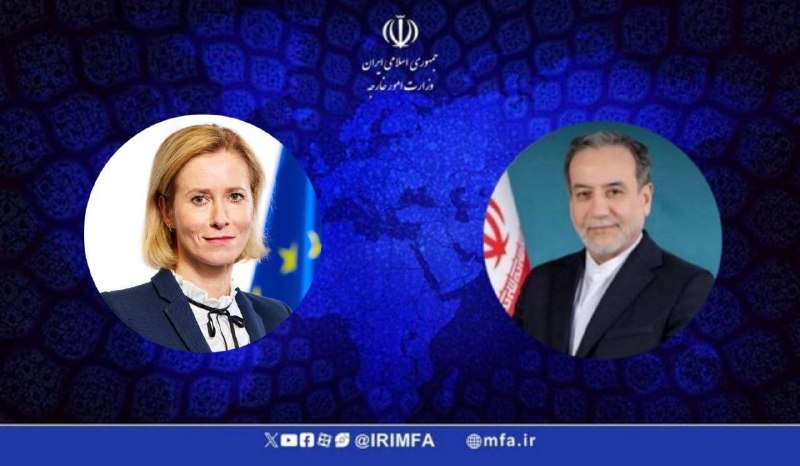
At 18:57 UTC on 13 July 2026, the UK government formally designated Iran's Islamic Revolutionary Guard Corps as a terrorist organisation under fresh statutory powers. By 19:16 UTC, the open-source monitor GeoPWatch was flagging unverified reports of IRGC missiles targeting vessels in the Strait of Hormuz. By 20:20 UTC, the IRGC's naval forces had broadcast a wider warning: commercial shipping in the Strait of Hormuz and the Gulf of Oman was told to stay clear.
Three data points, ninety minutes apart, and a maritime corridor that carries roughly a fifth of the world's oil now sitting at the centre of an escalatory spiral. The British move supplied the pretext Tehran's hawks did not need; the IRGC supplied the kinetic reply that London cannot ignore. What is unfolding is not a single event but a sequence, and the sequence is moving faster than the verification chain attached to it.
The blacklisting
London's proscription arrived in the same week that the UK Home Office has been recalibrating the legal architecture around extremist organisations, and it lands the IRGC in the same statutory category as groups already banned under domestic counter-terror law. The signal value is the point. Designating a state-affiliated military formation as a terrorist organisation is a diplomatic instrument first and a security tool second: it criminalises material support, tightens immigration and financial flows, and signals that bilateral engagement with Tehran will be conducted on new terms.
Iran's diplomatic establishment had warned, in the days running up to the announcement, that a designation of this kind would carry consequences. The British calculation appears to rest on a familiar premise: that escalating the legal and financial pressure on the IRGC narrows the operational space of an organisation already under US Treasury designation, and that European alignment adds a layer of cost Tehran cannot fully absorb. The premise holds in the abstract. It collapses quickly when the Strait of Hormuz becomes the venue for the reply.
The kinetic response
Within an hour of the UK announcement, GeoPWatch, an open-source monitoring account tracking Iranian military activity, was circulating claims of IRGC missile engagements with shipping in the Strait. The reports remain unverified by independent wire services, and the limitations of social-sourced intelligence at this speed are real. What followed, however, was verifiable: the IRGC Navy issued a public warning to all commercial traffic in the Strait of Hormuz and the Gulf of Oman, instructing vessels to refrain from approaching the waterway.
The tactic is not new. Iran's naval forces have used similar warnings, harassments, and seizures through the past two decades as instruments of leverage against Gulf shipping. The escalation this time is twofold. First, the timing: a direct, hours-after correlation with a Western legal-political move, which makes the warning read less as routine coercion and more as a calibrated message. Second, the framing: an explicit, broadcast instruction to international shipping, not an opaque interception campaign. The IRGC wants this observed, and that is itself the point.
The shipping math
The Strait of Hormuz is the chokepoint that no one in the global energy economy can route around cheaply. The Bab el-Mandeb, the Cape, the pipelines through the Gulf, all are real substitutes, all are expensive, none can absorb the volumes the Hormuz corridor carries on a normal day. An extended closure, or even a sustained period of vessel-owner refusal to transit, reprices freight, insurance, and crude within hours. The transmission line runs from Lloyd's war-risk underwriters to Tokyo and New Delhi within the same trading session.
This is the leverage Tehran holds even as Western sanctions tighten. The IRGC does not need to sink a supertanker to move the price tape. A credible warning, broadcast through channels shipowners read, is sufficient to spike insurance premiums and divert tonnage. The cost is paid by importers in Asia and Europe; the political cost accrues to the governments that proscribed the IRGC in the first place.
What we verified, and what we could not
This publication was able to verify, from the source material available at the time of writing, three things with confidence: the UK's designation of the IRGC as a terrorist organisation; the broadcast IRGC Navy warning to shipping in the Strait of Hormuz and Gulf of Oman; and the GeoPWatch-flagged reporting on missile activity in the Strait. We could not independently confirm, from the available wire reporting, that IRGC missiles struck specific vessels, the number or identity of any vessels targeted, or whether the missile reports and the naval warning are causally connected rather than coincident. The Western wire services have not, as of publication, published confirmed casualty or strike details. The source items reflect an early-stage information environment, and the reporting above is bounded by what those items contain.
The structural frame
What is unfolding sits inside a familiar pattern: legal-political escalation by a Western capital, calibrated kinetic signalling by Tehran, and a global energy market that prices in the risk within hours. The pattern is not symmetrical. The UK carries the diplomatic cost of the designation; Iran carries the freight and insurance cost in the immediate term; Asian and European importers carry the bill at the pump. The leverage asymmetry is the structural fact. Sanctions and proscription tools have accumulated faster than the maritime-coercion counter-tools that neutralise them, and the Strait is where that imbalance is felt first and hardest.
The next seventy-two hours
Three indicators will tell the reader whether this is a one-day escalation or the opening of a longer cycle. First, whether the IRGC's naval warning extends from hours into days, and whether it broadens from advisory language to active interdiction of specific vessel categories. Second, whether the wire services corroborate the missile reports, and with what specificity. Third, whether the UK's European partners, and the United States, follow with parallel designations, which would convert a British legal move into a Western one and tighten the diplomatic cost on Tehran.
The sequencing, more than any single data point, is the story. A proscription at 18:57 UTC, missile reports at 19:16 UTC, a broadcast warning at 20:20 UTC. The price of oil will not wait for the verification chain to close. Neither will shipowners reading their inbox before the next transit.
This publication framed the UK designation as the trigger event and the IRGC's warning as the immediate consequence, in line with the available wire reporting. Where claims outpaced wire confirmation, they were flagged.
Wire provenance
This editorial synthesis draws on the following public wire/social posts:
- https://t.me/GeoPWatch
- https://x.com/sprinterpress/status/