Trump declares a US "guardian" role over the Strait of Hormuz, with a 20% levy on shipping
On 13 July 2026, Donald Trump announced a reinstated naval blockade on Iran and framed the US as the permanent "guardian of the Strait of Hormuz," with a 20% duty on passing ships. Iranian outlets read the move as a long-term basing strategy, not a sanctions tool.
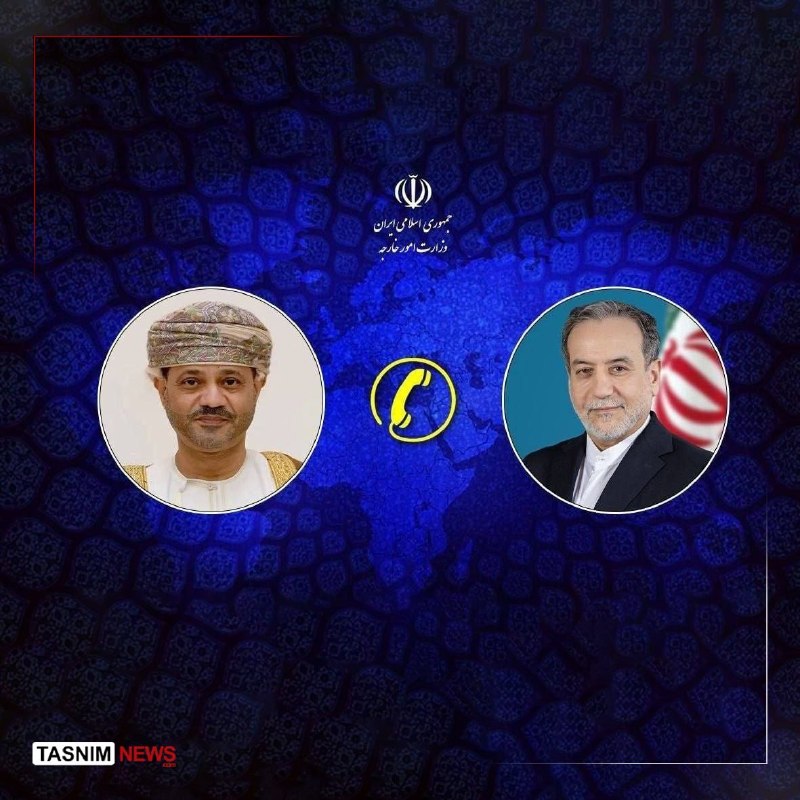
At 14:29 UTC on 13 July 2026, US President Donald Trump announced that America would henceforth be known as the "guardian of the Strait of Hormuz," that a naval blockade against Iran had been "restored," and that the United States would charge a 20% duty on ships transiting the chokepoint, according to Iran's Fars News Agency wire. Eighteen minutes later, in remarks reported at 14:47 UTC, Trump declared that "the United States is taking control of the Strait of Hormuz," a phrasing echoed across Persian-language channels within the hour. The Strait, the narrow corridor between Iran and Oman through which roughly a fifth of global seaborne oil passes, had not been the subject of a sustained US naval blockade of this character in the post-1991 period; the language of "control," the explicit levy on third-country shipping, and the rebranding of the US role as "guardian" together amount to a unilateral claim on the world's most consequential energy waterway.
What is being proposed is not a sanctions regime in the customary sense, in which one state restricts its own firms and partners from dealing with another. It is a tolling arrangement on a transit lane that all maritime nations, including Iran's, depend on, enforced by a navy operating outside any treaty framework that Iran or the other littoral states have signed. Read together with the blockade language, it is closer to a customs station than to a blockade in name, but with the firepower of a carrier strike group behind it.
The announcement, in three messages
Three pieces of language circulated within a 26-minute window on 13 July. At 14:29 UTC, Fars News carried Trump's claim that the naval blockade of Iran "will be restored," coupled with the new slogan, "Guardian of the Strait of Hormuz", and the 20% duty. At 14:44 UTC, Fars published a commentary by contributor Mehdi Mujahid arguing that Trump had "finally admitted that his main goal is the permanent deployment of the US war fleet in the Strait of Hormuz and collecting fees from passing ships," an interpretation that recasts the move as a basing strategy. At 14:47 UTC, the X account @sprinterpress posted the shortest of the three formulations: "Trump: The United States is taking control of the Strait of Hormuz."
The three are consistent in substance, even where their editorial registers differ. A blockade is, in classical maritime law, an act of war declared against one party's ports and shipping. A 20% transit levy, applied to vessels of all flags, is something else: a tariff on a public good that no single state owns. The phrase "guardian," borrowed from the older vocabulary of naval supremacy, suggests permanence rather than crisis response.
How Tehran is reading it
Iranian outlets have not treated the announcement as primarily about sanctions enforcement. Mehdi Mujahid's framing, that the underlying objective is permanent US fleet presence and toll collection, has been the dominant line in Persian-language commentary carried by Fars and Tasnim on the day. The Tasnim News channel, in a bulletin at 14:21 UTC, characterised the blockade restoration in adversarial terms and described Trump's claim that the Strait "is open and will remain open with or without Iran" as delusional. The choice of that adjective is itself a signal: Iranian state-adjacent commentary is positioning Iran as an indispensable actor whose acquiescence, or lack of it, will determine whether the waterway actually stays open. The US, in this reading, can call itself guardian; Iran can still close the tap.
That counter-frame matters because it points to the operational weakness of any unilateral US claim. The Strait is 21 nautical miles wide at its narrowest; its shipping lanes run along both the Iranian and Omani coasts. Iranian fast-boat forces, anti-ship missile batteries along the coast, and the IRGC Navy's swarm-tactics doctrine, demonstrated in successive seizure incidents since 2016, give Tehran instruments to make transit expensive without formally closing the corridor. A 20% levy on shipping only works if shipowners believe the US can keep them safe.
The structural shape
The claim to be "guardian" of a waterway that is also the territorial approach to another state's coast is older than the current Iranian dispute. The British Empire made a similar argument about the Strait for most of the twentieth century, and the UN Convention on the Law of the Sea, in force since 1994, was in part a multilateral answer to that arrangement. It recognises transit passage through straits used for international navigation, prohibits hampering such passage, and reserves to coastal states only a narrow set of jurisdiction. The 20% duty does not sit comfortably inside that regime, and no third-state flag has yet been named as having consented to it. The commercial shipping industry, through bodies such as the International Chamber of Shipping and the tanker associations in London and Athens, has not, in the materials available on 13 July, been heard from; their absence is itself a story, because the levy only becomes real when underwriters and charterers decide whether to pay it.
There is also a pricing logic to consider. If the levy is enforced at the Iranian-side or Omani-side approach, it effectively taxes the world's oil buyers on behalf of the US Treasury. If it is enforced in US ports or against US-flag vessels, it is far narrower than the rhetoric suggests. The distance between the announcement and the operational mechanism is where this story will live or die.
What the next week will tell us
Three things to watch. First, whether the US Navy publishes sailing directions or notices to mariners that codify the 20% figure, which would convert rhetoric into a billable regime. Second, whether Iran's IRGC Navy stages an interception or boarding of a tanker in the next seven days, which would test the gap between US "guardian" framing and Iranian counter-claim. Third, whether OPEC+ members and the largest Asian importers (China, India, Japan, South Korea) react through diplomatic notes or, more tellingly, by routing crude around the Strait via overland pipelines to the Gulf of Oman.
The sources do not specify whether any of these steps has been set in motion as of 14:47 UTC on 13 July 2026. The wire items consist of the three Iranian-language reports cited above and the @sprinterpress social post; no Western wire had, at the time these items were filed, carried an independent confirmation of the "control" language, the 20% figure, or the "guardian" designation. The announcement is, at this moment, an assertion from one party about its own future behaviour, met with a familiar assertion from the other that it cannot be carried out. What neither side has yet produced is the mechanism. That is the part that matters.
Monexus framed this as a unilateral US claim on a transit corridor, not as a sanctions story, because the levy and the "guardian" language operate on third-country ships rather than on Iranian commerce. Iranian commentary is presented in its own framing rather than as background colour, and the structural question of how a 20% transit duty sits against the international law of straits is named rather than glossed.
Wire provenance
This editorial synthesis draws on the following public wire/social posts:
- https://t.me/farsna/
- https://t.me/farsna/
- https://t.me/JahanTasnim
- https://x.com/sprinterpress/status/