Trump floats Iran drone presence in Cuba, orders new naval blockade hours later
Two announcements within five hours on 13 July 2026 put Tehran and Havana back inside the American electoral frame and revived a Cold War-era tool of economic warfare.
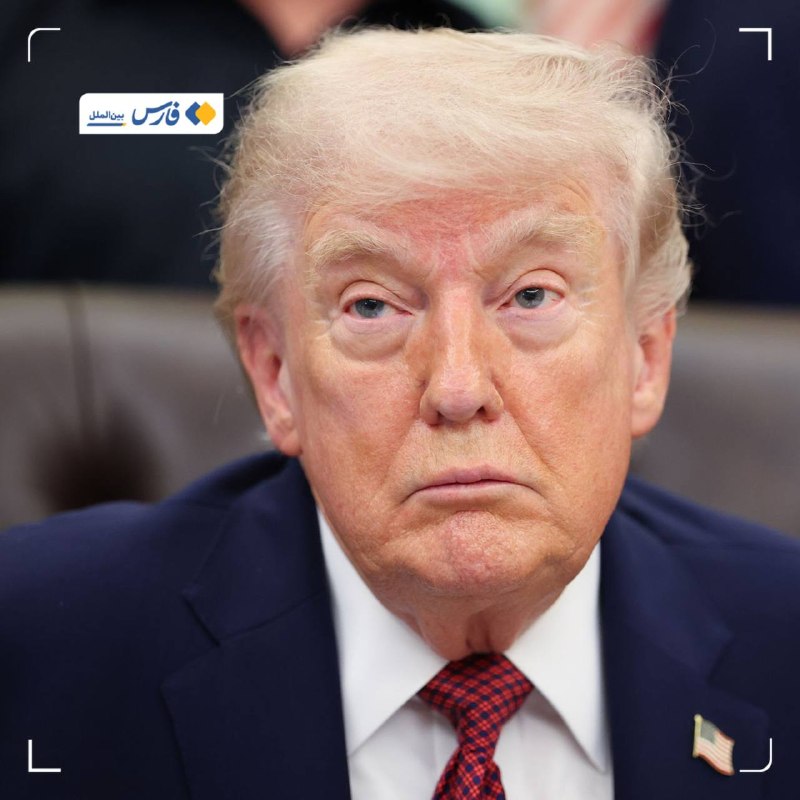
At 22:26 UTC on 13 July 2026, the prediction-market account @polymarket posted on X that Donald Trump had disclosed Cuban possession of Iranian drones. Roughly five hours earlier, the markets-focused account @unusual_whales had reported that Trump had announced the re-imposition of a US naval blockade on Iran, with the Axios scoop flagged in the same post adding that the measure could not yet take effect because of a statutory requirement to give shipowners twenty-four hours' notice. Two announcements, same day, same presidency, two of America's three formal antagonists: a reactivated Caribbean blockade framework and a fresh accusation tying Tehran to a platform 90 miles off the Florida coast.
The pattern is not a coincidence. Both moves fold into an administration logic in which military pressure on Iran, sanctions architecture, and the consolidation of hemispheric control reinforce one another. Each announcement also lands inside an election cycle in which Cuba policy and Iran policy are, for the first time in a decade, simultaneously live campaign material rather than background noise. The market signals are doing the same work as the policy signals: Polymarket and the Unusual Whales feed track both the probability of escalation and the political payoff of escalation in real time.
What was actually said
The Cuba-drone claim is the more provocative of the two because of where it is said to be happening. According to the Polymarket wire at 22:26 UTC, Trump asserted publicly that Cuba may be operating Iranian drones on its territory. The single-sentence alert frames the claim as presidential disclosure rather than an intelligence leak; the short form does not specify drone type, basing location, or the evidentiary basis Trump cited.
The blockade announcement, by contrast, is procedurally constrained. @unusual_whales reported at 17:01 UTC that Trump had declared the United States was reimposing the Iranian maritime blockade. The same post embedded an Axios reading: the blockade had not entered into force because federal statute requires a twenty-four-hour notice to shipowners before intercept operations can begin. That procedural gap matters. Until notice is published in the Federal Register and broadcast through the relevant maritime advisories, vessels flagged to Iranian ports retain legal cover to transit. The announcement is therefore a political event with a delayed military horizon.
Why the Cuba thread reads differently
The Cuba-Iran linkage has historical scaffolding. From the early 1980s through the George W. Bush administration, successive US governments have alleged Cuban-Belt-and-Road-adjacent intelligence cooperation with both Iran and North Korea. The Trump administration's accusation echoes those patterns: third-country logistical support for sanctioned regimes, with the Caribbean as a transit node. The geographic specificity raises the operational stakes for US Southern Command and the US Coast Guard Seventh District in ways that a Persian Gulf interdiction does not.
There is also an electoral read. Florida's Cuban-American vote remains a swing constituency, and a visible Cuba-Iran linkage gives an incumbent something concrete to point at in any August campaign push. The market reaction that the Polymarket post itself surfaces is part of the same cycle: prediction-market odds on escalation move with the announcement, the movement becomes a talking point, the talking point drives more coverage, and the cycle accelerates. That is the loop @polymarket is monetising.
The blockade as instrument
Maritime interdiction against Iran is not a new tool. The Trump administration used it heavily in 2019-2021 under a "maximum pressure" framework; the Biden administration softened but did not abolish it; sanctions enforcement on Iranian oil exports has continued under successive OFAC general licenses. The 17:01 UTC announcement re-imposes rather than invents, but the legal notice requirement cited by Axios suggests the administration wants a visible, dated launch that can be paired with a domestic message.
The procedural detail is also where the policy lives or dies. A blockade that lacks the statutory twenty-four-hour notice is, in US domestic-law terms, an unannounced expansion of executive authority over shipping. That is a story for maritime lawyers and importers of Iranian crude alike, and it is the angle Axios has flagged. For shipowners, the relevant question is when the Federal Register notice drops; for Tehran, the relevant question is whether the policy survives the inevitable Iran-filed challenge at the International Court of Justice, where the 2019-2021 blockade framework already produced provisional-measures orders.
What remains unresolved
The source material is sparse by design. @polymarket gives a headline claim about Cuban drones without specifying type, basing, or evidence; @unusual_whales confirms the blockade announcement and the Axios procedural caveat without naming the underlying executive instrument. Whether the Cuba claim is sourced from a US intelligence community product, a third-party partner, or a presidential assertion is not in the public record of either feed. Whether the blockade will move from announcement to operational status within the week, or whether the twenty-four-hour clock resets under legal challenge, is also unknown on 13 July.
What is clear is the convergence. Two announcements, same day, both targeting Iran, one of them extending the theatre of operations into the Caribbean for the first time in this cycle. The market data will firm up first; the operational data will follow once the Federal Register notice publishes and once any Cuban or Iranian official commentary surfaces. Until then, the Polymarket odds and the Unusual Whales tape are the most reactive source of truth on how the political market is reading these moves.
Monexus framed this as a paired announcement rather than as two isolated stories because the source wires landed within a five-hour window on the same day; the newswire consensus treats them as separate beats, but the temporal proximity and the shared Iran frame make the linkage the editorially responsible read.
Wire provenance
This editorial synthesis draws on the following public wire/social posts:
- https://x.com/polymarket/status/1944716621822038093
- https://x.com/unusual_whales/status/1944619284734775371