Trump reimposes Iran blockade, with a toll on ships, after third weekend of US-Iran firefights
A revived US naval blockade, and a transit fee Washington will collect on every ship passing Iran's coast, signals that the June ceasefire is now openly collapsing into a sequenced escalation.
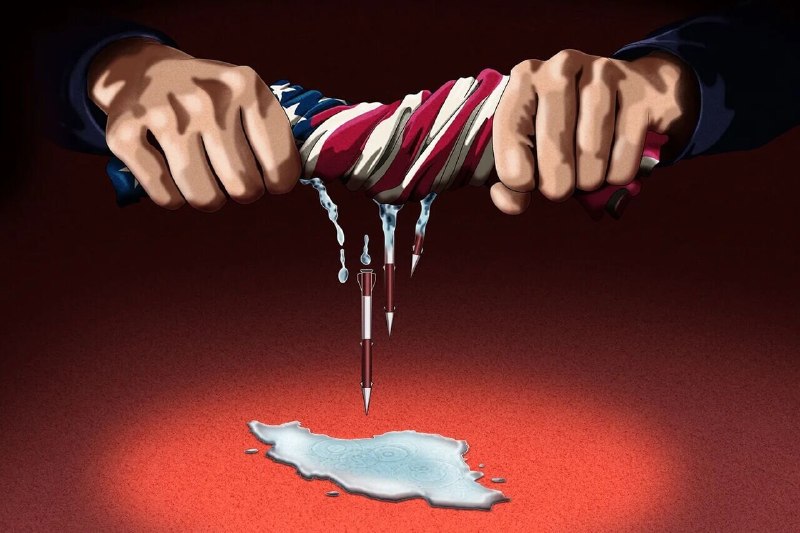
At 16:53 UTC on 13 July 2026, US President Donald Trump announced that Washington will reinstate a naval blockade on Iran and begin charging a toll on vessels transiting Iranian waters, escalating a confrontation that has now seen the two sides exchange fire for three consecutive weekends and bringing the fragile June ceasefire to its most public stress test yet. The move, reported by NPR, frames the next round of escalation as financial as much as military: a blockade sets the perimeter, a toll sets the price of passage, and both are designed to be visible to shipowners, insurers, and oil traders thousands of miles from the Persian Gulf.
What looked in June like a managed de-escalation is on track to become a sequenced blockade-and-toll regime, with the Strait of Hormuz again the operative chokepoint. The pattern is now familiar enough to name: a deal is reached in principle, a substantive clause is renegotiated in private, the renegotiation is publicly recharacterised by Washington as bad faith, and a coercive instrument is then layered onto the diplomatic wreckage. The question is no longer whether the ceasefire holds, but who pays the bill for its collapse.
What the US is actually announcing
Trump's statement, as carried in NPR's live coverage on 13 July, layers two distinct instruments. The first is a physical blockade: US naval interdiction of Iran-bound and Iran-flagged shipping, the same posture that defined the late-spring standoff before the June truce. The second is new and more pointed: a transit fee that Washington will collect on ships passing Iran's coastline, including the Strait of Hormuz, the narrow corridor through which a large share of seaborne crude moves.
The blockade is a tool of denial. The toll is a tool of revenue. Combining them turns a maritime cordon into something closer to a customs regime, with the United States acting as the collector. That is the part of the announcement that will land hardest in Lloyd's of London syndicate rooms and on the desks of charterers with cargoes already booked for mid-July loadings out of the Gulf.
The Iranian counter-frame
Tehran's information space is already producing its own version of the events. Mehr News, Iran's state-affiliated wire, published a video package on 13 July at roughly 16:00 UTC framed around the slogan "You are killing," recasting the blockade as continuation of an existing assault rather than a response to a recent breach. The framing is deliberately maximalist: it collapses the ceasefire, the spring standoff, and decades of sanctions into a single narrative of aggression, in which any US move reads as escalation regardless of sequence.
That framing has a domestic audience and a regional one. Within Iran, it gives the leadership room to argue that negotiation produced nothing of value and that resistance pays. Across the wider Shia-influenced press ecosystem, it positions the Strait of Hormuz not as a contested commercial corridor but as a battlefield, which raises the political cost for any Iranian faction inclined toward a quiet deal. Iranian state media's job here is not persuasion of Western audiences; it is closing the diplomatic exit door from the inside.
The deal that almost was
Trump's own account of the collapse, posted to his social channels on 13 July and aggregated by Unusual Whales, leans on a familiar construction: "We had a deal, and they broke it… Iran leaders are professional negotiators." The compliment is the warning. By calling Tehran's negotiators "professional," Trump is simultaneously legitimising their leverage and accusing them of using it.
The fuller version of the complaint, surfaced by Fox News and circulated by Polymarket at 14:29 UTC the same day, is more specific: Trump described an 11-hour meeting between US and Iranian officials in which "everything was agreed to," followed by Tehran opening late-stage demands on the Strait of Hormuz. The implication is that the breakdown was not over whether the deal existed but over what the deal was supposed to do to Iran's control of the corridor itself. If the US draft was an arrangement that left Hormuz transit rules substantively unchanged, and the Iranian counterdraft asked for formal recognition of Iran's right to regulate passage, then the blockade-and-toll package announced this afternoon is the American answer to the Iranian ask: not a negotiation, but a price.
A toll on whom, in practice
The political headline is Iran. The economic bill lands somewhere else. A transit fee is collected at the dock, the bank, or the insurance layer, and it is collected in dollars. Shipowners operating VLCCs out of Ras Tanura, Mina Al Ahmadi, and the UAE's Fujairah and Habshan terminals will be the first to see it, with the cost passed back to refiners and ultimately to consumers through fuel and feedstock prices. Insurers will rerate war-risk premia inside 24 to 48 hours of the announcement. Lightering operations, the workaround of last resort for cargoes too big to transit safely, will be repriced upward inside the week.
None of this requires a shot to be fired. The blockade sets the perimeter, the toll sets the price, and both do their work on the global freight market before any of it is tested in a ship's wheelhouse. That is the structural point of the design: coercion by ledger entry, not by shellfire.
What is not yet on the page
Several pieces remain unverified by the reporting available so far. NPR's account names the blockade and the toll but does not specify the fee structure, the enforcement zone, or whether neutral-flag vessels are inside its scope. The Iranian state-media counter-frame, in the Mehr News package, asserts continuity of aggression but does not name a specific retaliatory action. Trump's social-media remarks and the Fox report outline the diplomatic sequence but do not detail which clauses the Iranian side reopened. Any of these gaps, if filled, would materially change the read of where the escalation lands on the spectrum between signalling and war.
What the wire does establish, with uncomfortable clarity, is that the ceasefire as constructed in June has now been openly replaced. The instruments have changed; the parties have not.
Desk note: this publication has led with NPR's wire-level confirmation of the blockade and toll, then carried Iranian state-media framing as counter-claim rather than as primary frame, per house rule on adversarial sourcing.
Wire provenance
This editorial synthesis draws on the following public wire/social posts:
- https://t.me/mehrnews