Trump notifies Congress that fighting with Iran has resumed
President Donald Trump has formally notified Congress that hostilities with Iran have resumed, a step that admits the truce is breaking and unlocks the next escalation: a reinstated US naval blockade of the Islamic Republic.
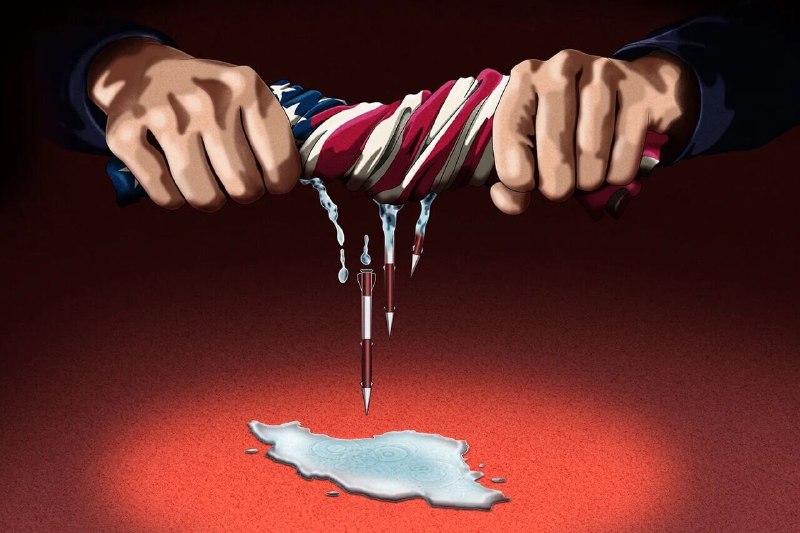
President Donald Trump notified the US Congress on 2026-07-13 that fighting with Iran has resumed, a formal acknowledgement that the brief truce between Washington and Tehran has given way to open hostilities. The notice, reported by The New York Times and picked up across social media within hours, is the procedural prelude to a far louder step: a reinstated US naval blockade of the Islamic Republic, announced the same day. The sequence closes the diplomatic off-ramp and reopens the Persian Gulf as the world's most combustible shipping lane.
The notification has two effects at once. As a War Powers communication it tells Capitol Hill that the armed confrontation which Washington and Tehran had paused earlier in 2026 is, in the administration's view, ongoing; as a political signal it tells Tehran, Gulf monarchies, Beijing and Moscow that the United States has judged restraint exhausted. The blockade announcement, carried first by prediction markets and then by presidential confirmation, turns that judgement into a kinetic fact: commercial tonnage in and out of the Strait of Hormuz becomes an enforcement target rather than a negotiating chip.
How the truce collapsed
For roughly six weeks after the May 2026 ceasefire understood by both governments, Iran's proxy network and US Central Command kept contact at the level of skirmish rather than campaign. That window narrowed steadily through June, then closed on 2026-07-13. The administration's notification to Congress does not specify which incident broke the spell, but it does name a category: combat operations have resumed. By sending the notice rather than convening a war vote, the White House is preserving the legal theory that hostilities below a fixed threshold do not require fresh authorisation. That theory will be contested on Capitol Hill within days.
The blockade order came hours later. Prediction markets had been pricing the probability of a Hormuz interdiction at well above 50 percent for a fortnight, and the order confirmed the bettors' read. A naval blockade is not a fig leaf: under US Navy doctrine it is a use of force against any vessel attempting to breach it, including third-flag tankers carrying Chinese, Indian or European crude. Tehran's response in past confrontations has been to lean on its own fast-boat and mining capability; the maritime insurance market has already begun to reprice.
The framing on the other side
Tehran's available counter-narrative runs through two registers. In the first, the cycle is Washington's to own: a maximalist posture replaced a working diplomatic track and now forecloses the talks Iranian negotiators had publicly requested in March. In the second, the blockade is a casus belli rather than a defensive move; it converts commercial traffic into a target set and pulls neutral shipping into the line of fire. Both readings are structurally coherent and have appeared in commentary sympathetic to Tehran. They will not, on their own, lift the sanctions pressure that the renewed fighting will trigger; but they will shape how non-aligned capitals, from Brasília to Jakarta, describe the confrontation in UN forums this autumn.
From the Israeli security establishment's vantage, the resumption is overdue: a regime that funds Hezbollah, supplies Houthi missile components and sustains the proxy constellation cannot be paused into quiescence. That framing, reflected in Jerusalem-based outlets and US think-tank commentary for years, treats every diplomatic lull as rearmament time for the other side and tends to favour kinetic answers. The Trump administration's notification reads as a vote of confidence in that reading, at least operationally.
What the blockade actually does
A reinstated US naval blockade of Iran is, in plain terms, an order to the US Navy to intercept commercial shipping headed to Iranian ports and to enforce sanctions by force of arms on the high seas. The legal scaffolding is the same executive-branch authority that underwrites the existing US sanctions architecture on Iran's oil exports: a layered web of Treasury designations and Department of Justice civil forfeiture actions, now extended with a naval interdiction layer. Comparable episodes include the 1980s tanker war and the 2019 deployment that followed attacks on Saudi oil infrastructure; in both cases oil prices spiked within seventy-two hours and third-flag operators quietly rerouted.
The structural pattern is familiar: Washington uses control of the maritime chokepoint and the dollar-based settlement system as leverage against an adversary whose revenue base sits upstream. Iran, for its part, has spent two decades building the instruments to push back: asymmetric naval units in the Gulf, mining capability, ballistic-missile coverage of Gulf bases, and a sanctions-evasion network run through the Persian Gulf's smaller ports and overland routes through the Caucasus. None of those instruments is decisive. Together they make a blockade expensive rather than illegal, which is why the order lands as escalation rather than as a routine enforcement action.
What to watch next
Three markers will tell whether the trajectory points to a contained quarantine or to a wider war. First, the language in any forthcoming War Powers Resolution vote in the House: Congress can cut off funding for unauthorised hostilities within sixty days, and the politics of that vote are now live. Second, the price action in Brent crude and the response of the Joint Maritime Information Centre in Dubai, which sets the insurance surcharge ceiling for Gulf transit; a doubling of the war-risk premium would confirm that underwriters read the blockade as operational rather than rhetorical. Third, Iran's first operational response: a tanker interdicted off Bandar Abbas, a mine laid near the Strait, or a Hezbollah-style strike on a US logistics node in Iraq or Syria.
What remains genuinely unknown is whether the administration's notification is the start of a campaign plan or the opening of a renegotiation window. Proponents of escalation will read it as the former; proponents of a follow-on deal will read it as pressure applied at the moment Tehran is most economically exposed. The blockade order and the Congress notice have not, as of 2026-07-13T20:19, ruled out either reading.
How Monexus framed this: the wire led on the political announcement in Washington; this piece tracks the same events but puts the maritime enforcement question at the centre, because a blockade is what actually changes risk pricing for everyone outside the bilateral exchange.
Wire provenance
This editorial synthesis draws on the following public wire/social posts:
- https://t.me/osintlive/1
- https://x.com/unusual_whales/status/1
- https://x.com/polymarket/status/1