Nine PM Eastern: Reading Trump's Prime-Time Address Before It Happens
A president reaches for the highest-visibility platform in American politics when he wants to define a moment before others do. On 13 July 2026, Donald Trump told the country he will speak at 9 PM Eastern on Thursday.
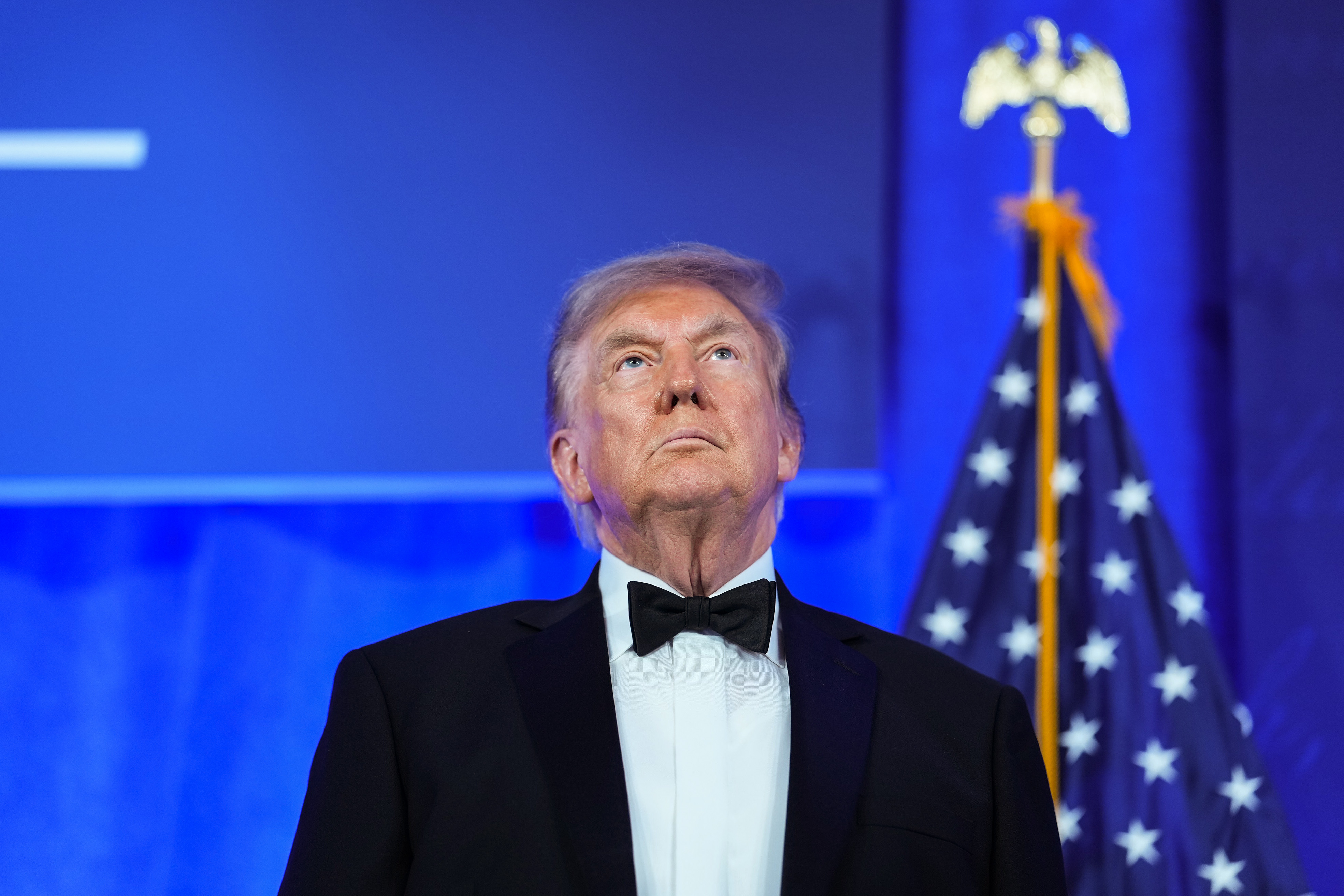
At 18:54 UTC on 13 July 2026, a short, declarative message began to propagate across the American political-media stack: President Donald Trump will address the nation on Thursday evening at 9 PM Eastern. The text itself was three lines long, signed "Trump," and ended with the phrase "Thank you for your attention to this matter!" Within seven minutes, the announcement had been re-posted by half a dozen accounts on X and Telegram, including an aggregator that pinned the timing as 9 PM ET and explicitly noted the topic was unknown. Polymarket, the prediction market whose traders profit from being right about exactly this kind of ambiguity, opened a contract on the address within the same window.
That is the entire news. There is no policy in the message, no statutory trigger, no foreign counterpart named, no dollar figure attached. What there is, instead, is a procedure: a president signalling that he intends to use the single most attention-concentrating instrument in American politics, the prime-time televised address from the White House, and the rest of the country being told to be in front of a screen roughly forty-eight hours from now. Everything that follows is the reading the announcement itself demands.
The clock, and what the silence around it costs
The text is short on detail and long on staging. The original Truth Social post, surfaced by Disclose.tv at 18:59 UTC, contains the address time and a courteous sign-off, nothing else. The Clash Report reproduction at 18:55 UTC preserved the exact phrasing, including the capitalised "Speech to the Nation." Insider Paper flagged it as breaking at the same moment. Unusual Whales, the markets-and-politics account, repeated the timing. GeoPWatch confirmed the 9 PM Eastern slot. Polymarket, finally, made the only honest contribution a market can make when the inputs are this thin: a contract opened, the topic explicitly marked unknown.
When a White House wants to maximise the address, it tends to telegraph the moment of speech but not the substance, because speculation is part of the product. Every hour between the announcement and the broadcast is an hour in which cable news fills with panel discussion, prediction markets adjust, opposition parties hold hurried conference calls, and the story becomes as much about what might be said as about what is said. The thirteen-minute window between 18:54 and 19:13 UTC, during which the announcement propagated from a single Truth Social post to six downstream aggregators, is the first lap of that process. The next forty-eight hours are the rest of it.
The relevant counter-frame is also structural: a presidential address from the White House is one of the few remaining broadcast events that can plausibly command a single shared audience across a fragmented media system. Network anchors will clear their primetime lineups. Streaming platforms will carry the feed. The address will compete with everything else on the timeline and, for roughly twenty minutes, win. That is the asset the office is cashing in, and it is non-trivial in a media environment where almost nothing else commands simultaneity.
What the wire is not telling you
The most striking feature of the available reporting is what is missing. None of the aggregators that carried the announcement on 13 July named a topic. None cited a White House official on the record. None quoted a press secretary. None pointed to a precipitating event: no military deployment, no natural disaster, no market dislocation, no resignation, no indictment. The prediction market's explicit "topic unknown" tag is, in this context, an honest disclosure rather than a hedge.
That absence cuts two ways. The first reading is procedural: the White House simply chose not to preview, a longstanding tactic for preserving the impact of the address itself. The second reading is more uncomfortable, and worth entertaining. It is that the staff and the principal themselves have not yet committed, in writing, to what the address will be about. Prime-time addresses have been used for genuine national inflection points (war declarations, major terror attacks, fiscal cliffs) and for political-theatrical exercises whose shelf life measured in news cycles. Both uses remain live possibilities here, and the available reporting does not yet let a reader distinguish between them.
The market's posture is illustrative. Polymarket's decision to open a contract on an address whose topic is officially undefined is itself a kind of editorial position: there is enough demand for prediction that traders will pay to bet on the content even without a stated frame. The traders are not claiming to know. They are claiming that someone else might know soon, and that the gap is itself tradable.
The instrument and its history
Presidential addresses from the White House are an old instrument, and one whose political weight has changed with the medium around it. In the network-news era, the prime-time address could credibly claim a single national audience in the high tens of millions. In the present environment, that audience share has thinned but the address retains a particular gravity: it is the only event the U.S. political system schedules in advance and treats as a piece of state communication rather than campaign output.
The office also retains the ability to make the moment bigger by withholding detail. Compare two patterns. When a president previews an address with the substance attached, cable producers can pre-load graphics, opposition leaders can pre-record responses, and the address itself becomes a referendum on a known proposal. When a president announces the time and not the topic, the address becomes the event, and the speculation around it does the work of amplification for free.
What is structurally new in 2026 is the speed at which an announcement like this propagates through non-broadcast channels. Truth Social is the originating surface. Telegram and X carry the rest. Within thirteen minutes of the original post, the address had been re-published by accounts that operate at the seam between news aggregation and political performance. By the time the actual broadcast begins, the prediction market will have produced a probability distribution on what the address is about, cable producers will have assembled two prebuttal packages, and opposition research shops will have assembled three. None of that machinery existed when the instrument was first invented.
What to watch between now and Thursday at 9 PM
Three signals will compress the uncertainty before the address itself airs. The first is a clarifying statement from the White House press office: a topic sentence, a triggering event, or a specific policy announcement tied to the address. Its absence over the next twenty-four hours would suggest the address is intended as theatre rather than legislation. The second is movement on Polymarket and comparable books: a tightening probability on a specific topic, or a drift toward "other," tells the reader whether the informed money believes there is a known payload. The third is counter-programming: an opposition address from a rival network or a competing prime-time slot by a senior congressional figure, which would indicate the address is being treated as a political event rather than a civic one.
The audience-side question is simpler. Will the address command a shared audience large enough to constitute the simultaneity the office is reaching for? The honest answer is that it will be measurable in overnight ratings, and that number, more than any line in the prepared text, will determine whether the instrument still works the way the office believes it does.
A final note on what remains genuinely uncertain. The announcement does not name a topic. The reporting does not name a topic. The prediction market has explicitly flagged the topic as unknown. Any piece written before the address airs that claims to know what the president will say is, by construction, speculating, and a reader who treats speculation as reporting is being misled by the format. The next substantive piece of journalism on this address will be the address itself, watched live, transcribed, and weighed against the silence that preceded it.
This publication noted the source material as a single Truth Social post propagated across Telegram and X aggregators within a thirteen-minute window on 13 July 2026; the wire did not preview substance, and this piece is built around the announcement itself rather than the content, which as of publication had not been disclosed.
Wire provenance
This editorial synthesis draws on the following public wire/social posts:
- https://twitter.com/disclosetv/status/2076743346593153473
- https://t.me/ClashReport
- https://t.me/insiderpaper
- https://t.me/GeoPWatch
- https://x.com/polymarket/status/207674000000000000
- https://x.com/unusual_whales/status/207673900000000000
- https://t.me/disclosetv