Strait of Hormuz under pressure as UK moves to harden Jewish-community policing
Explosions near the world's most important oil chokepoint coincide with London's £251 million community-safety package, exposing how two security stories are colliding in the same 48-hour news cycle.
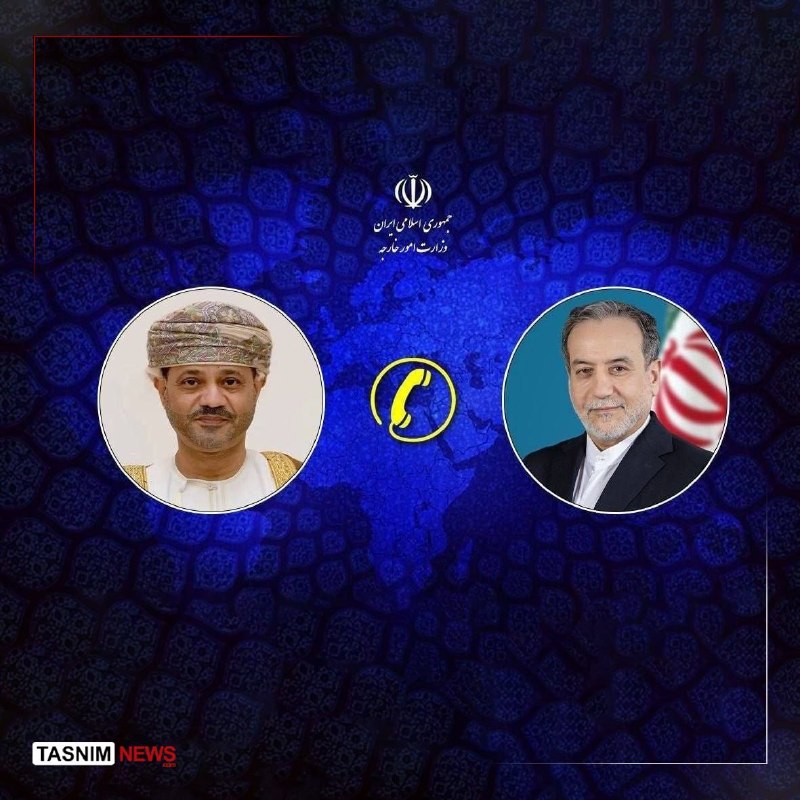
Explosions were audible near the Strait of Hormuz on the morning of 13 July 2026, according to a flash alert from the BRICS-affiliated Telegram channel BRICS News posted at 10:19 UTC. The report did not specify which side of the waterway the blasts occurred on, whether commercial vessels were caught in the incident, or which actor was responsible. It landed inside an already volatile 48-hour stretch for the corridor: US forces had, according to Axios, coordinated the passage of roughly twenty commercial vessels through the strait over the preceding day, and Oman had formally proposed splitting traffic into two separately controlled shipping routes.
Two security stories, set on opposite edges of the European and Middle Eastern news maps, are converging on the same Monday. The first is a military-and-trade crisis centred on a 39-kilometre strait through which a significant share of the world's seaborne oil moves. The second is a domestic-protection story announced by the British government: a £251 million package to help police forces guard Jewish communities against a documented rise in antisemitic attacks. Read together, they sketch a single picture of a security environment in which both state-level deterrence and community-level resilience are being repriced at speed.
The corridor under new management
The Hormuz picture is moving on three tracks at once. The first is kinetic. BRICS News's 10:19 UTC flash came after two days of escalating shipping anxiety, with the channel reporting the explosions without offering origin, target, or casualty information. The reporting environment around the strait is fragmented: the Telegram channel carried the alert, but no Western wire had independently confirmed an incident at the time the alert was posted. The standard for confirming such reports remains confirmation from the US Navy's Bahrain-based Fifth Fleet, regional coastguards, or commercial-vessel operators via the United Kingdom Maritime Trade Operations (UKMTO) portal.
The second track is escort logistics. Per Axios, the US military coordinated the transit of around twenty commercial vessels through the strait in the 24 hours before the BRICS alert. That figure, if accurate, indicates a sustained escort tempo rather than a one-off passage: it implies that commercial operators are now routing with the expectation of a protective naval bubble, and that insurance underwriters are repricing war-risk premia for voyages that do not have one.
The third track is traffic architecture. On 11 July 2026 at 19:02 UTC, a proposal attributed to Oman surfaced via the Polymarket wire: split Strait of Hormuz shipping into two separately controlled routes. The logic is the standard traffic-separation logic that already governs the English Channel and the Malacca Strait: separate inbound and outbound lanes reduce the chance of an accidental encounter, make enforcement legible, and concentrate naval escort duties. The proposal has not yet been adopted, and Muscat has not, on the evidence available, framed it as anything more than a starting point for negotiation with Tehran, Riyadh, and Washington.
The reading Tehran favours, and the reading Washington favours
Two framings of the Hormuz picture are now in circulation, and they are not reconciling. The first, more common in Western wire reporting, treats the recent activity as an Iranian-linked provocation: Iran-aligned forces probe or harass commercial shipping, the US Navy responds with escorts, and the cycle escalates. The second framing, more common in Iranian state-aligned media and in the BRICS-News-style Telegram ecosystem, treats the escort operation itself as the provocation, with outside naval power being projected into a transit corridor that ought to be policed by the regional states on its shores. Both readings are internally consistent, and the evidence at the moment does not adjudicate between them: UKMTO advisories over the past week would be the right starting place for a reader who wants to settle the question, and those advisories have not, on the source material available here, been published in the alert window covered by this article.
The honest framing is that the strait now operates inside an escort regime in which the US Fifth Fleet and partner navies are formally responsible for de-risking commercial transit, and Iran retains the capacity to make that transit expensive. Oman's lane-splitting proposal is best understood as the regional middle path: it would reduce both the volume of accidental encounters and the political charge of any single escort mission.
What London is buying
On 13 July 2026 at 09:57 UTC, BRICS News reported that the United Kingdom would release more than £250 million to help police forces protect Jewish communities in response to a documented rise in antisemitic attacks. A Polymarket wire 40 minutes later put the figure at £251 million and confirmed the destination: police budgets, not community organisations directly. The funding is a recognition that the threat picture for British Jewish communities has hardened enough to require a sustained, multi-year protective posture, not a one-off grant cycle. Antisemitic incidents in the UK had already been on an upward trend through 2024 and 2025, and the Community Security Trust, the principal Jewish-community safety NGO in the country, has documented the trajectory in its annual reports.
The political geometry is worth marking. The package lands while the British government is simultaneously under pressure on two files it would rather keep separate: the cost-of-living squeeze on local authority policing budgets, and the diplomatic cost of posture toward Iran. Funding visible protection for one specific community is, in the British context, a high-trust move: it assumes that the Treasury, the Home Office, and the police covenant can deliver without the package being read as either under-protective elsewhere or as ethno-religious reservation of public resources.
What it adds up to
The two stories are not the same story, but they rhyme. In the Gulf, the assumption that commercial shipping can transit the strait on commercial terms is being quietly retired; the escort regime is the new baseline. In Britain, the assumption that Jewish communities can be protected within ordinary local policing budgets is being quietly retired; a dedicated fund is the new baseline. In both cases the question being answered is the same: what does it cost to keep an exposed system operating, and who pays? The Hormuz answer is being written in naval task orders and insurance underwriter spreadsheets; the British answer is being written in pounds sterling on the Home Office's books.
The unresolved piece, on the evidence available, is the source of the explosions reported near the strait at 10:19 UTC. Until a Western wire, UKMTO, or the Fifth Fleet publishes a confirming advisory, the alert is a single-channel claim, and a reader should treat it as such. The lane-splitting proposal, in turn, is a negotiating instrument, not a fait accompli. Watch the UKMTO notice board and the Omani foreign ministry for the next data point; that is where the next material move will be visible.
Desk note: Monexus framed the two items in this wire together not because they are causally linked, but because they share a single underlying question about the price of operating in exposed security environments in 2026. The Hormuz section treats Iranian-aligned Telegram channels as primary sources for the explosion claim while flagging that the claim is unconfirmed; the UK section relies on the Polymarket wire for the £251 million figure rather than on a Downing Street press release, which the thread context did not include.
Wire provenance
This editorial synthesis draws on the following public wire/social posts:
- https://t.me/s/bricsnews
- https://t.me/s/bricsnews