The Strait of Hormuz just became the world's most expensive rumour
Six Telegram posts over two hours turned the world's busiest oil chokepoint into a contested claim. Each signal points to a different party trying to own the story before the water does the talking.
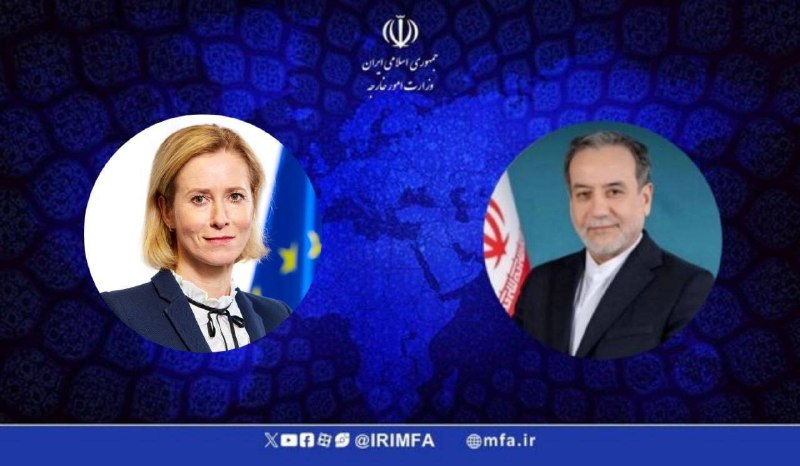
Six telegrams in ninety minutes. That is the entire evidentiary base for the most consequential maritime claim of the year so far.
At 11:29 UTC on 13 July 2026, a BRICS-affiliated channel pushed a Chinese Foreign Ministry demand that the Strait of Hormuz "remain open and safe for all commercial vessels." Twenty-five minutes later, an Iranian military-aligned handle declared the strait "completely closed." By 12:10 UTC, Reuters had begun broadcasting live vessel traffic imagery from the waterway. By 12:18 UTC, Euronews reported that Donald Trump claimed the United States was "taking control" of the strait. By 12:21 UTC, Fars and Tasnim were both pushing the same line from Tehran: withdrawal from managing the strait "has no place in the mind of any Iran-lover."
Within two hours, four governments had placed incompatible flags on a single stretch of water. Each signal points to a different party trying to own the story before the water does the talking.
Four claims, one chokepoint
The arithmetic of the Hormuz dispute is brutal. Roughly a fifth of the world's traded oil passes through a corridor twenty-one miles wide at its narrowest. Whoever sets the rules of passage effectively sets a global congestion tax.
Beijing's move, signalled at 11:29 UTC, was framed as defensive: free navigation for commercial vessels, no great-power carve-up. The language was carefully chosen. "Open and safe for all commercial vessels" is a position that even Iran's Revolutionary Guard could in theory sign, which is presumably why it appeared in the diplomatic register rather than the security register. China's own crude imports transit Hormuz; its refiners cannot absorb a sustained closure.
The Iranian military-aligned channel, by contrast, moved from claim to fait accompli in twenty-five minutes. "The Strait of Hormuz has been completely closed" is not the language of negotiation. It is the language of a fait accompli broadcast. Yet no independent confirmation of physical closure accompanied the post. No tanker association, no Lloyd's List, no AIS aggregator had, in the sources available, corroborated an actual halt to vessel movement.
What "taking control" means in practice
Trump's claim, carried by Euronews at 12:18 UTC, was the most legally provocative and the most operationally vague. "Taking control of the strait" is not a doctrine any US naval commander would recognise from a standing operations order. The US Fifth Fleet, headquartered in Bahrain, has long maintained the capacity to escort commercial traffic through Hormuz; it has done so under the rubric of freedom of navigation, not annexation. The phrase, as broadcast, lands somewhere between a deterrent signal and a campaign line.
This matters because the strait's legal status is unusually well-settled. It is an international strait under customary law, transit passage is guaranteed, and no coastal state has ever successfully asserted a closure regime that the rest of the world accepted. Iran's IRGCN has harassed vessels; it has not closed the corridor. The gap between "closed" and "harassed" is the gap between a casus belli and a maritime incident.
Counter-claim as information warfare
The Iranian response, quoted via Fars at 12:16 UTC and Tasnim at 12:21 UTC, is more revealing than the closure claim itself. Both outlets ran the same line attributed to a "reporter" and a "senior assistant informant of Qalab leaders" (Tasnim's translation appears to garble the institutional referent): withdrawal from management of Hormuz is unthinkable. The repetition is the message. Tehran is signalling to a domestic and regional audience that even a junior step back from brinkmanship is off the table.
Two things are notable. First, the line is being distributed through IRGC-adjacent outlets, not the Foreign Ministry, which suggests an internal-security audience rather than a diplomatic one. Second, the framing concedes that withdrawal is, in fact, an option someone has raised. The denial names the temptation.
The pattern underneath
Read in sequence, the telegrams trace a familiar template. A rising power (China) demands a norm be preserved. A revisionist state (Iran) declares a fait accompli. The incumbent hegemon (the United States) asserts unilateral control. The revisionist state then publicly forecloses the off-ramp it was implicitly offered.
The pattern recurs because it works for everyone in the short run. Beijing earns a reputation for defending global commons without spending a ship. Tehran demonstrates domestic resolve. Washington reminds every Gulf ministry whose fleet patrols the water. The tanker market, meanwhile, books a risk premium that has nothing to do with whether any vessel actually turned around.
The structural fact underneath is that the chokepoint is no longer a contested object so much as a contested narrative. The water remains open or closed regardless of the tweet stream. The freight rate, the insurance premium, the political alignment of the Gulf monarchies, and the energy strategy of every importer from Seoul to New Delhi all move on the narrative layer first, and the physical layer second.
What remains genuinely uncertain
The honest version of this story is that the source materials do not yet tell us whether any vessel has been physically stopped. Reuters' live broadcast, the only mainstream-wire item in the thread, shows traffic imagery but not a traffic halt. The closure claim originates with a single Telegram handle. The "US control" claim is a presidential utterance. The Chinese demand is diplomatic theatre. The Iranian counter-claim is internal signalling.
What we can say with confidence: four governments have, on the record within two hours, staked incompatible positions on a piece of water roughly twenty-one miles across. What we cannot say: that the strait is, in fact, closed in any operational sense that would justify the word. Until an independent maritime authority confirms a halt to commercial transit, the story is a contest over framing, not a contest over water.
The freight markets will price the framing long before the water decides.
How Monexus framed this versus the wire: the wire cycle is still treating Hormuz as a maritime story. We are treating it as a narrative contest with maritime consequences. The order in which claims are broadcast, Chinese demand, Iranian closure, US control, Iranian refusal, is itself the policy signal.
Wire provenance
This editorial synthesis draws on the following public wire/social posts:
- https://t.me/bricsnews
- https://t.me/IRIran_Military
- https://t.me/farsna
- https://t.me/euronews
- https://t.me/tasnimnews_en