Pretoria's diamond pause and Lagos's compensation bill: two tests of South Africa's economic weight
De Beers will idle the country's flagship diamond mine for two years, while Nigeria mobilises a compensation claim against Pretoria over the recent deportee episode. Both tests speak to who carries costs when African economies are pulled in different directions.
On 13 July 2026, two dispatches from Pretoria set the tone for a week that will test how much economic weight South Africa can still carry on its own terms. Anglo American's De Beers said it will pause production at South Africa's largest diamond mine for two years to absorb what it called persistently weak trading conditions. Hours earlier, the federal government in Abuja said it was collating the names of Nigerian deportees recently returned from South Africa in order to file a compensation claim that Pretoria has already ruled out. On the surface, the two stories sit in different ministries: mines on one side, foreign affairs on the other. Read together, they describe the same problem. South Africa is being asked to absorb external shocks in two of its most political economic relationships, and its room to push back is shrinking.
The diamond pause is the easier story to parse. De Beers announced on Monday 13 July that work at the country's flagship operation, the Venetia mine in Limpopo province, would be suspended for two years to cut costs while trading conditions remained tough, according to AfricaNews reporting. Venetia is South Africa's largest diamond mine. De Beers has been retrenching across its portfolio since 2024 as lab-grown stones have eaten into demand and as Anglo American has reshaped the group. The company has not said how many jobs will be affected at this stage, and the announcement does not by itself change ownership of the asset. What it does is remove a major source of high-grade production from the global rough-diamond pipeline for two years at a moment when Botswana, Angola and Namibia are all angling for more beneficiation and pricing power. The structural read is straightforward. A flagship asset is going quiet in the country with the continent's deepest capital markets and most diversified mining sector, while peers upstream and downstream reposition.
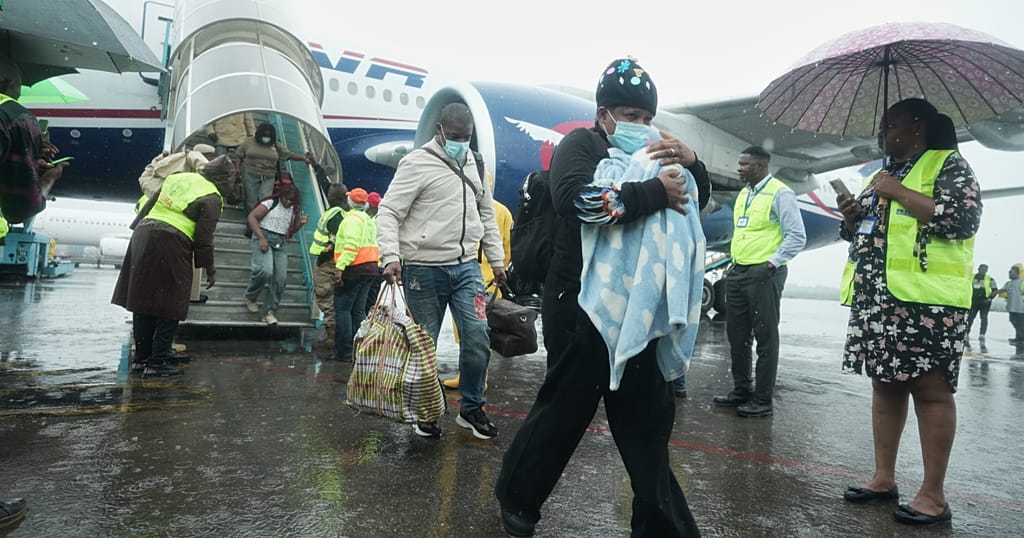
The Nigeria file is messier and more politically charged. AfricaNews reported that Nigeria is collating details of its citizens who recently returned from South Africa to use them as the basis of a compensation claim, something Pretoria has already said it will not entertain. The framing inside Abuja is that Nigerian migrants were expelled or mistreated in violation of bilateral protocols. The framing inside Pretoria is that border enforcement falls inside South African sovereignty and that compensation is not on the table. Both governments are speaking in the language of their own domestic audiences: Abuja wants to demonstrate that it can defend citizens abroad; Pretoria wants to demonstrate that it will not be invoiced for routine immigration enforcement. The dispute is also being read inside South Africa as a stress test of the country's standing in West Africa, where Lagos has spent the last five years positioning itself as the continent's diplomatic and commercial hub. A compensation claim against a fellow African heavyweight is a deliberate instrument.
Two parallel shocks, one structural problem. South Africa remains the continent's most industrialised economy, but its bargaining leverage is being pulled in two directions at once. On the commodities side, it sits inside a global rough-diamond market where demand from the major cutting centres in Surat and Antwerp has cooled and where De Beers itself is contractually reducing its stockpile commitments to Botswana through the 2031 sales agreement. On the migration side, it is caught between a domestic electorate that wants tighter borders and a regional partner that treats any expulsion as a diplomatic incident. The combination is a kind of squeeze: the mining ministry is asked to absorb the cost of a multinational restructuring, while the foreign affairs ministry is asked to absorb the cost of a diplomatic fight it cannot easily afford. Coverage of these stories routinely splits them across desks, mines on one page, migration on another. They belong on the same page.
What is genuinely uncertain is how the compensation demand will be quantified. AfricaNews did not specify the figure, the class of deportees, or the legal vehicle Abuja intends to use. The sources also do not record any formal diplomatic note beyond the public statements of both governments. Nigerian officials have framed the episode inside the language of continental free movement, which is the right rhetorical register for a federal government trying to project pan-African standing but is also the slowest legal track available. Pretoria's flat refusal suggests it expects the dispute to fade in the regional press cycle, the way previous flare-ups between the two governments have. That calculation may hold for a quarter. It will not hold if Abuja ties the compensation claim to a specific bilateral instrument, including any review of visa regimes for South African diplomats and business travellers in Nigeria. The diamond pause, by contrast, is on a slower clock. Two years of idled production at the country's flagship mine is a planning problem for the treasury in Pretoria and for the contractors around Venetia, not a market shock on its own. The bigger question is whether De Beers's broader retrenchment is now structural rather than cyclical, and whether Anglo American's portfolio review leaves South Africa with fewer of the marquee assets that have historically anchored its mining revenue. The sources do not answer that question yet.
What is also worth saying plainly is that both stories will be read in the Global South through a frame the Western wire services tend to soften. A flagship mine going quiet in a mid-income African economy, while the operating multinational reduces exposure and the host state's royalties flatten, is a recurring pattern of the last decade. A regional power issuing a compensation claim against another regional power over the treatment of migrants is, similarly, the kind of intra-African friction that continental institutions were built to mediate. The AfricaNews dispatches carry both stories without the editorialising that often flattens them in the international press. That is the register this publication will hold.
Desk note: Monexus ran the diamond pause and the Nigeria deportee file as a single story because the structural frame is the same. Wire coverage has split them across commodities and migration desks, which obscures the leverage question.
Wire provenance
This editorial synthesis draws on the following public wire/social posts:
- https://en.wikipedia.org/wiki/Venetia_Mine
- https://en.wikipedia.org/wiki/De_Beers