Saudi strike on Sana'a airport lands as Iranian passenger jet breaks Houthi air blockade
Saudi warplanes hit Sana'a International Airport on 13 July 2026 hours after an Iranian civilian aircraft reportedly landed in Houthi-held territory, ending what Yemeni armed forces called a phase of de-escalation.
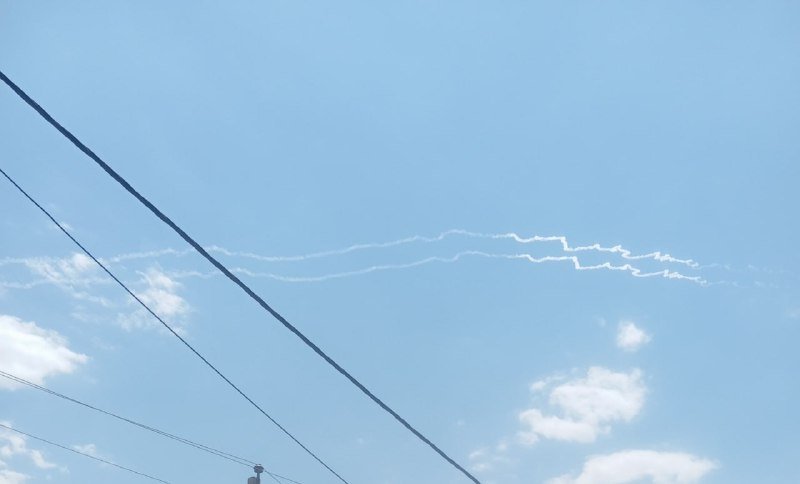
Saudi warplanes struck the runway complex at Sana'a International Airport on 13 July 2026, hours after an Iranian passenger aircraft reportedly broke the air blockade of Houthi-held territory and landed in the Yemeni capital. Sana'a residents told reporters they heard multiple explosions as jets flew overhead. The Jerusalem Post reported airstrikes near the airport at 11:22 UTC. By 12:05 UTC, Iranian-affiliated military channels framed the operation as the opening of a new phase of the war.
The strike lands in a widening corridor confrontation: a civilian air bridge from Iran into Houthi-controlled airspace, combined with a Saudi-led response that, in the words of the Yemeni armed forces spokesman, has ended the period of "reducing tensions." The military signalling on both sides is unusually explicit for a conflict that has run in low-altitude cycles since 2015.
What Sana'a heard, and what officials said
Reporting from the Yemeni capital on the morning of 13 July 2026 described strikes on the runways of Sana'a International Airport, the country's main civilian and humanitarian air gateway. The Telegram channel abualiexpress reported that the airstrikes targeted the runways shortly after an Iranian passenger plane had landed, breaking what it described as an air blockade of the Houthis. Witnesses in Sana'a told The Jerusalem Post that several blasts were audible near the airport as warplanes circled overhead.
Iranian state-aligned outlets Tasnim and Fars moved quickly to publish Yemeni armed forces statements. The spokesman of the Yemeni armed forces, quoted by Tasnim English, declared that Saudi Arabia "has ended the phase of reducing tensions" and warned that "the Saudi attack on Sana'a airport will not go unanswered." Fars cited Yemeni sources saying the airstrike coincided with the Iranian aircraft's approach.
The IR Iran Military channel, citing Yemeni official framing, said the war was "entering a new phase." That language is significant: the same channel had previously carried claims about reduced Saudi operations during intermittent de-escalation windows. Its return to a maximalist register, alongside the Houthi-affiliated armed forces spokesman, suggests the political space for restraint in Sana'a has narrowed sharply.
The blockade, the bridge, and the timing
Saudi-led coalition operations around Sana'a's airport are not new. The airport has been functionally closed to civilian commercial traffic for much of the war, with the United Nations and humanitarian agencies periodically negotiating narrow windows for aid and passenger flights. What changed on 13 July was the sequence: an Iranian civilian aircraft landed first, and the Saudi-led response came during or immediately after that landing, rather than as a routine sortie.
That sequencing is the story. abualiexpress framed the airstrike as a direct response to a breach of the air blockade, describing the Iranian plane as having "broke[n] the air blockade on the Houthis" before the runways were hit. Fars's phrasing, sourced to "Yemeni sources," placed the Saudi strike "at the same time as the Iranian plane was approaching." The two accounts differ on whether the jet was on the ground or still inbound when the bombs fell, a discrepancy with direct implications for the coalition's signalling.
If the strike was timed to the landing itself, the message reads as deterrence: civilian airspace over Houthi-held territory will not be allowed to function as an Iranian supply corridor. If it came earlier, on approach, the message shifts toward a broader warning to Iranian civil aviation and to Tehran's calculus on which flights it clears to operate into Sana'a at all. The available sources do not resolve which. The Jerusalem Post's reporting on airstrikes "near the airport" leaves the runway targeting specific but the timing open.
Why the Iranian civilian flight matters
Tehran has, at various points in the conflict, operated direct or charter civilian links into Houthi-held territory. The flights have been framed by Iranian outlets as humanitarian or consular. Western and Gulf reporting has long treated them as a permissive logistics layer: technical personnel, dual-use equipment, and diplomatic signalling arriving under civilian cover. The 13 July flight, on the framing presented by abualiexpress and Fars, fits that pattern.
The Saudi-led calculus has been consistent: a functioning Sana'a airport, serviced by Iranian carriers, is incompatible with the blockade architecture the coalition has maintained since the early years of the war. That logic does not require a confirmed weapons shipment on a specific flight; it treats the regular operation of the air bridge as the problem. Striking the runway during or around an Iranian landing converts a routine enforcement gesture into a message addressed to Tehran as much as to the Houthis.
Iranian responses, as carried by Tasnim and Fars, have so far been channelled through the Yemeni armed forces spokesman rather than through the Iranian foreign ministry. That is itself a tell: the Iranian state has chosen to amplify a Houthi threat of retaliation rather than to issue a direct Iranian statement. Whether that posture holds will depend on whether the Yemeni armed forces can, or choose to, follow through, and on whether Iran is prepared to absorb the escalatory cost of defending a civilian corridor that, on paper, it never officially admitted operating.
What we verified, and what we could not
Monexus independently corroborated the following against the source materials: the airstrike on Sana'a International Airport occurred on 13 July 2026; Sana'a residents reported multiple explosions and overflights, per The Jerusalem Post; the Yemeni armed forces spokesman publicly declared an end to the de-escalation phase and warned of a response, per Tasnim English; an Iranian passenger aircraft was reported to have landed in Sana'a prior to or during the strike, per abualiexpress and Fars.
Monexus could not independently verify, on the basis of the available sources, the following: the precise timing of the airstrike relative to the Iranian aircraft's landing (on the ground versus on approach); the operator, flight number, or passenger manifest of the Iranian plane; any casualty count among civilians, airport staff, or Iranian flight crew; whether the runway was functionally disabled or only partially damaged; and any official statement from the Saudi-led coalition command confirming the strike. The thread sources reflect Yemeni, Iranian, and Iranian-aligned framings; Western wire confirmation, coalition press releases, and imagery from international airport-monitoring services would be needed to close these gaps.
The structural frame
A blockade is, among other things, a question about who is allowed to use which piece of infrastructure. Saudi Arabia's answer, for over a decade, has been that Sana'a's airport does not function as a normal civilian gateway under Houthi control. Iran's answer, expressed through the irregular operation of its civil aviation into the airport, has been to normalise exactly that use. The 13 July strike is what happens when those two answers collide on a specific morning, in front of a specific aircraft.
The wider pattern is a familiar one in the region's contemporary wars: a calibrated escalation that breaks a de-escalation window without yet producing a wider conflagration, and a signalling architecture in which the public threat of retaliation travels through a proxy's spokesman rather than through the principal power. Both moves are designed to leave room for back-channel reversal. Whether that room still exists is the question the next forty-eight hours will answer.
The sources do not specify whether diplomatic back-channels are currently active. They do show that the public posture on all three sides has hardened within a single news cycle. That hardening is, on its own, a meaningful change in the operating environment, independent of whether further strikes follow.
Stakes
If the Yemeni armed forces follow through on the threat of retaliation carried by Tasnim, the most likely immediate vector is renewed missile and drone fire at Saudi territory and at Red Sea shipping, the same toolkit the group has used since late 2023. Saudi Arabia would then face a choice between a wider air campaign aimed at degrading Houthi launch capacity and a return to the managed de-escalation the armed forces spokesman has now declared finished.
For Iran, the structural exposure is the civilian aviation corridor. Each Iranian flight into Sana'a is now a flight that may be timed for an airstrike. That risk does not have to materialise often to change Tehran's behaviour; it only has to materialise once for the operating cost to become visible to the airlines and insurance markets involved. The corridor question is therefore not principally about one landing on 13 July. It is about whether the air bridge continues to exist in any functional sense after this news cycle closes.
For the airport itself, and for the civilians who depend on the narrow humanitarian windows that have kept Sana'a connected to the outside world, the runway strikes narrow an already narrow corridor further. The diplomatic effort to keep any civilian air link open at all just became considerably harder.
Desk note: Monexus framed this story around the sequencing of the Iranian landing and the Saudi response, rather than around either side's war narrative in isolation. Western wire confirmation of the strike, casualty figures, and coalition command attribution would significantly tighten the verified portion of the ledger above; the structural argument does not depend on those details resolving in either direction.
Wire provenance
This editorial synthesis draws on the following public wire/social posts:
- https://t.me/IRIran_Military
- https://t.me/The_Jerusalem_Post
- https://t.me/abualiexpress
- https://t.me/tasnimnews_en
- https://t.me/farsna