Saudi air defences engage ballistic missiles launched from Yemen
Coalition spokesman confirms Saudi Arabia faced an incoming missile threat from Yemen on 13 July 2026, the second such incident in under an hour according to regional channels.
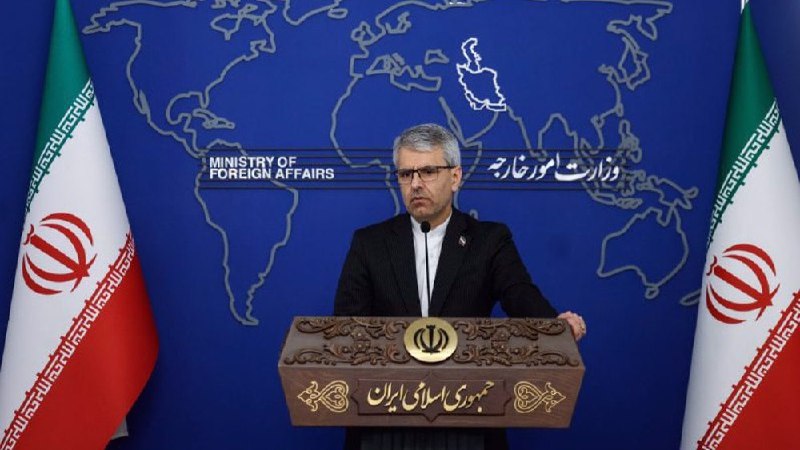
Saudi Arabia's air defences engaged ballistic missiles launched from Yemen toward the kingdom's southern region on 13 July 2026, the spokesman of the coalition led by Riyadh confirmed in a statement carried by Iranian outlets and regional correspondents at 17:12 UTC. The early framing came from the Yemeni side, where Reuters reporters in the area described launches toward southern Saudi Arabia roughly nine minutes later. By 17:48 UTC and 17:49 UTC, unverified accounts of an explosion inside Saudi Arabia were circulating on both Iranian and pan-Arab channels, including a brief, single-line Tasnim dispatch and an Al Alam Arabic "urgent" bulletin. The pattern fits a sequence now familiar in the Gulf: an initial launch report, a Saudi acknowledgement, then social-media claims of impact that the coalition has so far neither confirmed nor denied on the record.
What began as a wire alert about launches has, by mid-afternoon UTC, hardened into a recognisable propaganda contest between Houthi-aligned outlets, the Saudi-led coalition, and a Western wire that prefers to relay what is verifiable on the ground. Each side has its own incentives. Sanaa's missile programme presents itself as a sovereign deterrent. Riyadh wants its air-defence shield publicly credited. Tehran-aligned channels frame the event as proof that Saudi Arabia's war in Yemen has not bought it quiet skies. The truth of any single launch usually emerges only hours later, in fragmentary Saudi civil-defence statements or satellite imagery of a crater in the Empty Quarter.
What is actually on the record
Three discrete items of reporting are in the public ledger as of 17:49 UTC on 13 July 2026. The first is a Reuters report, carried by Al Alam Arabic at 17:21 UTC, that ballistic missiles were launched from Yemen toward the southern region of Saudi Arabia. The second is a coalition statement, surfaced by Tasnim at 17:12 UTC, that the kingdom's air defences had engaged the threat; the same wording was reflected in Al Alam Arabic's urgent bulletin. The third is a set of unverified claims from both Tasnim and Al Alam Arabic, filed within a minute of each other, that an explosion was heard inside Saudi Arabia. None of the three threads independently attributes the explosion to a direct hit, a debris strike, or a defensive intercept, and none of them names a specific city or province.
The missing details are the ones that determine the gravity of the event: target, weapon type, warhead class, interception outcome, and any ground casualties. Saudi civil defence has not, on the evidence available to this publication by the filing deadline, released a location, damage assessment, or casualty figure. Yemen's Houthi authorities have not yet claimed the launch on a formal channel that has been relayed by the wires in the items Monexus has read.
The frame the coalition wants
Saudi Arabia's preferred framing, visible in the coalition's wording as relayed by regional outlets, is that of an air-defence success: a threat detected, intercepted, neutralised, with the kingdom's territorial integrity preserved. That frame has a domestic audience and a Gulf-American one. Domestically, it reassures a population that has lived under intermittent missile threat since 2017. Regionally, it tells partners in Washington and Abu Dhabi that the multibillion-dollar air-defence architecture built up since the Abqaiq–Khurais attack of September 2019 continues to perform. The political utility of "we shot it down" is, in the Gulf, substantial.
That frame is not false; it is partial. The coalition's brief acknowledgement does not, by itself, confirm that a missile never reached Saudi soil. Defence interception statements typically describe the engagement; they do not, in the same sentence, confirm zero ground impact. Until civil defence publishes a location and an outcome, "engaged" is doing more rhetorical work than the underlying facts warrant.
The frame the Sanaa side wants
The Houthi-aligned messaging, when it arrives on a recognised channel, tends to emphasise range, payload, and political timing. Missiles aimed at the southern region of Saudi Arabia are aimed at the kingdom's economic heartland: Aramco's Abqaiq facility, the Shaybah oilfield, the airports that handle hajj traffic, or the southern military cantonments. Public Houthi statements since 2023 have typically coupled a launch claim with an explicit political condition: a demand to halt coalition strikes on Yemeni cities, or an assertion that any escalation will be answered. Whether today's launches came wrapped in such a statement is not in the source items this publication has read.
The Sanaa frame also relies on a longer structural argument: that eight years of coalition air operations, naval blockade, and ground pressure have failed to compel a political settlement on Houthi terms. Each successful launch, or even each successful launch attempt, is treated as evidence that the cost calculus has shifted. That argument has traction inside Yemen and among the movement's regional interlocutors in Tehran, Beirut, and Baghdad, and it is part of why Saudi Arabia is now publicly engaged in a parallel track of negotiations with the Houthis mediated in Muscat and Riyadh.
What the gap between the two frames leaves out
Neither frame addresses the question that matters most to civilians in both countries: what happens after the launch. A Saudi interception in the upper atmosphere can still produce falling debris that injures people on the ground; a Yemeni launch from inside a populated governorate exposes the launch crews and bystanders to Saudi and US counter-strikes that, since January 2024, have repeatedly killed Houthi officials and military figures. The missile exchange is, in this sense, a two-sided casualty regime: Saudi civil-defence exposure on one side, Yemeni launch-area exposure on the other. Neither coalition statements nor Houthi communiqués typically weight that symmetry.
The secondary media layer is also worth naming. Iranian state-aligned channels such as Tasnim and PressTV carried the coalition's confirmation almost in real time, with the implication that Saudi Arabia's own spokesman had validated the attack. The Saudi-aligned pan-Arab coverage, where it exists in the items reviewed here, is more cautious and tends to lead with the air-defence response. Reuters ran a single sentence on the launch and stopped there. The result is a three-track reporting environment: official claims from each side, partial confirmation from Western wires, and amplification by partisan outlets that frame the same event toward incompatible conclusions.
Stakes and what to watch next
If the past three years of Saudi-Yemeni exchanges are a guide, the next forty-eight hours will be decisive. Saudi civil defence will, if there was any ground impact, issue a localised statement naming a governorate, a city, or an industrial site. Houthi outlets will, if they intend to claim credit, publish a video of the launch and a statement naming the operational unit. Coalition air operations out of Al Kharj and the King Faisal air base will, if escalation is the chosen response, move into Yemeni airspace in a pattern visible on flight trackers within hours. None of those signals has, on the evidence available by the filing deadline, appeared.
The wider stakes sit at a level the wires rarely reach. Every missile exchange between Sanaa and Riyadh is read in Tehran as a proof of deterrent value, in Abu Dhabi as a regional-security prompt, and in Washington as a signal about the durability of the post-2015 Gulf order. A single intercepted launch does not change that order. A second successful penetration of Saudi airspace would. The reporting gap between what the coalition says it engaged and what actually landed is, in that sense, the political fault line of the next two days.
What remains uncertain
This publication has, as of the filing deadline, no independent confirmation of a ground impact inside Saudi Arabia, no civil-defence casualty count, and no Houthi claim of responsibility relayed by the wires in the items Monexus has read. The Tasnim report of an explosion is explicitly described as "unofficial". The Al Alam Arabic bulletin is a single-line urgent alert. Reuters reported the launch and stopped there. The coalition's language is "the threat was engaged". A fuller picture will require Saudi civil-defence, Houthi military media, and corroborating satellite imagery, none of which has surfaced in the source items on the wire as of 17:49 UTC on 13 July 2026.
Desk note: Monexus is leading with coalition and Reuters wording because that is the part of the record that is currently sourced; Houthi-side framing is treated as context, not as load-bearing fact, until a verified claim of responsibility appears. Iranian state-aligned channels are cited as amplifiers of the coalition's own statement, not as independent witnesses.
Wire provenance
This editorial synthesis draws on the following public wire/social posts:
- https://t.me/alalamarabic
- https://t.me/alalamarabic
- https://t.me/JahanTasnim
- https://t.me/JahanTasnim