Sam Neill dies at 78: a career that outgrew the dinosaur suit
The New Zealand-born actor who made Dr Alan Grant a permanent fixture of the blockbuster era has died in Sydney at 78, his family said on 13 July 2026. The loss, they said, was sudden.
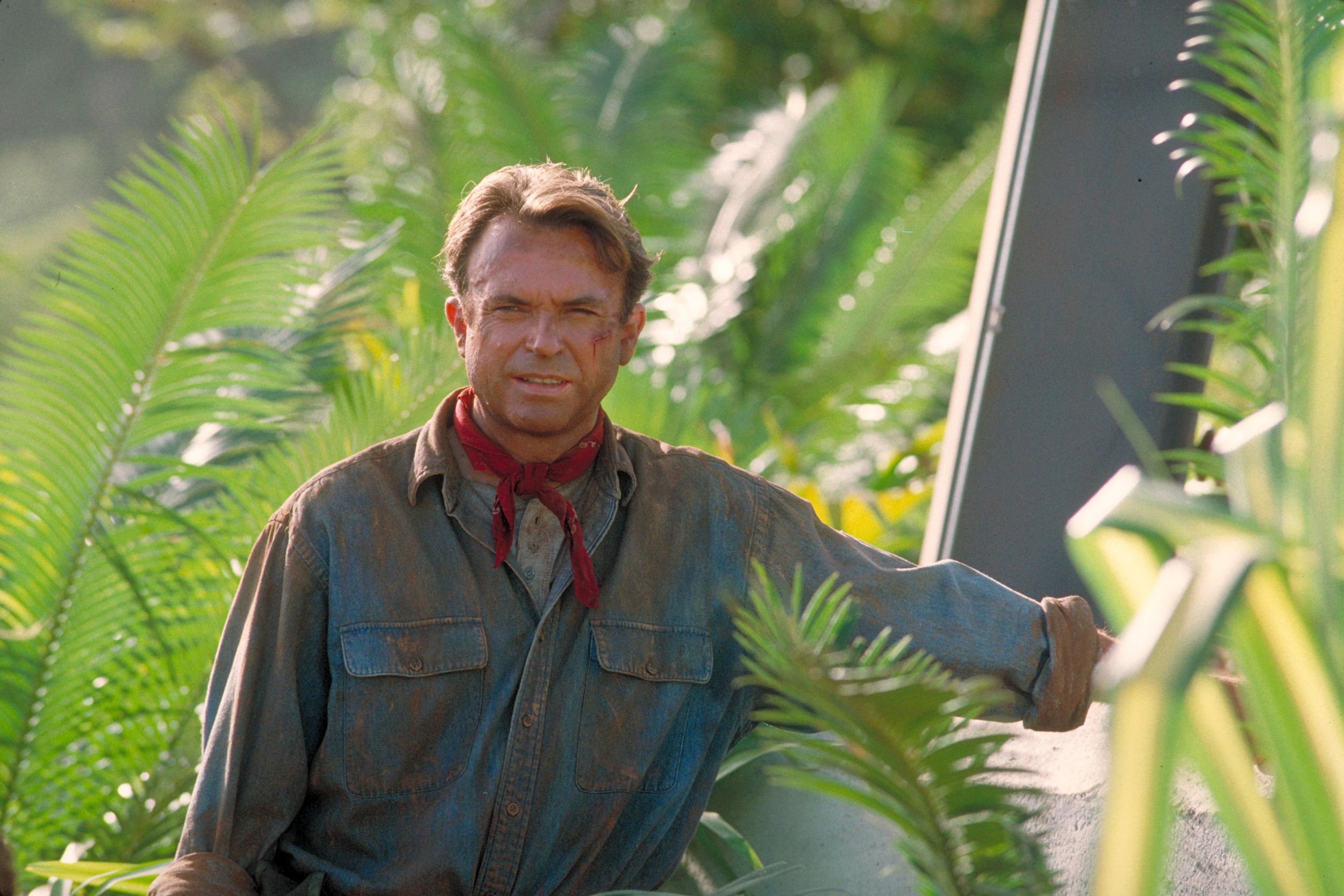
Sam Neill, the New Zealand-born actor whose steady hands and dry, bruised humour carried him from cult New Zealand drama to the global blockbuster stage, has died in Sydney aged 78. His family announced the death on Monday 13 July 2026, saying in a statement reported by The Star Kenya that the loss was "sudden and unexpected" and that he died "surrounded by family." The brief, family-issued notice gave no cause of death.
Within hours, tributes were clearing customs in newsrooms from Rome to Nairobi. Corriere della Sera, posting at 06:35 UTC, ran the wire under the headline noting his role in Jurassic Park and The Piano. BellumActaNews picked it up at 06:48 UTC; The Star Kenya carried the family statement at 07:12 UTC; the open-source monitoring account @TheWarMonitor posted confirmation at 08:03 UTC, citing the family statement and a photograph of the actor in character. The speed of the wire tells its own story: a death that moved from a private Sydney hospital room to global front pages in under two hours, propagated through a mix of legacy Italian press, Kenyan wire reposting, Telegram-based conflict monitors, and an open-source-intelligence feed. The system for spreading news of a famous man's death is now a kind of relay race between very different kinds of athletes.
The actor who never quite belonged to Hollywood
Neill's public life was, in a sense, a long negotiation with the category "Hollywood leading man." Born in Omagh, Northern Ireland, in 1947 and raised in New Zealand, he built his career first in Antipodean television and film before crossing the Pacific in the early 1980s. The role that fixed him in the popular memory was Dr Alan Grant in Steven Spielberg's Jurassic Park (1993), a part the actor reportedly came close to losing to a more bankable American name and won, by most accounts, because Spielberg wanted a scientist who looked like he had actually spent time in the dirt. He returned to the role across the franchise's later instalments, including Jurassic Park III (2001) and the 2022 sequel Jurassic World Dominion, the latter a reminder that the character had outlived most of the cast's original contracts.
But the reduction of his career to the fedora and the velociraptor fence does him a particular disservice. Neill's filmography, even in the part of it that a Monday-morning obituary can plausibly reconstruct, stretches across decades: a long, often under-the-radar run of character work that pivoted between Australian period drama, British television, and American studio pictures. The Piano reference in the Italian wire, alluding to Jane Campion's 1993 Palme d'Or winner, points to the other half of the year 1993: the same twelve months that delivered Jurassic Park also produced a very different kind of object, and Neill was in both, anchoring opposite ends of the year's tonal spectrum.
The family statement, circulated in the early Australian morning, made a point of noting that he died in Sydney "surrounded by family, and passed with" a sentence the partial Kenyan repost cut off. The phrasing is small, but editors will read it the same way: a man who kept his base in Australia even when the work took him elsewhere, who was, by his own account in recent years, a winemaker as much as an actor.
A different kind of public figure
In the last decade, Neill had become something rarer than a film star: a film star who was unusually candid about the machinery of being one. His 2023 memoir Did I Ever Tell You This?, written, as he disclosed at the time, in the early months of a course of treatment for angioimmunoblastic T-cell lymphoma, was reviewed widely as a quiet, unshowy book about a life in the wings. He spoke, in interviews around the book, about the unglamorous arithmetic of an actor's working year, the long stretches of unemployment between jobs, the way a single role can subsidise a decade of smaller ones. None of that colour was in the family statement on Monday, but the structure of the tributes that followed assumed it.
It is worth pausing on the kind of public figure he had become. In an entertainment press that rewards either relentless self-promotion or carefully managed transgression, Neill occupied an adjacent lane: famous enough to fill a press conference, but not so famous that the press conference had to be about fame. He granted long magazine interviews in which the subject matter was wine, or New Zealand politics, or the structural decline of mid-budget cinema, more often than it was himself. The family statement's brevity is, in that sense, continuous with a career built on understatement.
How a death notice travels now
The other story on Monday was the path the news took. The earliest dated item in the public record on Monday morning is the Italian daily Corriere della Sera's Telegram channel at 06:35 UTC, citing the family statement. An Italian legacy outlet is not, on its face, the obvious first stop for news about a New Zealand actor who died in Australia. But Corriere is a newspaper that runs an aggressive translated-wires desk, and Neill's connection to Campion's The Piano gives the Italian cultural press a clean angle the Anglo-American wires of the same hour were still catching up to.
From there, the notice propagated fast. BellumActaNews, a Telegram channel that primarily covers conflict and geopolitics, reposted the wire at 06:48 UTC, thirteen minutes after the Italian flag-drop, framing the death in its own masthead style with a coffin emoji and a dinosaur. The Star Kenya, a legacy Kenyan outlet, carried the family statement at 07:12 UTC. By 08:03 UTC, the open-source-intelligence account @TheWarMonitor was circulating a photograph of the actor in character, citing the family statement as its source. The pattern is familiar to anyone who has watched a major death move through the modern information ecosystem: one legacy outlet breaks, the Telegram relay picks it up within minutes, regional papers of record follow, and the OSINT and conflict-monitoring accounts treat the death as they would treat any other significant event, with a primary-source citation and a single attached image.
What is different from a decade ago is the absence, in the early cycle, of a clear single wire-service originator. The original statement, by all accounts in the available material, came from Neill's family, distributed through a publicist and a small number of direct contacts. The wires that follow are reproducing, not originating.
What the notices did not say
A note on what is not in the public record as of the early UTC afternoon of 13 July 2026. No source reviewed by this publication names a cause of death. No source names a hospital. The family statement, as excerpted in the available wire copies, is short and does not elaborate on the medical circumstances. Several of the early items explicitly call the loss "sudden and unexpected," language that in this kind of notice usually does some quiet work: it sets expectations against speculation, and asks the press to wait.
A second note on what is also not in the record: a complete, verified filmography. The Italian and Kenyan wires name Jurassic Park and The Piano; that is consistent with how Neill's career is most often summarised in the broader press, but a fuller accounting of his stage and screen work, his producing credits, and his New Zealand television of the 1970s and 1980s will take longer pieces than a Monday-morning notice to set out properly. The sources available to this publication in the hours after the announcement do not contain that material, and a longer piece will, in due course, want to assemble it.
The available material does support a smaller, more modest claim. Sam Neill died on 13 July 2026, in Sydney, at the age of 78. His family asked for privacy. The wire moved fast, in keeping with how it always moves now, and the gap between the family statement and the global front page was, as it usually is, a matter of minutes rather than hours. The rest of the story is one for a longer piece, in a different register, after the obituaries have had time to do their work.
This publication treats the death notice as a family statement first, and as wire material second. Where the available sources disagree in tone, we have let the more measured wording carry.
Wire provenance
This editorial synthesis draws on the following public wire/social posts:
- https://t.me/CorriereDellaSera/22357
- https://t.me/BellumActaNews/47892
- https://t.me/TheStarKenya/51230
- https://t.me/osintlive/90124
- https://twitter.com/TheWarMonitor/status/2076571909420974411