Russia hits Togo-flagged cargo ship in Ukrainian port as Putin admits fuel pressure on the home front
A Togolese-flagged fertilizer vessel came under Russian strike at a Ukrainian port on 13 July 2026, killing three crew, while Vladimir Putin conceded for the first time that Ukrainian long-range attacks are squeezing Russian fuel supply.
A Togo-flagged cargo vessel was unloading fertilizer at a Ukrainian Black Sea port on the afternoon of 13 July 2026 when a Russian strike tore into the superstructure. Kyiv Post reported that three crew members were killed and five others injured, with the strike hitting the vessel while it was docked and discharging cargo. The ship was a civilian trader operating under the flag of a small West African state, not a Ukrainian naval auxiliary, and the strike landed on infrastructure in active commercial use.
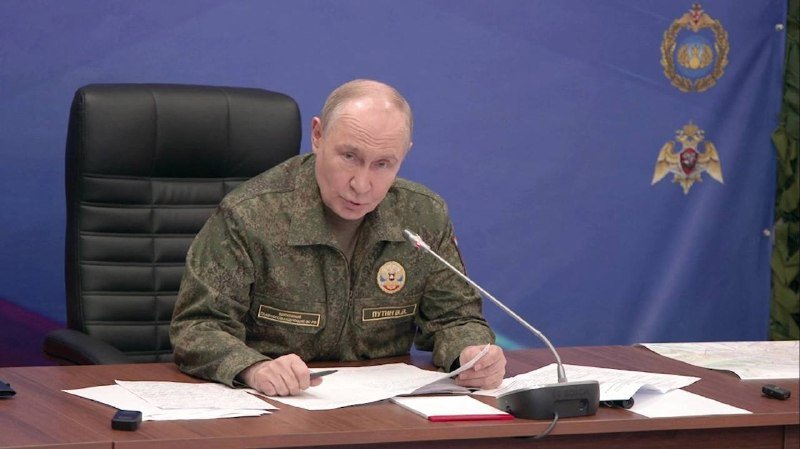
Within hours of the attack, Vladimir Putin made his most candid public admission yet that the war is now pinching Russians at the petrol pump. Speaking from Moscow, the Russian president acknowledged that Ukrainian strikes are "creating certain problems with petroleum products" inside Russia, while insisting that the situation would "gradually improve." He used the same platform to threaten "more powerful retaliatory strikes" against Ukraine. The two messages, the attack on a third-flagged merchant ship and the admission of domestic fuel strain, came within ninety minutes of each other, and they read as a single signal.
A flag of convenience hit at the dock
The choice of target matters as much as the strike itself. Russian forces have hit Ukrainian grain infrastructure repeatedly since the full-scale invasion began in February 2022, drawing condemnation from Kyiv, Ankara, and UN agencies over the weaponisation of global food supply chains. A Togo-flagged fertilizer vessel broadens the field. Togo's open registry is one of the world's busiest flag-of-convenience systems, used by shipowners from Lagos to Limassol. Killing crew on such a vessel extends the casualty list beyond Ukrainians to seafarers whose governments have no seat at any negotiation table.
Kyiv Post's Telegram channel carried the initial account in the early afternoon UTC of 13 July, reporting the strike hit the vessel's superstructure as fertilizer was being discharged. The framing matters: this was not a warship struck at sea, and not a military depot in a contested zone. It was a merchant ship doing what merchant ships do, tied up at a working port. The five wounded extend the human ledger beyond the three dead, and the ferry of paperwork that follows, flag-state protest notes, owner insurance claims, and crew repatriation, will now run through Lomé, the ICRC, and Lloyd's syndicates simultaneously.
Putin admits the fuel squeeze
The second thread, dropped by Telegram channels noel_reports, ClashReport and BRICS News in near-real-time, is the one with the longer fuse. Putin, on the record, conceded that Ukrainian long-range strikes are producing "certain problems with petroleum products" inside Russia. The phrasing is careful, the kind of language Kremlin speechwriters use when they want to acknowledge a problem without quantifying it. But the admission is the point. Moscow has spent most of 2026 insisting that Ukrainian drone and missile attacks on Russian refineries and storage depots were nuisance-level disruptions. Telling Russians, on camera, that the fuel situation will "gradually improve" only makes sense if the present situation is one that requires improvement.
Putin paired the admission with a threat: "more powerful retaliatory strikes" against Ukraine. The threat is not new in form; Moscow has escalated its rhetoric against Ukrainian cities at least four times in 2026 alone, according to wire tallies. What is new is the sequencing. Acknowledging domestic fuel stress and promising escalation in the same appearance is the rhetorical move of a leadership that needs both to look in control and to explain why the next few weeks may feel harder at home.
What the wire frame leaves out
Western coverage of the cargo ship strike will, on past form, focus on the humanitarian toll, the flag state, and the question of whether the vessel was carrying dual-use cargo. Russian state media will likely treat the strike, if it reports it at all, as collateral damage from Ukrainian use of port infrastructure for military purposes, a framing that has appeared after every previous Russian attack on civilian port facilities. Neither frame is wrong, exactly; each is incomplete.
The under-reported angle is the fuel admission. Independent Russian-language outlets have been documenting refinery downtime in regions from Volgograd to Rostov for months, and Russian regional governors have intermittently introduced fuel export curbs. Putin's acknowledgement on 13 July moves that picture from blogosphere to the Kremlin podium. The structural reading: a war economy that has absorbed roughly four years of sanctions, mobilisation, and battlefield loss is now visibly leaking on a commodity ordinary voters consume weekly. Threatening Kyiv harder is the only domestic move available to a leadership that has staked its legitimacy on the war's manageability.
Stakes through the harvest season
If the fuel picture inside Russia deteriorates further, two pressure points follow. The first is political: regional governors who control fuel allocation will face the same constituency pressures that produced taxi-driver protests in 2023 and farm-machinery queues in 2024. The second is logistical: Russian offensive operations depend on diesel for armoured columns and aviation fuel for fixed-wing sorties. Refinery downtime does not yet amount to a battlefield constraint, but the trajectory is one analysts have been tracking since at least the spring 2026 wave of Ukrainian strikes on Tuapse and Slavyansk.
For Ukraine, the calculus runs the other way. Strikes on Russian refining capacity have become one of Kyiv's most visible instruments, alongside the long-range drone campaign that has reached the Volga region. Sustaining that tempo costs money and air-defence interceptors that Ukraine does not have an unlimited supply of. The cargo ship strike is the Russian reply in kind: an attack not on a refinery but on the civilian maritime layer that Ukraine relies on for both export revenue and the symbolic proof that its ports are still functioning. The Togolese flag on the hull ensures the diplomatic paperwork lands in Lomé, not just in Brussels.
What the public sources do not yet specify is the name of the vessel, the operator, the cargo tonnage, or whether any of the wounded are Togolese nationals. Those details will emerge in the next forty-eight hours through owner statements and flag-state communications, if the pattern of previous strikes holds. The numbers that have been confirmed, three dead, five wounded, a fertilizer vessel under Togo's flag, Putin on the record about fuel problems at home, are enough to anchor the day's picture: a war in which attacks on civilian logistics at one end and admissions of civilian stress at the other are happening inside the same news cycle.
The wider pattern
Read together, the two threads describe a war settling into a long, grinding rhythm of economic attrition. Strikes on merchant shipping, ports, refineries, and fuel depots are not battlefield operations in the conventional sense; they are operations against the material substrate of each side's war effort. The toll shows up in seafarer casualty lists and in the fuel queues that regional Russian governors now have to manage. The diplomatic scaffolding, UN shippingsafety committees, IMO flag-state audits, Togolese foreign ministry notes, EU sanctions packages on Russian shadow-fleet operators, runs behind the kinetic events by weeks. By the time the paperwork catches up, the next round of strikes will already be on the wire.
A Togolese-flagged fertilizer ship at a Ukrainian dock on 13 July is the kind of incident that will be cited in IMO circulars for years. Putin's fuel admission is the kind of line that Russian opposition commentators will replay on domestic platforms the moment space allows. Both sit inside a pattern that has been building since the spring, and both will be tested again before the autumn.
Desk note: Monexus frames this as two linked events inside one news cycle, a strike on a third-flagged civilian vessel and a Kremlin admission of domestic fuel pressure, rather than as separate stories. Telegram wires from Kyiv Post, noel_reports, ClashReport and BRICS News anchor the timeline; the structural reading on Russian refinery strain is flagged as inference from Putin's own on-record language and from independent Russian-language coverage cited elsewhere, not asserted as confirmed supply data.
Wire provenance
This editorial synthesis draws on the following public wire/social posts:
- https://t.me/Kyivpost_official
- https://t.me/noel_reports
- https://t.me/bricsnews
- https://t.me/ClashReport