Ruto leads, but one in five Kenyan voters remain undecided ahead of 2027
A new Nation poll puts President William Ruto ahead of declared rivals, but a fifth of the electorate has not made up its mind, a reminder that 2027's contest is still being written.
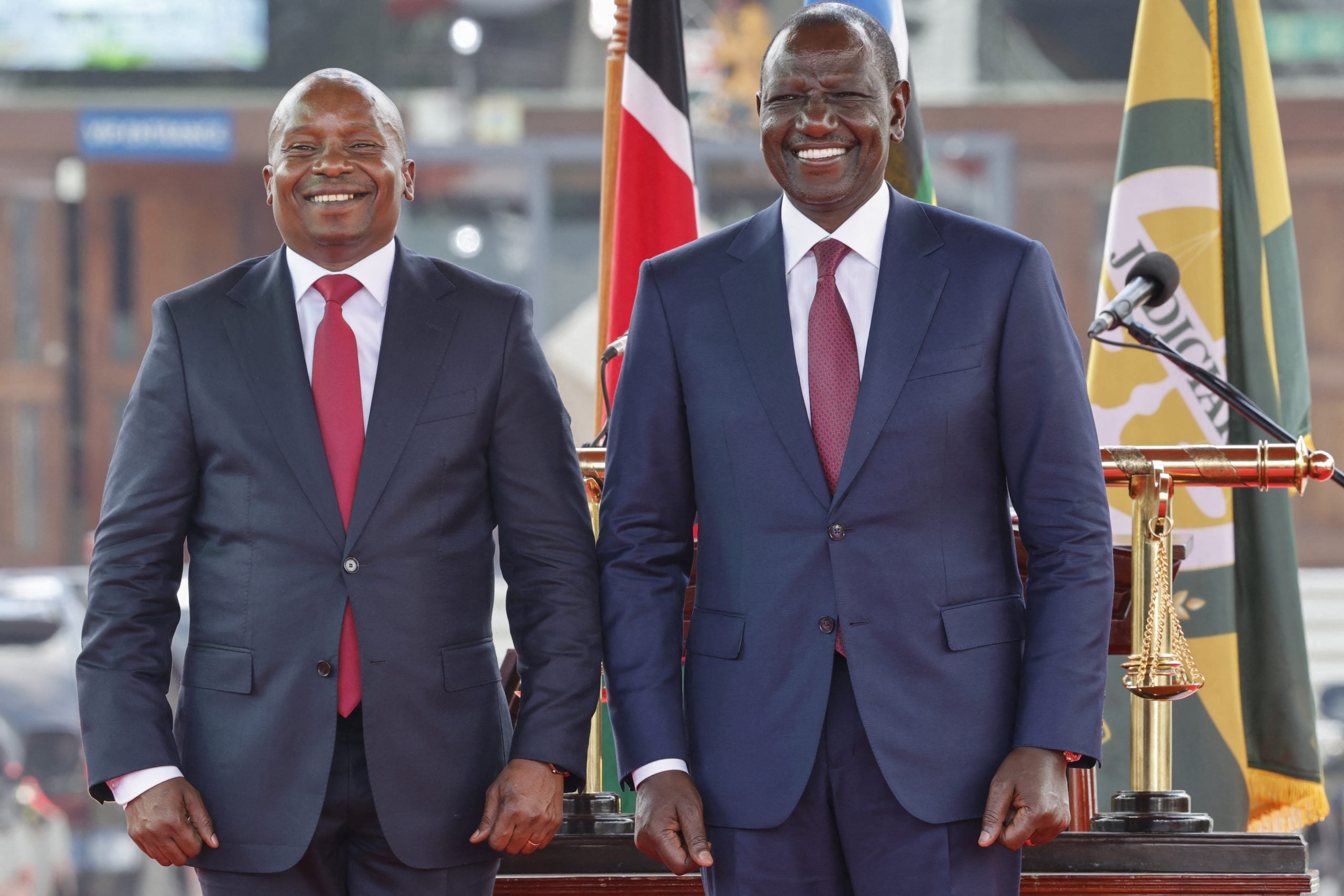
On 13 July 2026, Daily Nation published a fresh opinion survey that places President William Ruto ahead of every declared challenger for the next general election, while leaving an unusually large slice of the electorate on the fence. Roughly one in five voters told pollsters they were still undecided, a margin that, in a country where previous cycles have been decided by single-digit percentages, is the story inside the headline.
The result reads less as a coronation than as a temperature check. Ruto's lead is real but conditional, and the undecided pool is large enough to redraw the map if either the cost-of-living debate or the opposition's coalition arithmetic shifts before the campaign proper begins. Monexus finds that Kenya's 2027 race is shaping up to be a contest defined less by loyalty to the incumbent and more by who can credibly promise relief from the price of maize flour, fuel and credit.
What the numbers actually say
The Nation's polling, reported on 13 July 2026, frames Ruto as the leading presidential hopeful, the leading presidential candidate, and the figure most likely to win if a vote were held that day, three formulations that the paper has used across successive updates of the same survey. The headline finding is consistent: the incumbent sits first, the declared opposition candidates trail, and a block of voters, put by the paper at one in five, say they have not yet chosen.
The framing matters. "Leading" in a poll taken more than a year before a ballot is not a forecast; it is a measurement of name recognition and incumbent visibility, both of which Ruto enjoys by default. What the undecided share measures is something different and more useful: the share of the electorate that has not yet been locked in by either the government's record or the opposition's pitch. In Kenya's 2022 cycle, a comparable late-stage undecided figure swung decisively in the final fortnight. That precedent is the one both sides are now planning against.
The opposition's coalition arithmetic
The opposition enters the cycle fragmented. The Kenya Kwanza government's principal challengers are not yet aligned around a single vehicle, and the parties that matter, the orange Democratic Movement, Wiper, the Jubilee remnants, the newer Gen-Z-aligned formations, have so far failed to converge on a flagbearer or a joint manifesto. Monexus has previously noted that Kenyan opposition politics tends to consolidate only after a clear external shock: a tax revolt, a scandal, an economic data print bad enough to rewrite the news cycle.
The Nation poll implicitly tests this. If the undecided share were small, the story would be Ruto's durability. It is not small, which means the question shifts: what, between now and the nomination deadlines, will move that fifth of the electorate off the fence? Cost-of-living data will dominate the answer. Kenya's inflation trajectory, the central bank's policy rate path, and the seasonal maize harvest all sit inside that window, and each is more likely than any campaign slogan to convert undecideds into either votes or abstentions.
Incumbency, visibility, and the structural ceiling
Ruto's lead reflects a structural advantage that has less to do with affection than with exposure. As president, he controls the broadcast schedule: every foreign trip, every cabinet reshuffle, every presidential directive lands on the front page by default. The opposition, by contrast, must buy its visibility or stage it. In a country where television viewership remains concentrated and radio still drives rural opinion, that asymmetry compounds.
But incumbency in Nairobi has not, in recent cycles, functioned as an unbeatable advantage. The 2024 finance bill protests demonstrated that a mobilised street can rewrite a government's political calendar overnight, and the government's response, the partial withdrawal of the bill, followed by a cabinet dismissal, left a residue of grievance that has not been fully drawn down. A fifth of voters undecided is consistent with an electorate that has watched the government survive a stress test and is still deciding whether survival equals competence.
What to watch between now and the ballot
Three dates will reshape this poll before it stops mattering. First, the opposition's coalition agreement, expected late in 2026, will determine whether the undecided share collapses into a single opposition vehicle or splinters across rival tickets. Second, the budget cycle in mid-2027 will give Ruto a chance to seed relief on staple prices or fuel levies, the two issues that the Nation's reporting consistently surfaces as decisive for working-class voters. Third, the IEBC's voter registration window will set the denominator: a larger registered electorate favours turnout operations, an area where the incumbent retains the more muscular machinery.
The Nation poll, taken on its own, is a snapshot of a race that has not yet been contested. Read alongside the same paper's reporting on cost-of-living protests, tax-policy U-turns, and coalition talks, it sketches a country where the incumbent leads by default but not by conviction, and where a fifth of the voters have not yet been asked a question they find convincing. The campaign, when it begins in earnest, will be fought for that fifth.
How Monexus framed this versus the wire: the Daily Nation coverage treats the poll as a straightforward measurement of the race. Monexus reads it as a measurement of the undecided share, and of the structural conditions, opposition fragmentation, cost-of-living pressure, incumbency visibility, that will determine whether that share moves.
Wire provenance
This editorial synthesis draws on the following public wire/social posts:
- https://en.wikipedia.org/wiki/2027_Kenyan_general_election