Tokyo names the problem: Russia has turned Japan into a 'den of spies'
After a New York Times investigation, Japan publicly acknowledges what its officials have long whispered: Moscow's intelligence services have built a covert pipeline through Japanese territory to feed the war machine.
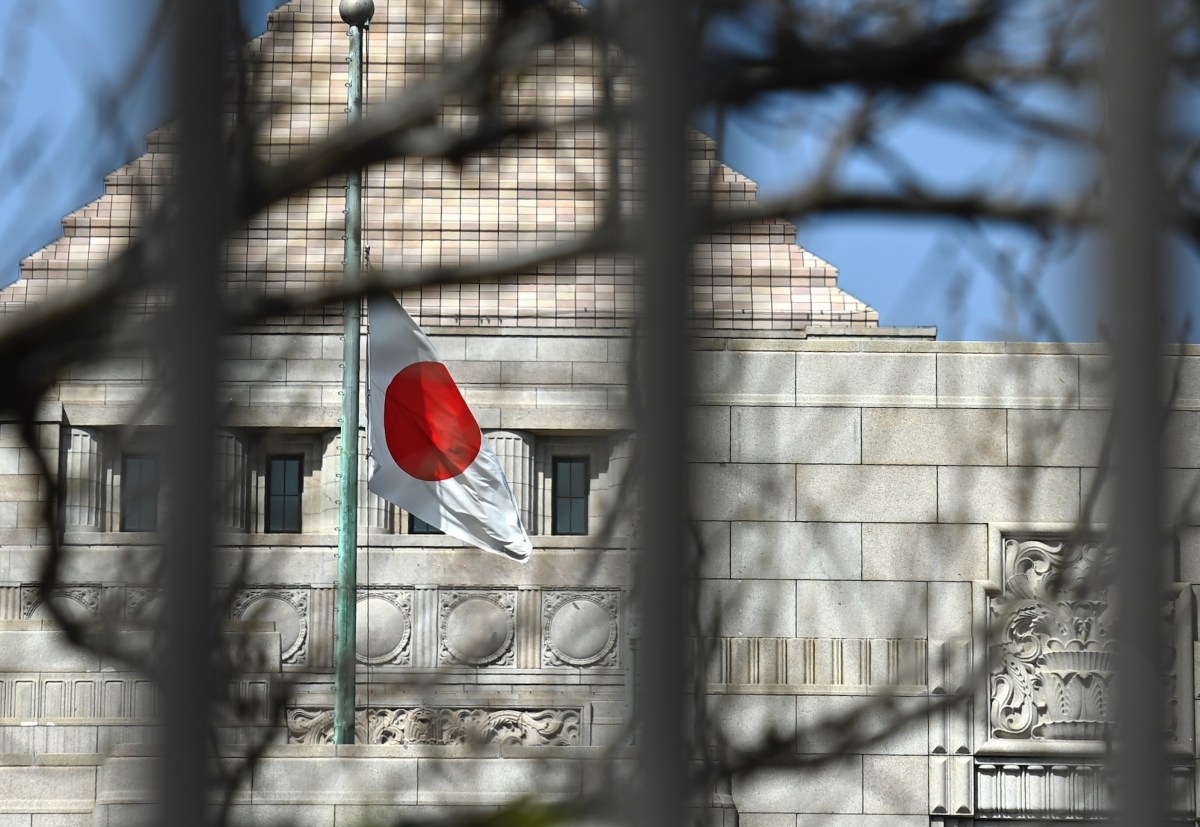
At 07:24 UTC on 13 July 2026, Japan's chief cabinet secretary confirmed what security officials in Tokyo have been warning in private for months: the country has become a permissive operating environment for Russian intelligence, and the government now treats that as a policy problem, not a press query. The statement, carried by Telegram's Insider Paper wire, followed a New York Times investigation that described Japan as a "den of spies" and a key transit node for components feeding Moscow's defence-industrial base.
The admission is unusual for Tokyo, which prefers diplomatic language and has spent two years arguing that its own sanctions regime against Russia is robust. By naming the threat publicly, the cabinet secretary is doing two things at once: signalling to Moscow that the runway is shrinking, and acknowledging to a domestic audience that the cost of remaining a friendly host to neutral-state commerce is now a national-security liability. The harder question is what the government can actually do about it.
What the Times investigation described
The New York Times reporting, cited directly in the Japanese government's response, sets out a layered picture. Russian intelligence services are alleged to be running a sustained presence inside Japan, using a combination of official cover at the embassy in Tokyo, business intermediaries, and a wider network of contacts across the country. The same reporting claims that Japanese territory, firms, and logistics routes have been used to move dual-use goods and components into supply chains that ultimately feed Russian weapons production. The phrase "den of spies" is the newspaper's framing of a permissive environment, not a single operational finding.
For Japanese officials, the problem is that the picture is plausible without requiring a dramatic change in Russian tradecraft. Moscow has long treated the country as a soft target: a stable host, a major economy, a NATO and Quad partner with restrained public attribution. The components question sits inside a wider sanctions-evasion architecture that has been documented across the Caucasus, Central Asia, and the wider Pacific. The Japanese case is notable not for novelty but for the public confirmation.
Why Japan, and why now
The geography explains the supply-chain exposure. Japanese electronics, semiconductor equipment, machine tools, and specialised chemicals are the kinds of items that Russian end-users have spent three years trying to source through third countries. A neutral, technically advanced, diplomatically cautious economy is, from Moscow's perspective, exactly the kind of jurisdiction to route such goods through. The Times's reporting is consistent with the broader pattern: re-export hubs do not need to be complicit to be useful. They only need to be porous.
The timing reflects two pressures. First, allied intelligence sharing on sanctions evasion has tightened considerably since 2024, and Tokyo has received more specific reporting on Japanese-firm involvement in third-country re-export chains. Second, the diplomatic cost of being seen as a weak link has risen as Washington, London, and Brussels have grown more willing to name and shame jurisdictions whose firms feed Moscow's defence industry. The cabinet secretary's statement is, in effect, a preemptive move: acknowledge the problem before an ally does it for you.
The structural problem Tokyo cannot solve alone
Sanctions enforcement inside a G7 economy is a different problem from border interdiction. The Japanese government can tighten export-licensing procedures, expand the police and customs footprint, and coordinate with allies. What it cannot easily do is monitor the millions of small transactions and shipping movements that constitute the modern Japanese economy without a meaningful expansion of state surveillance. The same dynamic plays out in the European Union: investigations by member-state authorities have surfaced repeated cases of dual-use goods moving through ostensibly clean logistics chains, and the volume of trade makes comprehensive inspection impossible.
This is the structural reality the cabinet secretary's statement is sitting inside. Sanctions regimes are designed to raise the cost of evasion, not to make evasion impossible. The metric that matters is whether the rate of interdictions, prosecutions, and license denials is high enough to deter the next shipment, and whether the diplomatic signalling is sharp enough to convince Moscow's services that the cost of operating in Japan now exceeds the benefit. On that test, Japan's public acknowledgement is a starting gun, not a finish line.
What to watch next
Three things will indicate whether the policy turn is real. The first is whether Tokyo follows the statement with specific enforcement actions: named companies placed under export restrictions, customs officers reassigned to dual-use trade lanes, or arrests of alleged intermediaries. The second is whether allied governments reciprocate with their own public statements, which would lock the issue into a coordinated diplomatic track rather than a single country's press cycle. The third is whether Japanese industry itself adjusts: whether major trading houses, freight forwarders, and electronics distributors quietly tighten their compliance procedures in ways that close the most obvious re-export corridors.
The New York Times investigation, the Japanese acknowledgement, and the allied response together form a familiar sequence. A major newspaper publishes. A government is asked to comment. The government chooses to confirm rather than deflect. The story is now on the record, and from here the burden of proof runs in one direction: showing that the public language is matched by operational follow-through. If the follow-through is real, Japan's admission will be cited for years as a turning point in allied sanctions coordination. If it is not, the next investigation will be harder to dismiss.
Desk note: Monexus treats the New York Times's reporting on Russian intelligence activity as the lead wire for this story and gives equal weight to the Japanese government's formal acknowledgement. Russian state-aligned sources have not been used as primary basis for any factual claim in this article.
Wire provenance
This editorial synthesis draws on the following public wire/social posts:
- https://t.me/insiderpaper1