Japan moves to rebuild a wartime-era intelligence architecture, eight decades on
Tokyo is consolidating scattered bureaus into a single national intelligence outfit, the country's most consequential security restructuring since 1945.
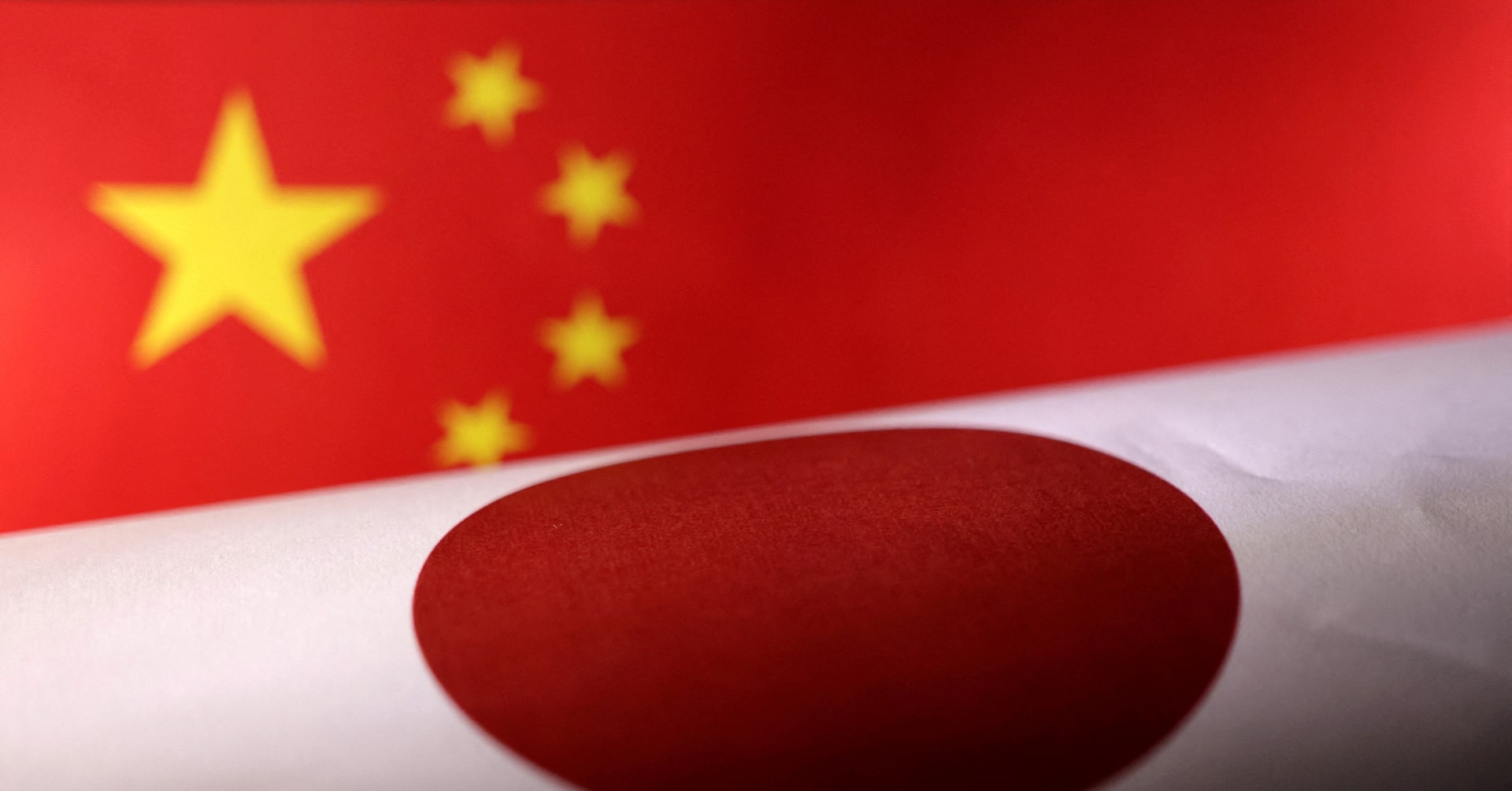
At 08:03 UTC on 13 July 2026, the OSINT channel WarMonitor reported that Japan is overhauling its postwar security posture by constructing its first centralized intelligence agency since the surrender ceremonies aboard the USS Missouri in 1945. The move marks the most consequential reorganisation of Japan's security state in the country's postwar history, and the first time Tokyo has formally considered pooling civilian and military intelligence under a single roof.
What is being proposed is not a Japanese clone of the CIA, and not quite a re-run of the wartime Naikaku Johōbu either. It is a hybrid: a coordinating directorate inside the Cabinet Secretariat with the authority to task, receive and assess intelligence drawn from the Defense Ministry's intelligence本部, the Foreign Ministry's analysis shop, the National Police Agency, and the Public Security Intelligence Agency. The aim is to close the seams that opened, visibly, in 2023 and 2024 when ballistic-missile tests by Pyongyang and balloon overflights from Beijing exposed the limits of Japan's stove-piped tradecraft.
Why now, and what triggered it
The proximate pressure is two-fold. In the north, Moscow's war against Ukraine and its growing alignment with Beijing has forced Tokyo to treat the Russian Pacific Fleet and the Northern Territories issue with renewed seriousness; in the west, Chinese maritime activity around the Senkaku Islands and a steady cadence of coast-guard incursions have put the Self-Defense Forces on a near-daily operational footing. Japan's intelligence apparatus, built for a pacifist era when information collection was treated as a job for foreign ministries and not a sovereign function, has visibly struggled to fuse the two theatres into a single picture.
According to the WarMonitor summary, the new structure will draw cabinet-level authority into what was previously a fragmented set of bureaux. The ambition is less about espionage in the Hollywood sense and more about the unglamorous middle of the pipeline: collection tasking, all-source analysis, and warning. In that sense, the reform resembles what the United Kingdom attempted with the creation of the Joint Intelligence Committee in 1936, and what Australia has incrementally built around the Office of National Intelligence since 2018.
The coalition politics of a Japanese CIA
The political geometry inside Japan is delicate. Prime Minister Ishiba's minority government does not enjoy the commanding margins that Yoshida Shigeru held when he wrote the original pacifist constitution into law. Any agency that touches on defence will face scrutiny from Komeito, the pacifist-leaning Soka Gakkai affiliate that has historically tolerated but never fully endorsed Japan's drift toward collective self-defence. The Reconstruction and Cybersecurity portfolios, both of which currently house intelligence-adjacent units, will also need to be reconciled with the new structure.
Worth weighing: the Opposition-Power coalition that backed the original 2015 security legislation has publicly welcomed the move but cautioned against any new agency's drift toward domestic surveillance. Civil-society groups, including the longstanding Article 9 constituency, are expected to demand statutory firewalls and clear sunset clauses. Tokyo's challenge is to build an institution that can compete with the Ministry of State Security in Beijing or the FSB's Fifth Service in Vladivostok, while remaining constitutionally and politically constrained in ways those counterparts are not.
What the neighbours will read into this
Beijing will read the move, accurately, as part of a broader trajectory: Japan's doubling of defence spending to two percent of GDP, the co-development of a glide-phase interceptor with the United States, and the expansion of intelligence-sharing through the Quadrilateral Security Dialogue. The Chinese position, as conveyed through state media in previous cycles, is that Japan's rearmament erodes the post-1945 settlement and revives an imperial-era threat picture. The structural counterpoint is that Tokyo is responding to a security environment that bears little resemblance to 1945, with two nuclear-armed revisionist powers operating in its near abroad.
Moscow's read is likely to be more transactional. Russian Far East forces have historically traded technical intelligence cooperation with Japanese counterparts on fisheries, border incidents, and the Northern Territories visa regime. A consolidated Japanese agency with a clearer chain of command may, paradoxically, simplify quiet channels rather than complicate them. It will not, however, soften Tokyo's posture on sanctions enforcement or on the bilateral response to any new Ukraine-style escalation.
Stakes and what to watch
If the restructuring passes, the next twelve months will be defined by personnel and budgets rather than by statutes. The Open Source Intelligence Hub inside the Cabinet Intelligence and Research Office, currently Japan Asia-Pacific's most modern collection asset, will likely be elevated. The question of whether a new agency will be granted operational authorities against foreign targets, or restricted to analysis and coordination, will be decided quietly, behind closed Diet committee doors.
The harder question is whether a centralised agency can be built without importing the pathologies that have eroded public trust in intelligence services elsewhere: politicisation, mission creep into domestic politics, and the slow drift from foreign-targeting to surveillance of opposition movements and journalists. Japan's democratic institutions are robust, but they were built for a country that did not, by design, run intelligence operations. The reform is necessary. Whether the country can absorb it without paying an unexpected price inside its own constitutional order is the question that the next several years will answer.
The sources do not specify the size of the new directorate's proposed budget, nor whether the legislation will move before the autumn Diet session. Those details will determine whether this becomes a genuine institutional shift or another entry in a long list of security white papers that produced little.
Desk note: Monexus has framed this as an institutional reform story with geopolitical stakes, rather than a sensational "Japan builds a spy agency" framing. The structural frame is that of a late-comer to the intelligence state consolidating in a hostile neighbourhood, while preserving the editorial discipline of understating rather than dramatising.