A Mother and Daughter on One Set: Costa Rica's Istarús Anchor Tres Tigres' 'Quemada'
A long-marginalised Central American film industry gets a marquee pairing as Ana Istarú joins daughter Ardélia's directorial outing for Valentina Maurel's label.
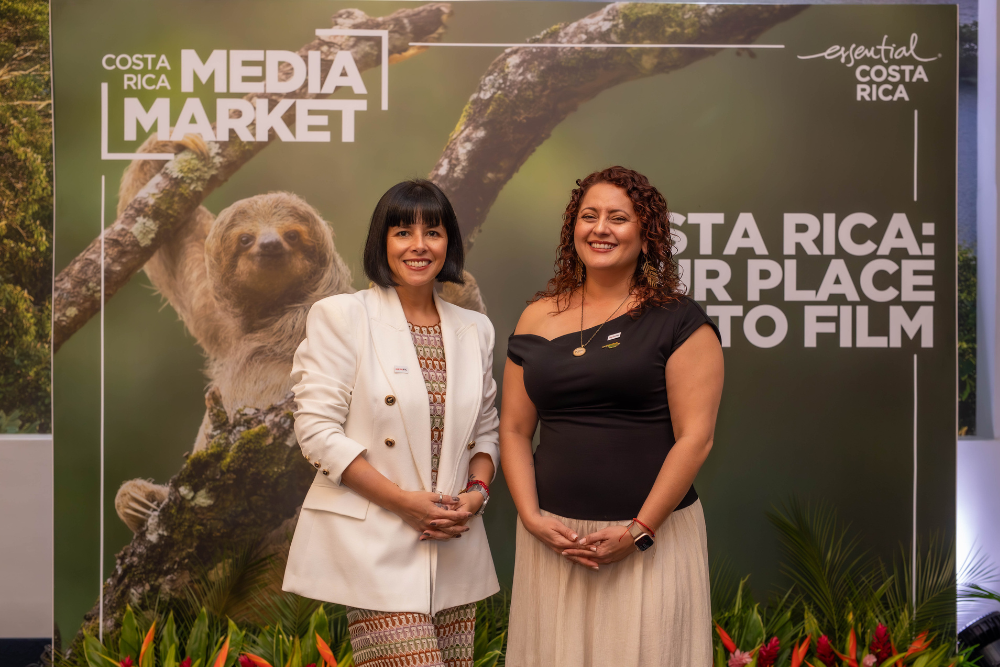
Renowned Costa Rican actor, playwright and poet Ana Istarú will appear alongside her daughter, director Ardélia Istarú, in the latter's next film, "Quemada," Variety reported on 13 July 2026. The pairing anchors a slate quietly expanding from Paris-based producer Valentina Maurel and her Tres Tigres label, and lands at a moment when Central American cinema is forcing its way back into international festival conversation on terms set in the region itself rather than imported from Mexico City or Buenos Aires.
Tres Tigres has spent the past several releases positioning itself as a small, writer-led house willing to take meetings on projects that the established Spanish-language studios have declined to option. Maurel, the Paris-raised Uruguayan filmmaker behind "Los saldos," has used the label to back directors from outside the customary production capitals. "Quemada," written and directed by Ardélia Istarú, sits inside that logic: a Costa Rican shoot, a Costa Rican cast built around one of the country's most recognisable performing families, and a thematic register that the wire trade press has rarely bothered to translate.
A literary dynasty steps in front of the camera
Ana Istarú's name in Costa Rica carries weight that reaches well beyond the screen. She is the daughter of the late Alfredo "Fello" Istarú, a figure who shaped twentieth-century Costa Rican letters, and she has spent decades in theatre, poetry and screen work. Bringing her into "Quemada" alongside her daughter is, on the Variety reporting alone, both a casting decision and a signal of intent: the production wants the film rooted in a lineage of Costa Rican cultural authority rather than imported from outside.
For Ardélia Istarú, who has been working her way up through shorter formats and festival-adjacent projects, the move hands her directorial debut something most first-time Latin American directors never get on their first feature: a marquee name whose presence can clear festival programmer inboxes. Whether that translates into a stronger position in international sales is a separate question, but it changes the baseline of who shows up at the first screening.
The Tres Tigres bet on the region
Maurel's label has, by Variety's account, spent the last few years building a roster that runs against the tidy Buenos Aires-Mexico City-Madrid triangle that still dominates Spanish-language arthouse financing. Costa Rica is not a country most international sales agents can locate on a spreadsheet of national film funds, and the local production infrastructure is thin. That makes the Tres Tigres bet a more fragile one than the trade press sometimes acknowledges: the same logistical gaps that make the project distinctive also make it expensive to execute.
What the label is buying, on the evidence available, is authorial voice. Maurel has tied herself to directors whose work carries a regional grammar, and the Costa Rican Istarú project extends that. The risk is geographic concentration on countries with weak public film-fund pipelines; the upside, if the film lands on the festival circuit, is the kind of cultural return that lifts a label's next few slates without a corresponding marketing spend.
What the international circuit has missed
Costa Rican cinema has, for most of the past two decades, been filtered into international coverage only when a Costa Rican-born producer or actor broke through in Mexico, the United States or Spain. Ana Istarú herself has worked across those borders, as have other figures from the country's small but persistent national cinema. The result has been a Costa Rican cinema that is read, from outside, as a diaspora rather than a domestic industry.
A Costa Rica-set film anchored by a Costa Rican directing-acting family, financed through a label run by a Uruguayan filmmaker based in Paris, partly answers that. It does not invent a national cinema that did not exist, but it reorganises the question of who gets to underwrite it. The more interesting structural story is the slow appearance of South–South co-production circuits within Latin America itself, where a Uruguayan producer can decide that a Costa Rican subject is worth her next eighteen months. The trade press has begun to notice these arrangements in fits and starts; the actual money still chases the same handful of capitals.
Stakes for the next eighteen months
If "Quemada" travels well on the autumn festival circuit, the most immediate consequence is mechanical: Tres Tigres secures credibility to greenlight the next Ardélia Istarú project without having to beg the Spanish sales agents for a meeting. That, more than any single film's box office, is the asset under construction.
The longer structural question is whether a label built around regional authorship can hold its footing against the gravitational pull of the established Spanish-language studios and the U.S. Hispanic market, both of which still set most of the commercial terms. Variety's 13 July 2026 report frames "Quemada" as an auteur bet; the rest of the year will determine whether the bet pays back in distribution or only in prestige.
What remains thin in the public record is the financial shape of the deal. The reporting identifies the principals and the production lineage but does not specify a budget, a co-producer structure, or a confirmed sales agent. For a film that wants to be read as a regional auteur statement rather than a niche festival item, those details are the next test. Without them, the most that can be said is that the project exists, the casting is locked, and the label behind it has spent recent years earning the right to be taken seriously when it makes a call like this.
This article leans on Variety's 13 July 2026 exclusive as its sole wire input and frames the Costa Rican project inside a structural pattern of South–South co-production that the wire trade press has only begun to document in earnest.