Iraq opens land borders for Arbaeen as millions prepare to walk to Karbala
Baghdad has activated its land crossings for foreign pilgrims ahead of Arbaeen, the world's largest annual religious gathering, with Iran expected to supply the largest cohort of marchers.
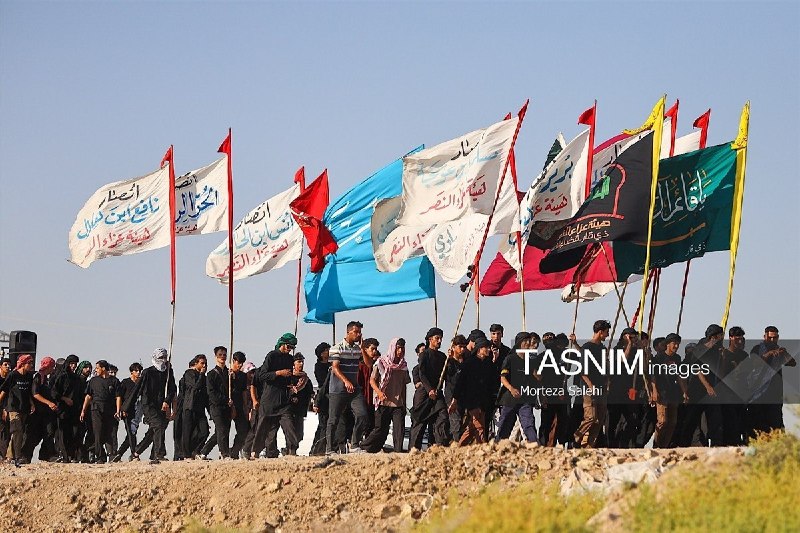
Iraq's interior authorities announced on 13 July 2026 the activation of designated land entry and exit points for foreign nationals and resident immigrants travelling to the country for Arbaeen, the Shia commemoration marking the fortieth day after the martyrdom of Imam Hussein at Karbala in 680 AD.
The notice, relayed in parallel by Iran's Tasnim News Agency and republished by Jahan-e Tasnim at 10:18 UTC, is procedural rather than political, but it lands at the start of a logistics window that will determine whether Iraq can absorb what is, by most counts, the largest annual peaceful human migration on earth. Tens of millions are expected to converge on the holy city in central Iraq over the coming weeks, the bulk of them crossing on foot from the Islamic Republic.
A border designed for mass movement
The announcement instructs foreign pilgrims to use specified crossings rather than ad-hoc routes. In practice this means the Mehran and Shalamcheh land ports in southern Iraq's Wasit and Maysan governorates, facing Iran's Ilam and Khuzestan provinces respectively, plus al-Mundhiriyah (Mehran's western counterpart on the Iraqi side of the same corridor) and the Shatt al-Arab crossings further south. Iraq reopened and expanded several of these ports specifically for Arbaeen traffic after 2017, when the defeat of Islamic State allowed overland pilgrimage to resume at scale.
The mechanics are unglamorous but consequential: temporary visas issued on arrival, dedicated pilgrim lanes, biometric registration, and convoys of buses that shuttle walkers the final stretch into Karbala. The Iranian side mirrors this with its own pilgrim offices, free or subsidised transport, and medical tents strung along the roughly 90-kilometre route from the border to the shrine city.
Why the Iranian numbers dominate
Iran is the single largest source of foreign pilgrims. Direct overland access, shared Shia identity, and a long tradition of walking the route combine to produce an Iranian cohort that, in recent years, has run into the low single-digit millions. Pakistan, Afghanistan, and the Gulf Shia communities add meaningful but smaller layers; Azerbaijani, Indian, and Lebanese contingents also travel in significant numbers.
This skew matters for three reasons. First, it makes Iraq's relationship with Tehran the operational backbone of Arbaeen logistics, regardless of the wider political weather between Baghdad and the Islamic Republic. Second, it concentrates demand on a small number of crossings, creating bottlenecks that Iraqi planners have spent close to a decade trying to ease. Third, it places the ceremony inside the wider Iran-Iraq political economy: shared shrines, shared seminary networks in Najaf and Qom, and a pilgrimage economy worth several hundred million dollars annually in transport, food, and lodging.
What the wire says, and what it leaves out
Iranian state-aligned outlets, Tasnim foremost among them, treat Arbaeen coverage as a soft-power platform, foregrounding the discipline of Iranian pilgrims and the spiritual reward of the walk. The framing is celebratory by design, and it shapes the vocabulary in which the announcement itself is phrased. Western wire reporting on Arbaeen tends to be episodic, surfacing mainly when security incidents or stampedes occur, and rarely names the scale of the routine operation.
What both frames flatten is the Iraqi side of the exercise. Baghdad's interior ministry, the border police, the popular mobilisation units that provide route security, and the governorate-level commissions in Karbala, Najaf, and Maysan are doing the work that keeps roughly twenty million people fed, watered, and moving. Iraqi press coverage of the run-up is dense and operational; it deserves more column inches than it usually gets when the international press picks up the story.
Stakes for the season ahead
The 2026 edition arrives with two structural pressures on top of the familiar logistical ones. Inside Iraq, the political calendar around Prime Minister Mohammed Shia al-Sudani's government has sharpened debates over Iranian economic and security influence, and pilgrimage infrastructure is one of the few arenas where Baghdad and Tehran coordinate with little public friction. Inside Iran, the economic strain of sustained sanctions has thinned domestic travel budgets, and the volumes from the Islamic Republic this year are a real, if under-reported, indicator of household disposable income.
The border activation is the opening move of a six-week logistics campaign. The metric to watch is throughput at Mehran and Shalamcheh in the first ten days: a clean start means the corridor works, and a clean corridor is the difference between a spiritually meaningful journey and a humanitarian incident. Iraqi planners have done this often enough to know which numbers matter.
This publication framed the announcement as a logistics story with geopolitical weight, rather than a religious feature. The Tasnim and Jahan-e Tasnim items carried the announcement verbatim; broader context on corridor infrastructure draws on prior Arbaeen reporting published by Iraqi and Iranian outlets.
Sources:
- https://t.me/JahanTasnim/1170409, Jahan-e Tasnim (Telegram), Foreign pilgrim border crossings announced for Arbaeen, 2026-07-13T10:18Z
- https://t.me/tasnimnews_en/1170409, Tasnim News English (Telegram), Foreign pilgrim border crossings announced for Arbaeen, 2026-07-13T10:18Z
Wire provenance
This editorial synthesis draws on the following public wire/social posts:
- https://t.me/JahanTasnim/1170409
- https://t.me/tasnimnews_en/1170409