Tehran's patience runs out: Iran says US memorandum is in crisis, schedules Lavrov visit
Iran's foreign ministry declared a crisis in the implementation of its memorandum with Washington on 13 July 2026, while moving to host Russia's foreign minister and dismissing US sanctions as concern for the Iranian people.
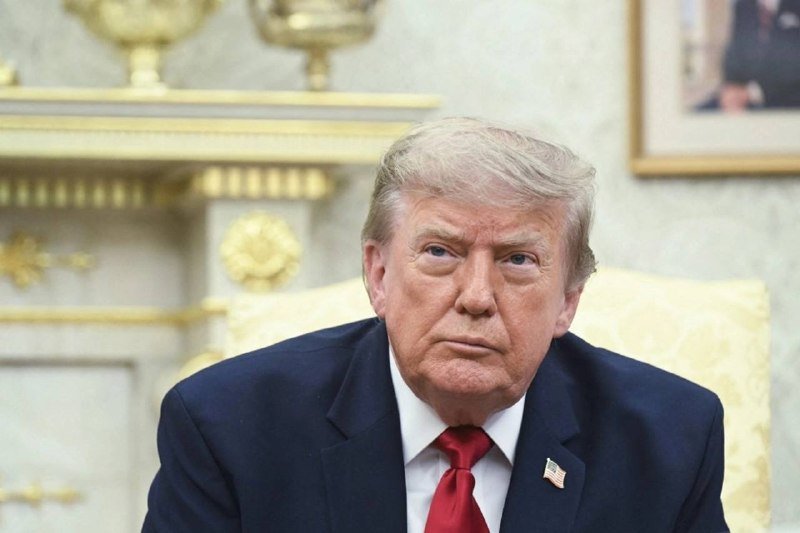
At 08:18 UTC on 13 July 2026, the Iranian foreign ministry declared that a memorandum of understanding with the United States had slid into a state of crisis, with Tehran saying it no longer intended to honour commitments it considered violated. Within two hours, the same ministry had announced it was preparing to receive Russian foreign minister Sergei Lavrov in Tehran, and its spokesman had opened a second front, dismissing new US sanctions as concern for ordinary Iranians and rejecting Israeli intelligence that Iran had plotted to assassinate Donald Trump.
What had been a slow-motion negotiation is now an open confrontation. Tehran's posture is no longer that of a party managing a deal; it is the posture of a party demonstrating that the deal, as currently constituted, has collapsed, and that it has alternative diplomatic architecture ready to deploy.
The memorandum that wasn't
The crisis language came from the foreign ministry itself, relayed by Iranian outlets and confirmed in the 08:18 UTC wire from the Tasnim-affiliated Jahan Tasnim channel. The ministry's framing was unambiguous: implementation has failed, and Tehran does not intend to keep its side of an arrangement it considers broken. No specific article of the memorandum was cited; the statement stayed at the level of political signalling.
That signalling is the news. Iranian officials have spent the better part of two years insisting that a path to relief from US secondary sanctions, whether through a revived nuclear understanding or a broader normalisation track, required a written commitment that survived American election cycles. The memorandum was supposed to be that instrument. Publicly declaring it in crisis is, in effect, an admission that the instrument has not held.
The spokesman's separate comment on sanctions, dispatched at 08:24 UTC, drove the same point home from a different angle. Asked about Washington's claim that new restrictive measures were motivated by concern for the Iranian people, he replied that the United States had no standing to express such concern, a line that recurs in Iranian official discourse whenever sanctions are announced. The phrasing is boilerplate; the timing is not. It is the rhetorical companion to the crisis declaration, the second leg of a coordinated message: we will not perform the role of supplicant, and we will not accept the framing that the pressure is humanitarian.
The Lavrov card
Eighteen minutes after the crisis announcement, at 08:20 UTC, deputy foreign minister Kazem Gharibabadi's office moved to confirm that Sergei Lavrov's trip to Tehran was being prepared, with the dates to be finalised. The sequencing is what matters. In the space of a single Tehran morning, the foreign ministry had declared a breakdown with Washington and put the Russia file on the table.
Moscow and Tehran have, in the past year, used Lavrov's regional itinerary as a way of marking diplomatic alignment at moments when both governments wanted to underline that they had options beyond the Western channel. A Lavrov visit in mid-July, on the heels of a public breakdown with the US, reads as a deliberate visual: the alternative architecture is operational, and it does not pass through Geneva or Muscat.
The visit also gives Tehran a venue to coordinate messaging on questions where Iranian and Russian interests overlap, most prominently Syria, the Caucasus transit corridor, and the price cap on Russian hydrocarbons. The two governments do not always agree, but they share an interest in demonstrating that the US-led sanctions architecture has exploitable seams.
The Trump assassination claim
At 08:26 UTC, the foreign ministry spokesman addressed a separate Israeli intelligence briefing alleging that Iran had intended to assassinate Donald Trump. The reply was categorical and dismissive. The Iranian position is that such allegations are recycled periodically to provide diplomatic cover for measures against Tehran, and that the most recent iteration, the ministry suggested, arrived in the same news cycle as the new sanctions package.
Iranian state-aligned and Iranian state-adjacent channels have, over the past two years, repeatedly framed such intelligence claims as pretextual. The pattern is consistent: an allegation surfaces in a Western or Israeli outlet, US policy tightens in response, and Tehran argues that the policy was the goal and the allegation was the instrument. Whether that pattern describes this specific episode is not verifiable from the open record; the Iranian position is that it does, and the foreign ministry used the press briefing to make sure that position was on the page.
What remains contested
The Iranian framing of the memorandum crisis is a political claim, not a documented accounting. The sources do not enumerate which specific obligations Tehran considers unmet, nor do they indicate whether the Iranian declaration has been matched by any visible Iranian countermeasure such as suspension of IAEA cooperation, withdrawal from a working group, or a reversal of enrichment limits. The statement that Tehran does not intend to fulfil its obligations is consistent with a wide range of behaviours, from a rhetorical downshift to a substantive reversal of cooperation.
The Russian side is also opaque. The ministry confirmed that the Lavrov visit is being prepared, not that it has been scheduled. Dates, agenda items, and joint communiqués are not yet on the wire. Moscow's interest in a visible Tehran visit is real, but so is its interest in keeping the door open to a separate channel with Washington. Until the Lavrov itinerary firms up, the diplomatic choreography remains aspirational.
On the sanctions, the Iranian rebuttal is structurally familiar. The US position, when stated in full, is that targeted measures respond to specific Iranian behaviours, including support for armed groups and human rights concerns. That framing does not appear in the Iranian press briefing material, and Tehran's dismissal of humanitarian concern is, on the record, a refutation of a strawman version of the US position. The contest over which framing the international audience receives is itself part of the news.
Stakes
For Tehran, the cost of declaring a memorandum in crisis is that it removes the most plausible off-ramp from the broader sanctions regime. The benefit is that it forces a renegotiation from a position that has been rhetorically upgraded, no longer a co-operative partner, but a state with documented grievances. Whether that upgrade produces material movement from Washington is the open question, and it is the question that the next ten days, the Lavrov visit, and any subsequent IAEA board meeting will answer.
For Washington, the immediate problem is operational. If the memorandum collapses without a replacement, the sanctions regime is running on inertia, and the secondary sanctions that the memorandum was designed to suspend come back into force by default. For Moscow, the visit is an opportunity to reinforce the partnership narrative at a moment when its own dealings with the US remain frozen. For readers, the practical takeaway is that the diplomatic calendar of mid-July 2026, Lavrov in Tehran, a possible Iranian response at the IAEA, the next round of sanctions implementation, is the clock on which the next phase of this confrontation will be set.
Desk note: Monexus treats Iranian state and state-adjacent channels as legitimate primary sources for Iranian government positioning, with explicit attribution. Where the same events are covered by Western wire outlets, the Iranian framing and the Western framing are reported side by side, and the reader is left to weigh them.
Wire provenance
This editorial synthesis draws on the following public wire/social posts:
- https://t.me/s/JahanTasnim
- https://t.me/s/JahanTasnim
- https://t.me/s/JahanTasnim
- https://t.me/s/JahanTasnim