Tehran draws the Gulf inside the threat: Iran warns neighbours that siding with Washington is an act of war
Within an hour of fresh US strikes and a Trump threat, Tehran told Gulf monarchies that any cooperation with Washington would be treated as belligerence. The escalation arithmetic just changed.
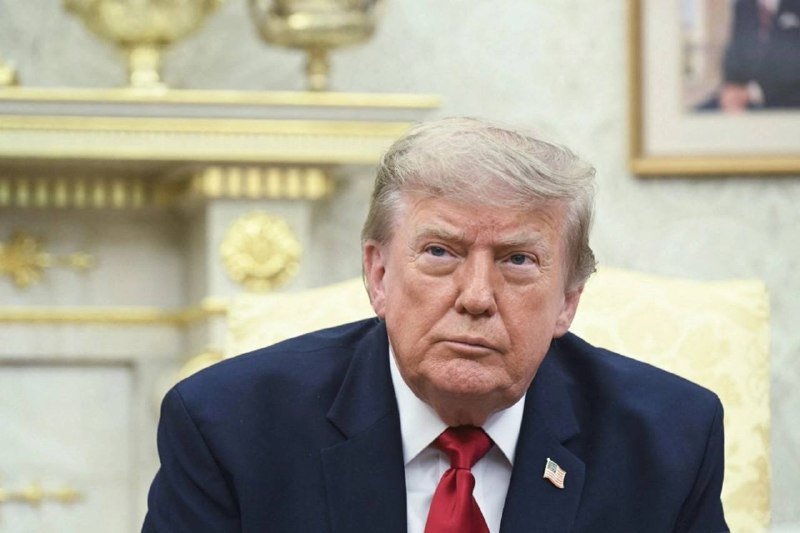
On 13 July 2026 at 12:45 UTC, US President Donald Trump publicly claimed that overnight American strikes had destroyed key pieces of Iranian military equipment, the central line of a warning issued after the collapse of a US-Iran military agreement. Forty-nine minutes later, at 13:34 UTC, an Iranian-aligned readout warned the Gulf monarchies that any cooperation with the United States would be treated as an "act of war." In the slot between those two messages, Trump told reporters Iran's inflation was running at 350 percent against roughly 5 percent six months earlier, mocked Tehran for trying to rebuild, and warned that the US would "strike them hard" because Tehran "always breaks agreements" (BRICS News, 12:57 UTC, 12:51 UTC; Clash Report, 12:51 UTC, 12:48 UTC). The exchange is the cleanest snapshot yet of how the latest US-Iran war scare is being conducted in public, in headlines, and through proxies.
Iran did not address the White House. It addressed the quiet middle of the escalation equation: the Gulf. By framing any Gulf cooperation with Washington as belligerence, Tehran is trying to convert neighbour states into a shield rather than a base. Read together with the satellite-imagery reporting that Iran may be rebuilding nuclear facilities (BRICS News, 12:46 UTC), the message is twofold: degrade the Iranian military, and any Gulf capital that helps you do it is part of the fight.
What's in the public record
The American side, as reconstructed from the day's wire: Trump told reporters Iran was attempting to rebuild, that Tehran "has no chance," and that the United States had it "on the run" (Clash Report, 12:48 UTC). He invoked a domestic economic figure, 350 percent inflation against roughly 5 percent six months ago, that he framed as evidence of Iranian fragility rather than as collateral damage from sanctions and prior rounds of strikes (Clash Report, 12:51 UTC). The headline warning, that the US would "strike them hard" because Iran "always breaks agreements," was relayed by BRICS News at 12:57 UTC.
On the Iranian side, the threatening readout to the Gulf landed first at 13:34 UTC, framing any cooperation with the US as an "act of war" (BRICS News, 13:34 UTC). That sits beside the earlier reporting that satellite imagery suggests Iran may be rebuilding nuclear facilities, a slower-burn signal than the kinetic warnings but the one with the longest tail (BRICS News, 12:46 UTC). The witness-feed line, summarised in the late-morning window by War Front Witness, tied the warning to the collapse of a military agreement and the overnight strikes on Iranian equipment (War Front Witness, 12:45 UTC).
What the public record does not yet contain is the underlying satellite-imagery provenance, the specific sites imaged, or independent corroboration of the 350 percent inflation figure from a non-American source. The Trump figures on inflation are best read as a political claim he is making to a domestic audience; they should not be confused with a multilateral audit.
Why the Gulf is now part of the messaging
There is a logic to addressing Saudi Arabia, the United Arab Emirates, Qatar, Bahrain, Kuwait and Oman directly rather than answering Washington point for point. The US strikes in this round were reported as striking Iranian military equipment, but the basing, overflight rights, intelligence sharing and command-and-control that make those strikes possible sit in Gulf territory. By tagging Gulf cooperation with the US as "an act of war," Tehran is signalling that any future strike carries a regional cost the Iranian side can adjust.
The threat cuts both ways. Gulf monarchies have spent two years trying to keep the temperature down, partly because their energy infrastructure is exposed and partly because the missile and drone exchanges of earlier rounds have already shown the latency. A clear Iranian line that cooperation with Washington is belligerence raises the political price Gulf leaders pay when they host US assets, share targeting data, or approve US tanker refuelling. It also gives those same leaders a domestic cover story for stepping back from the US posture if they choose to.
The counter-reading is straightforward and should not be discounted: Iran may simply be compensating for the loss of leverage. The 350 percent inflation claim and the satellite-imagery reporting about nuclear rebuilding arrive on the same day. The Iranian side can either let the strikes set the day's narrative, or it can reframe the conversation around Gulf complicity and a longer-term nuclear threshold. Tehran chose the second move. That is consistent with a state under kinetic pressure trying to widen the diplomatic battlefield, but it is also consistent with a state signalling an actual escalation ladder.
The structural frame in plain language
What the day's exchanges actually reveal is a contest where the participants are trying to set the cost of the next move for someone else. Trump is trying to put the cost on Tehran's economy and on its conventional rebuilding capacity, while signalling that any deal will be enforced by strikes rather than signed in good faith. Tehran is trying to put the cost on Gulf-US cooperation, so that the geography that enables American power projection becomes a contested surface. Neither side is bargaining over the underlying file in this hour of messaging; both are bargaining over who pays.
Inside that frame, the most consequential variable is whether Gulf states blink. They sit on the maritime chokepoints, on the air corridors the US uses for reach into Iran, and on the diplomatic legitimacy the US often needs to make a coalition read. If they keep cooperating at current levels, the American tempo can stay high. If they roll back cooperation, even partially, the US is forced into longer-range options and more permissive rules of engagement. Iran's choice to address the Gulf rather than Washington in this readout is the choice to push on that joint.
Stakes, and what to watch next
If the trajectory holds, three things become worth tracking in the next seventy-two hours. First, public statements from Riyadh, Abu Dhabi and Doha: silence would be the most telling answer. Second, any US request for new overflight, basing, or intelligence sharing, and whether Gulf capitals process it on schedule or slow-walk it. Third, the satellite-imagery story. The "may be rebuilding" framing is hedged; if a second, independent source publishes clear evidence of fresh construction at known sites, the nuclear-threshold discussion that the day's rhetoric put to one side returns at speed.
The Iranian framing is maximalist by design. Calling any Gulf cooperation an "act of war" is the kind of language a state uses when it wants the burden of de-escalation to fall on its neighbours. The American framing is maximalist in a different register: "we have them on the run" is a line the White House uses when it wants to convert a kinetic night into a market signal and a domestic headline. Both registers point in the same direction, which is away from a quiet file and toward a regional one. The Gulf monarchies are now the audience.
Desk note: Monexus framed the day's exchanges as a parallel messaging contest rather than as a story about who fired first; the public-record sourcing does not yet permit a definitive judgment on the strikes themselves, and the inflation and nuclear-rebuild claims are reproduced with attribution rather than asserted as verified.
Wire provenance
This editorial synthesis draws on the following public wire/social posts:
- https://t.me/bricsnews
- https://t.me/bricsnews
- https://t.me/ClashReport
- https://t.me/ClashReport
- https://t.me/bricsnews
- https://t.me/wfwitness