Infantino floats 64-team World Cup before 2030 tournament has even kicked off
Two days into the post-2030 handover, the FIFA president is already sketching a 64-team edition, framing the next tournament as a 'huge success' before its first whistle.
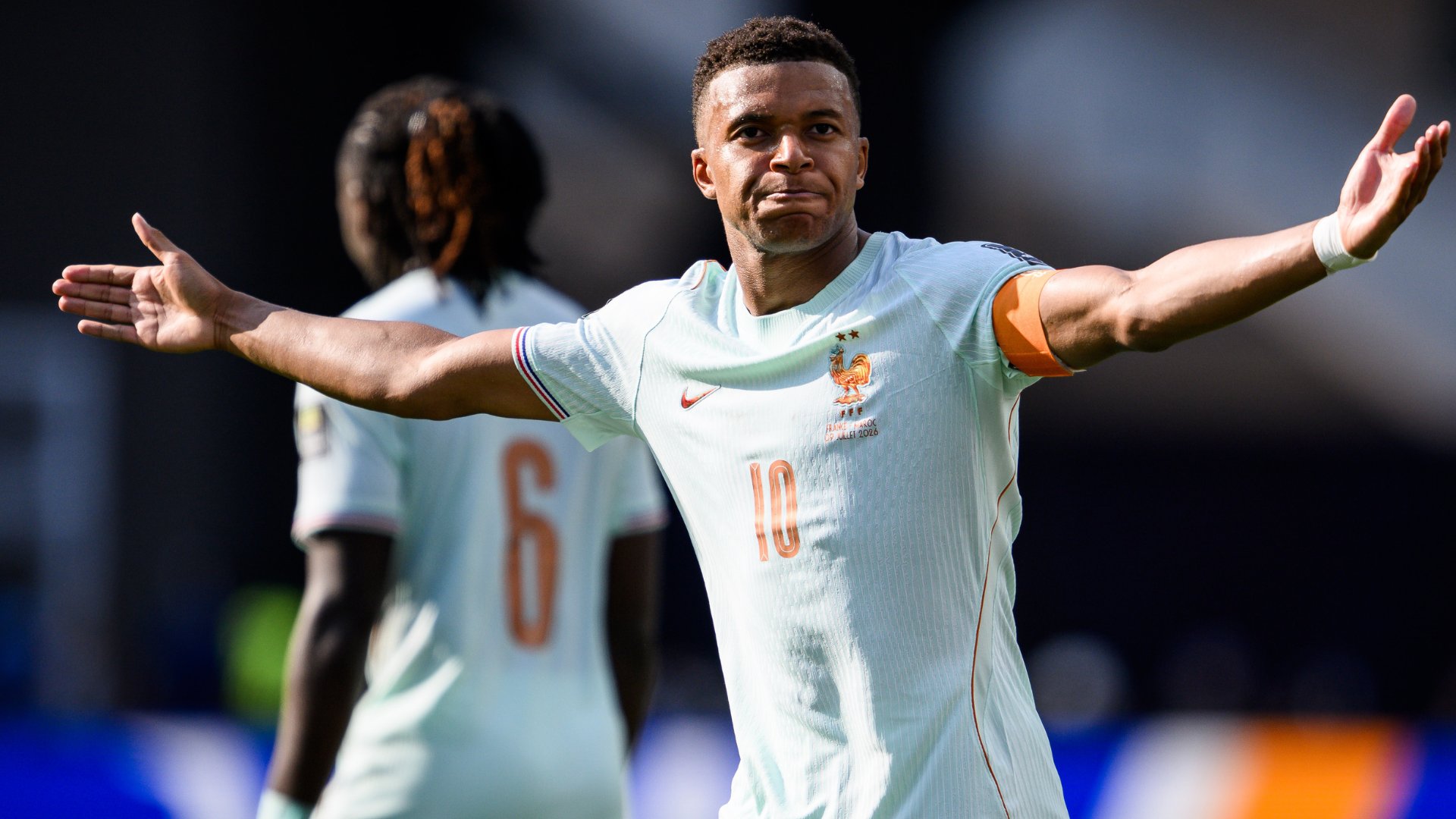
Two days after the final whistle in the United States, FIFA president Gianni Infantino was already sketching the next World Cup. Speaking to journalists on 12 July 2026, the Swiss administrator called the just-completed 48-team tournament a "huge success" and said officials would "examine and discuss" lifting the field to 64 teams before the 2030 edition co-hosted by Spain, Portugal and Morocco.
The pitch arrived before the ink is dry on the 2030 hosting accord itself. The expansion talk reframes a tournament that already grew from 32 to 48 teams only in time for the United States–Canada–Mexico showpiece. If FIFA's council takes the suggestion seriously, the next men's World Cup will be the largest in history by a margin that would have seemed fanciful a decade ago.
What was actually said
Infantino's framing, delivered in remarks circulated by Reuters at 15:16 UTC on 12 July and picked up by the German-based transfer feed at 14:48 UTC, is straightforward. The World Cup "should be for everyone, not just Europe and South America." That sentence does heavy lifting in the strategic argument. It positions the next round of expansion as a redistribution from the incumbent powers to the confederations that have historically played for fewer slots: Africa, Asia, CONCACAF and Oceania.
Whether that redistribution is what the numbers would actually deliver is the open question. The 2026 field already awarded eight places to Asia (up from four and a half) and nine to Africa (up from five). Adding another 16 berths without reweighting the formula would, on the current architecture, lift Europe and South America too, simply because they are the only confederations with the depth to fill them. The rhetoric of global inclusion runs ahead of the qualification math.
The pattern: bigger, more often
The 48-team format was sold, in 2017 when the FIFA council voted to enlarge the field from 32, as a one-off to broaden participation. The match calendar has since rotated in a different direction. FIFA has committed to a 32-team Club World Cup running every four years, expanded the Women's World Cup from 24 to 32 teams in 2023, and added a 32-team FIFA Series of friendlies in 2024.
The connective tissue is commercial. Each additional fixture is, in FIFA's accounts, an additional broadcast window and an additional sponsor surface. The argument that a bigger men's World Cup dilutes the group stage has not historically deterred the body that has, in less than a decade, voted the tournament larger once and signalled it intends to do so again.
The counter-narrative from player welfare advocates, the World Leagues Forum and FIFPro Europe, has grown louder with each cycle. Their case is straightforward: more matches in a World Cup year adds to the load on a calendar that already pushed elite players past fifty games a season. The body in charge of the game's rules has, by its own council's logic, no incentive to count the cost inside the dressing room.
What it would cost the 2030 hosts
The 2030 tournament is already architecturally novel. As part of the host award made by FIFA in 2023, the centenary match will be played in Uruguay, Argentina and Paraguay before the rest of the tournament shifts to Spain, Portugal and Morocco. Spain will stage the bulk of the matches across eleven venues; Morocco will become only the second African host in the tournament's history.
Adding 16 teams means 16 more matches. Group-stage expansion from 12 groups of 4 (48 teams) to 16 groups of 4 (64 teams) would push total fixtures from the 104 played in 2026 to roughly 120, before any knock-out adjustment. Stadium and logistics footprints scale with it. Spain, Portugal and Morocco signed up for 48.
The cities already named for the European leg include Madrid, Barcelona, Bilbao, San Sebastian, Seville, Tangier, Casablanca, Rabat and Lisbon, with Porto commonly cited in Spanish and Portuguese reporting. Each of those municipal bids was costed against the 48-team ledger the federations agreed to underwrite. A revised tournament structure is, in other words, a renegotiation in waiting.
The upside, as FIFA's regional directors have argued in earlier expansion rounds, is that an extra sixteen national-team slots arrive at a useful political moment. The federation's confederation-weighting arithmetic is the single most load-bearing variable in the global calendar; reshuffling it buys influence where it is cheapest in matches and most expensive in rights-fee inflation.
Stakes for the next four years
The cynical read is the easier one: a sitting president, locked in for a third term after the 2025 election, signals a 64-team future to keep the expansion conversation alive through 2030 and into his own fourth-term horizon. The institutional read is more textured. FIFA's statutes give the council authority over competition formats; the technology and the broadcast mechanics of a 64-team men's World Cup are now well understood, and the extra-window calendar is the harder constraint.
The plausibility threshold is the 2027 FIFA council calendar. If formal consultation opens before the 2030 draw, the 64-team number lands inside the tournament's planning horizon and the host federations are asked to absorb it. If it does not, the talk stays where it landed on 12 July: a flourish, parked on a Sunday afternoon, between post-mortems of the edition that just ended.
What remains contested is not whether the field grows but who pays for the growth. The argument about inclusion favours confederations with smaller football economies; the arithmetic about who can field a competitive 64-team roster favours the same confederations that already qualified 16 of last summer's 48. The next twelve months will show whether Infantino's hint is a negotiation opener or a press-release headline.
This desk file was filed at 16:00 UTC on 13 July 2026. Monexus reports from the existing wire pool on FIFA governance stories; the 64-team talk sits in Reuters and the transfer-news wires, and the next-round reporting will come from the federation council calendar rather than from speculation.
Wire provenance
This editorial synthesis draws on the following public wire/social posts:
- https://t.me/transfermarkt/12345
- https://en.wikipedia.org/wiki/2030_FIFA_World_Cup