Costa Rica’s Incendio Cine lands new co-production backing for Fantastic Lab winner ‘We Won’t Let the Goat Die’
Four years after ‘Domingo and the Mist’ put the San José label on the festival map, Ariel Escalante’s goat‑herding feature has lined up fresh partners ahead of a wider release.
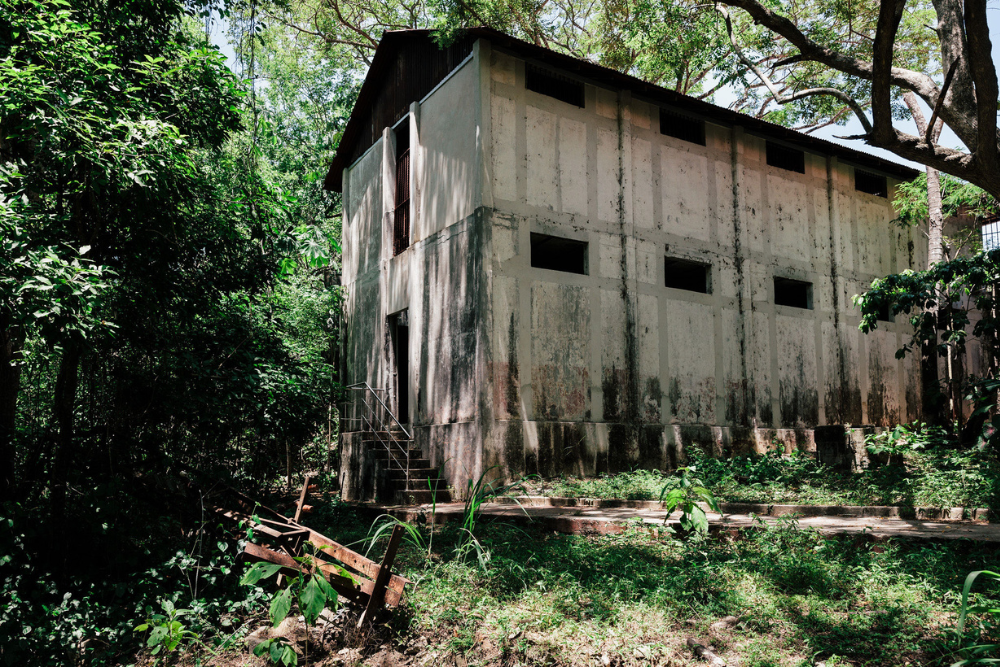
On 13 July 2026, Variety’s Santiago Durán reported that Costa Rican production house Incendio Cine has added new co-production partners to We Won’t Let the Goat Die, the Fantastic Lab winner directed by Ariel Escalante. The film, set among goat herders in the Costa Rican highlands, was first developed inside the country’s small but increasingly mobile independent sector, and the new financing tranche marks the most concrete international footprint the project has landed since its lab prize.
For a country whose feature industry long depended on a handful of festival breakouts, the deal signals something larger than one film: a working pipeline. Incendio Cine, the San José label behind Escalante’s 2017 Cannes‑premiering Domingo and the Mist, has spent the years since building the kind of slow, partner‑by‑partner scaffolding that Latin American mid‑budget cinema needs to survive outside its domestic market. The goat film is the test case.
What the new partners are actually buying
The headline, per Durán’s Variety exclusive, is that Escalante’s project has cleared the next financing hurdle, with additional co-producers attached. The reporting does not specify the partner names, the size of the co‑production envelopes, or the territorial splits. That matters: co‑production in the region rarely runs on a single cheque. It is structured, deal‑by‑deal, through public funds in Spain, France, and Mexico, tax‑credit arrangements in Colombia and Chile, and private equity from a small set of Latin American family offices that have learned to underwrite auteur cinema at sub‑$3 million budgets. The fact that the project has moved past its lab stage and into formal co‑production status is the operative news; the rest is execution.
The film itself, a feature built around a goat herder’s reckoning with land and inheritance, fits a long tradition of Costa Rican rural cinema, from the earliest generation of San José documentarians to the festival‑facing fiction of the 2010s. Incendio Cine’s distinctive move has been to keep these projects in Spanish, in country, and on a budget that lets them travel.
A label, not just a film
Incendio Cine’s track record gives the deal its weight. Domingo and the Mist, the company’s 2017 breakout, played at Cannes Critics’ Week and went on to a quiet international festival run, a model that has been emulated across Central America ever since. The label has since become a de facto home for Costa Rican directors who want to keep their projects inside the country without giving up the festival‑to‑distribution pipeline. Each new Escalante credit, in other words, is also a stress test of the company’s ability to keep that pipeline solvent.
The structural read: Costa Rica is a country of roughly five million people, with a domestic box office that cannot carry mid‑budget Spanish‑language features on its own. For decades, that arithmetic has pushed the country’s best directors toward either Mexican or Argentine co‑productions or toward US‑Spanish‑language indies. Incendio Cine has been the most persistent local counter‑proposal: a San José–anchored shop that tries to keep a majority of value, creative control, and rights inside Costa Rica while still selling into the international festival‑to‑sales circuit.
Counter‑narrative: the saturation problem
The honest read is that small national cinemas in Latin America are running into a saturation wall. The same European sales agents, the same public funds, the same handful of Mexican and Spanish streaming buyers now underwrite films from Argentina, Chile, Colombia, and Costa Rica in a single buying cycle. The marginal Costa Rican project has to out‑pitch the marginal Argentine or Colombian project, with a fraction of the prior credits. Incendio Cine has held its line by being selective and by keeping Escalante inside the label. But the new partners for the goat film, whoever they turn out to be, will be picking from a far more crowded shelf than the buyers who first backed Domingo and the Mist did in 2017.
The structural counter‑argument: the crowding is also the market. A Costa Rican feature with a Fantastic Lab credit and a confirmed co‑production slate is no longer an exotic pick for a Berlin sales agent; it is a routine buy, and routine buys are what keep small national cinemas financed.
What to watch next
The next data point is the partner list, the budget disclosure, and the festival where the finished film lands. If We Won’t Let the Goat Die premieres in 2026 in San Sebastián, Locarno, or the Horizons section of Venice, the Incendio Cine model will have held for another cycle. If it slides into 2027 without a festival anchor, the saturation argument starts to bite. The company’s longer‑term question, beyond any single film, is whether Costa Rica can sustain a second auteur generation on the same San José–anchored scaffolding, or whether the model depends on a small set of names the country does not currently have a clear pipeline to produce.
The deal, in other words, is less the news than the calendar the news will run against.
This piece is a news desk report. Monexus framed the story around the producer‑label relationship rather than the director profile, on the view that the more durable story in Central American cinema is the company, not the name above the title.
Wire provenance
This editorial synthesis draws on the following public wire/social posts:
- https://en.wikipedia.org/wiki/Domingo_and_the_Mist