Houthis return to Saudi airspace with six-missile barrage on Abha
Six missiles were launched toward Saudi Arabia's southern region on 13 July 2026, with initial reports of explosions in Abha, as the Houthis warned of further strikes on airports, ports and energy sites.
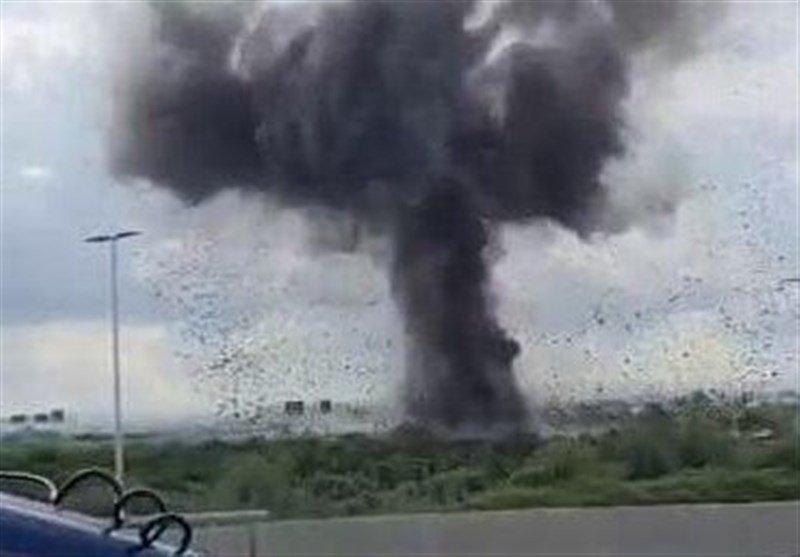
At 17:11 UTC on 13 July 2026, open-source channels began carrying a single, repeated claim: at least six missiles had been fired toward Saudi Arabia, with initial reports of explosions in the southern city of Abha. Within forty minutes, the Ansar Allah-aligned media apparatus had framed the salvo as the opening move of a new escalation, publishing footage titled "The response is on the way!" and marking Saudi airports, ports and energy facilities for further action. Saudi air defences were reported to have engaged the incoming missiles, according to Iranian-source accounts relayed by analyst Michael A. Horowitz. The exchange marks the most concentrated Houthi missile activity toward the kingdom's southern region in the current cycle and lands while the broader Yemen file is still in diplomatic suspension.
The story this barrage tells is not principally about six projectiles. It is about the persistence of a Yemeni front that has outlasted the pause-and-resume rhythm of recent months, and about what the Houthi media operation is willing to advertise while Riyadh weighs whether to treat each launch as a discrete incident or as the leading edge of a sustained campaign.
What landed where
The earliest reports of impact came from field-channel wfwitness at 16:55 UTC, citing initial accounts of explosions in Abha, the capital of Saudi Arabia's Asir province near the Yemeni border. By 17:11 UTC, ClashReport was reporting at least six missiles launched. By 17:40 UTC, Michael A. Horowitz was distributing an Iranian-source account specifying six missiles directed at Abha, adding that Saudi air defences had engaged them. By 17:42 UTC, abualiexpress was circulating Ansar Allah-aligned video material publicly identifying Saudi airports, ports and energy facilities as targets. By 17:48 UTC, intelslava was reporting fresh explosions across Saudi territory. The cluster's load-bearing detail is the Iranian-source attribution of the count (six) and the city's name (Abha); the load-bearing visual is the Houthi threat montage itself, which functions less as operational intelligence than as a declaratory statement.
The Houthi press apparatus does not claim launches in the passive voice. The 17:42 UTC video is a threat, not a report: its title, "The response is on the way!", signals that what observers witnessed on 13 July is being framed by its perpetrators as retaliation for something, and as a prelude to something larger.
The declaratory video
Ansar Allah-aligned channels have, across this conflict, used edited video as a substitute for what other militaries would release as strike footage. The 13 July product is in that tradition: an animation layer overlaying known Saudi infrastructure, with airport runways, port terminals, and what the channel identifies as energy facilities marked for further action. The choice of targets is itself a message. Saudi airports and ports are dual-use: civilian passenger traffic and the import arteries of an economy that does not feed itself. Energy facilities sit at the heart of the kingdom's revenue base and of its standing within OPEC+. A campaign that reliably threatens all three compresses Saudi decision-makers between the cost of interception and the cost of being seen to fail to intercept.
That compression is what the video is for. Saudi Arabia has, in past cycles, absorbed Houthi barrages without public escalation; it has also, in 2019, responded with strikes on Sanaa after attacks on Aramco infrastructure at Abqaiq and Khurais. Which path Riyadh takes after the 13 July salvo is a decision that will be made in Riyadh, not in this publication.
How much, and from whom
The only numbers in this cluster are the count of missiles (six, per Iranian-source reporting relayed by Horowitz) and the target city (Abha). The cluster does not specify missile type, launch site, intercept rate, casualties, infrastructure damage, or Saudi official response beyond the framing that defences "dealt with" the incoming salvo. Read narrowly, the open-source record supports a single defensible paragraph: at least six missiles were launched toward southern Saudi Arabia on 13 July 2026, with initial reports of explosions in Abha and Saudi air defences reported to have engaged. Read in the broader context of the Houthi media operation, the salvo is the action that the 17:42 UTC video was written to advertise.
The structural pattern is familiar. The Houthis communicate in two registers simultaneously: an operational register (launch, impact, intercept) that gets relayed through open-source channels, and a political register (threat, retaliation, capability demonstration) that gets amplified through their own media arm. Western wire coverage of previous barrages has tended to focus on the first register and treat the second as background colour. The 13 July cluster is unusual only in the speed with which the political register was published: the threat video was circulating within half an hour of the first reports of explosions.
What the counter-narrative looks like
Three alternative reads deserve airtime. First, that the salvo is best understood as a domestic-audience signal inside Yemen rather than as a substantive escalation toward Riyadh: the Ansar Allah leadership has internal reasons to demonstrate capability, and the threat video is directed as much at Sanaa's rivals as at Saudi Arabia. Second, that the rapid publication of the threat montage and the speed of Houthi attribution is itself the operation, designed to force Saudi Arabia into either a visible defensive posture (which costs diplomatic capital) or visible inaction (which costs deterrence credibility). Third, that the absence of confirmed infrastructure damage or casualties in the cluster is itself the news: Saudi air defences worked, the salvo did not penetrate, and what observers are watching is the containment of a Houthi capability rather than its breakthrough. Each of these reads is compatible with the open-source evidence; none of them is foreclosed by it.
What remains contested
The cluster does not specify whether the Saudi Ministry of Defence has issued a statement on the 13 July salvo, whether Patriot or THAAD batteries were the reported interceptors, whether any debris caused ground damage, or whether the launch was timed to coincide with a specific diplomatic event. The Iranian-source attribution of the missile count is reported rather than independently corroborated within the sources this article draws on, and the Houthi video's claim of a forthcoming "response" is a threat, not a forecast. A reader who needs certainty on any of these points will need to wait for Saudi official confirmation or for independent satellite imagery of the Abha area, neither of which is in the cluster at the time of writing.
The structural frame is the one that holds across cycles: a non-state actor with credible missile capability, a kingdom that can absorb the political cost of interception failures but not the economic cost of sustained attacks on its energy revenue base, and an information environment in which each side uses the same incident to make different arguments. What changes from cycle to cycle is whether the political cost of leaving the salvo unanswered rises above the cost of answering it. The 13 July video was made to push that calculation in one direction. The next few days will tell whether it worked.
This article draws on open-source channels reporting in real time from the Persian Gulf and southern Arabia. Where Houthi-aligned media has been cited, the attribution is explicit; where Iranian-source reporting on launch count has been relayed, it is labelled as such. Monexus treats Ansar Allah statements as primary-source material from a party to the conflict, not as neutral reporting.
Wire provenance
This editorial synthesis draws on the following public wire/social posts:
- https://t.me/intelslava
- https://t.me/abualiexpress
- https://t.me/osintlive
- https://t.me/ClashReport
- https://t.me/wfwitness