Hormuz toll fight: Tehran says yes to a levy, just not Trump's 20%
Iran's foreign minister told reporters on 13 July 2026 that the US president is right to charge for safe passage through Hormuz; he just thinks 20% is too much.
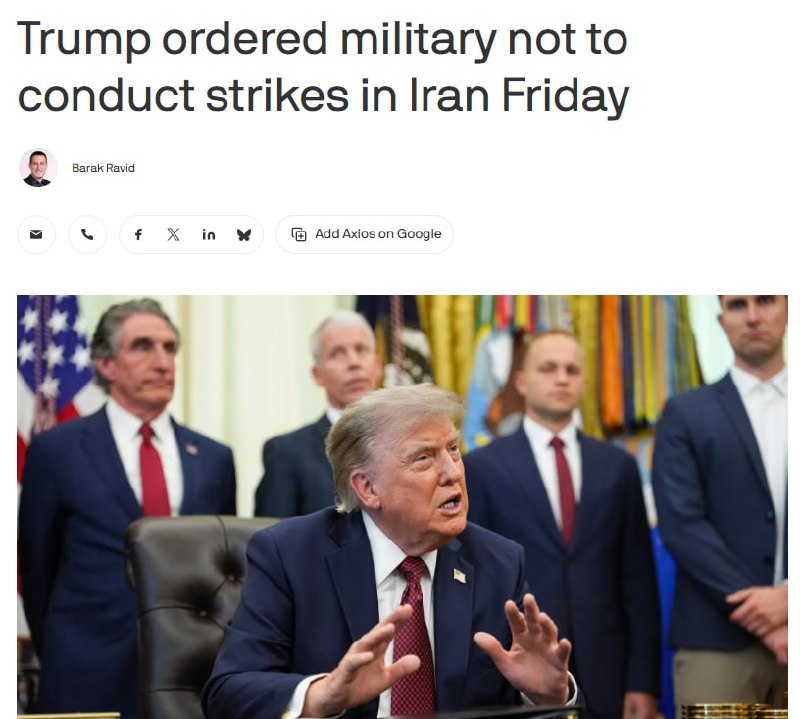
At 18:04 UTC on 13 July 2026, Iran's Foreign Minister Abbas Araghchi told reporters in Tehran that US President Donald Trump was "absolutely right" on one point: whoever provides secure passage for commercial vessels through the Strait of Hormuz deserves to be paid for it. The qualifier came fast. Twenty percent, Araghchi added, is too much. Iran, he said, will be fair.
The exchange is the clearest sign yet that the world's most important oil choke point is being reframed, in real time, as a toll road. Trump, for his part, used the platform to declare the strait "OPEN, and will remain OPEN, with or without Iran," and announced the resumption of a US naval blockade aimed at Iranian shipping, paired with a 20% levy on other countries transiting the corridor.
Read together, the two statements sketch the terms of a transaction neither side has signed.
The American ask, in plain numbers
Trump's framing is transactional and on-camera. The strait, he posted on 13 July, "is open and will remain open, with or without Iran." The United States, he said, is reinstating what his administration is calling "the Iranian blockade," under which only Iranian-flagged ships are subject to US interdiction; other countries' vessels transit freely on payment of a 20% levy. The arrangement, in the president's telling, recasts the US Navy not as the global commons' unpaid security guard but as the operator of a pay-to-pass corridor.
The proposition is provocative because it borrows Iran's long-standing argument. Tehran has, for years, asserted that its geographic position astride the strait gives it leverage over roughly a fifth of seaborne oil. Trump, until recently, treated that claim as a casus belli. On 13 July he effectively endorsed the premise.
Tehran's counter is not refusal, it's negotiation
Araghchi's reply is the news. The Iranian foreign minister agreed that compensation is owed to whoever secures the waterway. He mocked Trump's 20% figure, but he did not reject the concept. Iran's position, as relayed through the Telegram channels Middle East Spectator and Wfwitness, is that Iran will set its own toll, at a level it calls fair.
What "fair" means is the contested variable. A 20% surcharge on, say, a VLCC carrying two million barrels of Brent at prevailing prices is not a marginal cost; it is a rerouting decision. Iran does not need to enforce the levy to make it real. It only needs to threaten enough disruption that commercial operators price the risk in, and that insurance underwriters do the same. Tehran has done this before, in 2019 and again more recently, with the seizure and harassment of tankers in and around the strait. Each episode repriced war-risk premia across the global fleet.
Two things follow. First, the US blockade is a kinetic instrument: it stops hulls, not prices. It works against Iranian-flagged shipping and any third-party taker of Iranian crude that US sanctions have already pushed into the grey market. It does not, on its face, change the calculus for a Saudi or Emirati VLCC headed for Asia. Second, Iran's threat works on a different axis: the war-risk insurance market, where a single seizure or drone strike repriced the entire corridor overnight in 2019. The two instruments do not directly cancel each other. They operate on different parts of the supply chain.
What the language actually concedes
The most consequential line is the one both sides are now using in public: passage through Hormuz is a service, not a free good. For decades the US Navy has underwritten free transit, recouping the cost through the dollar's centrality to oil invoicing and through an enormous forward-deployed posture. Trump is now proposing to invoice the service explicitly. Araghchi is offering the same logic from the other end of the corridor, with a smaller number.
This is structural. The world's largest hydrocarbon transit lane has never been a tax-neutral space; the costs of securing it have always been paid somewhere. They have usually been hidden inside defence budgets, base rights in Bahrain and Qatar, and the long arm of US secondary sanctions. Putting the cost on a single line item, in a single currency, attached to a single percentage figure, makes an implicit subsidy visible for the first time. That visibility is why both governments like the framing and dislike the other side's version of it.
The same logic explains Tehran's restraint on the rate. A 20% toll, set and collected by Washington, is a precedent that legitimises the concept and the dollar as the unit of account. A lower toll, set by Iran under threat of disruption, would reassert that the geography of the strait, not the geography of the US Fifth Fleet, is what determines the price of the lane. Tehran can lose the argument and still be ahead on the structural point, provided that the underlying principle survives in shipping contracts and in the language ministers use.
What to watch before the next tick
The next forty-eight hours will be priced in shipping, not in statements. Three indicators matter more than the next speech.
First, tanker re-routing. If even one major charterer diverts a laden VLCC around the Cape of Good Hope, the incremental tonne-miles show up in Baltic Dirty indices within days and in retail diesel within weeks. Second, insurance. Lloyd's market-listed war-risk premia for the Persian Gulf are the cleanest read on whether operators believe the blockade is operational or rhetorical. Third, Iran's own naval activity. The Islamic Revolutionary Guard Corps Navy operates a fast-attack fleet of small boats designed for the precise task of seizing commercial hulls in the strait. A spike in IRGC naval drills, or a fresh detention by IRGC forces, would be the credible signal behind Araghchi's "we will be fair" line.
What remains genuinely uncertain is whether Trump's blockade is meant to be enforced against third-country shipping, despite the wording. The 13 July statement draws the line at Iranian hulls, with the 20% levy framed as voluntary. If the US Navy in fact stops a Chinese or Indian tanker in the coming weeks, the framing collapses and so does the implicit bargain with Beijing and New Delhi, both of which buy most of the crude that moves through the lane.
Until that test arrives, the language is the story. Trump and Araghchi now share a vocabulary they did not share a week ago. The dispute is no longer over whether the strait is a service to be priced, but over who sets the price and to whom it is paid. That is a different conversation from the one Western capitals were prepared for, and a more honest one about how the global oil trade actually works.
This article draws on Telegram-sourced reporting from the channels Clash Report, Middle East Spectator and Wfwitness, and on the 13 July 2026 public statements by President Donald Trump and Iranian Foreign Minister Abbas Araghchi. The 20% figure and the blockade announcement originate with the US president; Tehran's reply and the "too much" qualifier originate with Araghchi. The structural framing is Monexus's. Where the sources are silent on operational details (specific hulls, specific underwriters, specific insurance premiums), this article does not speculate.
Wire provenance
This editorial synthesis draws on the following public wire/social posts:
- https://t.me/ClashReport
- https://t.me/Middle_East_Spectator
- https://t.me/wfwitness
- https://t.me/two_majors