Hormuz toll and Tehran's counter-blocade: a 24-hour shipping fight Washington didn't choose
Within a single news cycle on 13 July 2026, Washington declared a 20% Hormuz toll and a naval blockade; Tehran says it has already seized violator vessels. The UN shipping agency says the legal basis is missing.
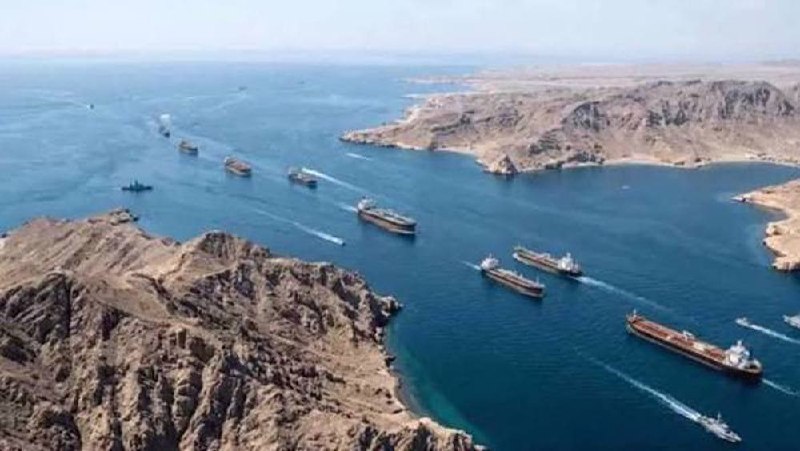
On 13 July 2026, between 14:38 UTC and 19:21 UTC, the rules of the world's most important oil chokepoint were rewritten by tweet. US President Donald Trump declared at 14:46 UTC that Washington would charge a 20% fee on all cargo shipped through the Strait of Hormuz and that the United States would "become the guardian" of the waterway and be reimbursed for protecting it, according to a post on X by @unusual_whales carrying the president's remarks. Hours later, the same platform reported a separate Trump statement asserting the strait would "remain OPEN, with or without Iran." By 19:21 UTC, an Iranian channel on Telegram, BRICS News, was reporting that Tehran had struck additional "violating" vessels in the strait. The Strait of Hormuz, the 21-mile-wide conduit between Iran and Oman through which roughly a fifth of seaborne oil passes, has become a live jurisdiction dispute inside a single trading day.
The White House is framing the new posture as a cost-recovery operation for maritime security the United States has long provided without compensation. The reality is messier. Washington has no precedent for levying a transit fee on a waterway it does not unilaterally control, and the UN International Maritime Organization has already, in a statement circulated on X, rejected the proposed 20% charge as having "no legal basis." At the same time, traffic data circulating on prediction-market feeds suggests the economic signal is real: confirmed Hormuz crossings reportedly plunged 52% over the weekend as operators shifted toward "dark", unannounced, routings, per an item on Polymarket's feed. A market on the same platform puts the implied probability that Iran itself charges Hormuz fees this year at 73%, versus 5% that Tehran acquires a nuclear weapon by year-end. The pricing tells the story the communiqués will not.
The 20% that has no address
The legal question is the most immediate. The UN shipping agency, in remarks circulated on X by @polymarket, declared there is "no legal basis" for mandatory tolls at Hormuz. International maritime practice treats transit passage through a strait used for international navigation as a right under the UN Convention on the Law of the Sea, not a service for which a flag state can invoice. A US fee on third-country cargo would, in practice, need either Iranian consent or a sustained enforcement capacity that would, in effect, be a blockade. Trump's separate announcement of a "reinstatement" of a US naval blockade of Iran, also posted at 14:46 UTC, collapses the distinction: the toll and the blockade are two sides of the same coin.
Dubai is already hedging. An FT-sourced item on @unusual_whales at 14:38 UTC reports that Dubai is planning a new port designed to bypass the Strait of Hormuz entirely. That is a longer-cycle response, but it tells a shorter-cycle truth: the Gulf's other maritime capital does not believe the US toll regime will hold, and is investing around it.
Tehran's parallel claim
Iran's counter-move is not rhetorical. According to a Telegram post from Tasnim News English at 19:44 UTC, Omani Foreign Minister Badr Albusaidi said Muscat "prioritizes interaction with Tehran to guarantee freedom of navigation," citing a "common aristocracy", almost certainly meaning shared geographic interest, on both sides of the strait. The wording matters: Oman, the only Gulf state physically on the Hormuz shore besides Iran, is publicly anchoring itself to Tehran's reading of transit rules. Combined with the 19:21 UTC BRICS News report that Iranian forces struck "several violating vessels," the picture is of a second jurisdiction, with a second set of boarding parties, sitting on top of Washington's.
For ship operators, the operational consequence is binary: either the US Navy's blockade is enforced with enough presence to physically inspect Hormuz-bound traffic, in which case Iran's tolls become irrelevant and a global energy shock is locked in, or it isn't, in which case Iran's tolls become the de facto price of doing business. There is little plausible middle.
What the traffic data already says
Markets have begun to price the disorder. The 52% weekend plunge in confirmed crossings is the cleanest signal. A traffic collapse of that magnitude does not happen on the back of a tariff announcement; it happens when shipowners believe the probability of being stopped, boarded, or struck has risen faster than the cost of rerouting. Rerouting around Hormuz means the Cape of Good Hope or Suez, adding 10–14 days per voyage and roughly doubling fuel burn on the relevant leg. Crude tanker freight, by extension, is repricing in real time, even if the headline indices have not yet caught up.
The other pricing tell sits on Polymarket: the implied probability that Iran charges Hormuz fees this year is 73%. If traders in that market are right, the US 20% toll does not displace an Iranian toll; it stacks on top of it. Iranian fees, in a Tehran-led arrangement with Oman, would carry the same legal vulnerabilities as the US proposal but would be enforceable by Iranian fast craft on Iran's own coastline.
The fight for the chokepoint's owner
The deeper contest is not over fees. It is over who sets the terms of transit for a chokepoint the global economy cannot route around in the short term. Washington wants to convert a security role it has played since 1987, Operation Earnest Will was the original precedent, into a revenue stream. Tehran wants to convert geography into leverage. Oman's positioning, and Dubai's parallel-port hedging, suggests the Gulf's own operators are not betting that either side wins cleanly.
Three dates to watch. First, the next IMO council session, which will be the venue at which the US toll's legal basis is either finessed or publicly buried. Second, any Iranian announcement formalising its own toll regime, which would turn the prediction market's 73% reading into a binding document. Third, the next readable traffic print from commercial AIS feeds: a second weekend of 50%-plus declines would mean shipowners have priced the dispute as durable, not theatrical, and freight indices will follow.
The sources disagree on exactly one thing worth flagging. The US-side feed at 14:46 UTC frames the toll as a separate measure from the blockade; the Iranian-side feed at 19:21 UTC frames any US naval action in Hormuz as an act of aggression against Iranian sovereignty. Neither side is wrong inside its own legal premises. The shipping industry, which has to operate in the real, is treating both as constraints and routing around both.
This article was written by Monexus staff from publicly circulated wire, market-data, and regional reporting on 13 July 2026. Monexus framed the dispute as a parallel-jurisdiction contest over the Strait of Hormuz rather than as a unilateral US move, weighting Iranian and Omani diplomatic statements alongside US announcements and the UN shipping agency's rejection of the toll.
Wire provenance
This editorial synthesis draws on the following public wire/social posts:
- https://t.me/tasnimnews_en
- https://t.me/BRICSNews
- https://x.com/unusual_whales/status/2076768144232710144
- https://x.com/unusual_whales/status/2076742284465311744
- https://x.com/unusual_whales/status/2076740000000000000
- https://x.com/unusual_whales/status/2076738000000000000
- https://x.com/polymarket/status/2076750000000000000
- https://x.com/polymarket/status/2076748000000000000
- https://t.me/tasnimnews_en
- https://t.me/BRICSNews
- https://x.com/unusual_whales/status/2076768144232710144
- https://x.com/unusual_whales/status/2076742284465311744
- https://x.com/unusual_whales/status/2076740000000000000
- https://x.com/unusual_whales/status/2076738000000000000
- https://x.com/polymarket/status/2076750000000000000
- https://x.com/polymarket/status/2076748000000000000