A Harlem program that taught children to make art, and a city that watched it happen
For nearly six decades, the Children's Art Carnival in Harlem has trained young artists and made space for Black women makers. A new exhibition at Columbia's Wallach Art Gallery traces that legacy through quilts, photographs, and ephemera.
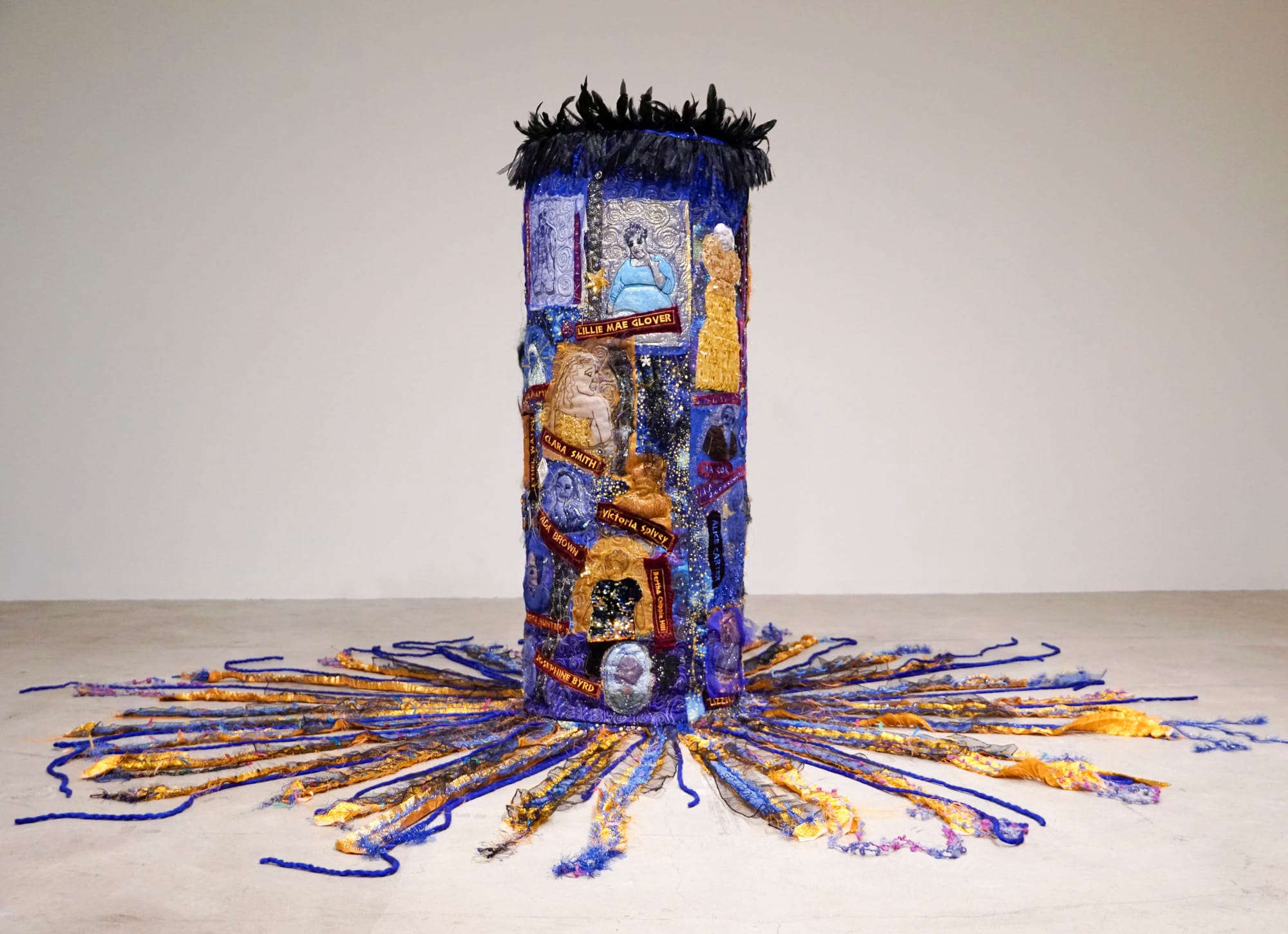
On the third floor of Columbia University's Wallach Art Gallery, a 54-by-118-inch quilt spans most of a wall. Blues Queens, by the Harlem artist Dindga McCannon, is part of the show tracing the legacy of the Children's Art Carnival, a community arts program founded in Harlem in 1969 that, for nearly six decades, has given neighbourhood children a studio, a print shop, and a working artist as a teacher. The exhibition opens this month.
The Carnival is one of those New York institutions that rarely surfaces in the press but recurs in the biographies of almost every artist who came of age in Harlem after the late 1960s. McCannon taught there. So did artists a generation older, and a generation younger. The Wallach show argues, through work on loan and through archival material pulled from the program's files, that the pedagogical model matters as much as any individual alumnus: structured studio time, paid teaching positions, and an emphasis on the neighbourhood's own visual traditions rather than on the canon imported from downtown galleries.
What the program actually did
The Children's Art Carnival opened in 1969 on West 125th Street, in the basement of a building that had previously housed a community centre. It was conceived as a free, drop-in studio for children between roughly five and fifteen years old. The pitch, then as now, was simple: paint, draw, print, sculpt, under the supervision of a working artist, with the neighbourhood's own cultural referents on the walls rather than European modernism.
The Wallach exhibition leans on ephemera to make the case. Vintage posters advertise weekend printmaking workshops. Black-and-white photographs show children clustered around lithography presses in the 1970s, their fingers ink-dark. Hand-lettered signs from the 1980s announce summer residencies. The point the curators are making is less nostalgic than structural: a working studio, sustained for decades at non-profit rates, produces both a body of work and a working infrastructure for the next cohort of artists.
That infrastructure is fragile. The Carnival has operated on a mixture of city council discretionary funding, state arts council grants, foundation money, and individual donors for most of its history. The exhibition does not dwell on the program's finances, but the timeline on the wall makes the pattern legible: expansions in years when a particular grant cycle landed, contractions when a mainstay funder pulled back, occasional closure threats that the press covered in earlier decades.
The artists the Carnival produced
McCannon is the show's centre of gravity. Her quilt Blues Queens (2021) is the largest single work on view, and its inclusion is a deliberate curatorial choice. McCannon came up through the New York Black arts movement of the 1970s, taught at the Carnival for years, and has long woven the visual language of quilting, embroidery, and appliqué into a fine-art practice that the mainstream art world spent decades treating as craft.
The Wallach show places McCannon's work in dialogue with other alumni and teachers: artists whose names recur in the catalogue and in the wall texts, and whose careers the curators argue are unintelligible without the institutional space the Carnival provided in the years before they had gallery representation. The argument is that the program functioned as a pipeline, a training ground, and a public-facing shop window for Black women artists in particular, at a moment when the downtown gallery system was uninterested in showing them.
The exhibition does not overstate the case. The artists on view have careers that extend well beyond the Carnival. But the show's structural claim is that those careers would have been different, and slower, without the program's intervention in the years when a young artist needs a studio and a mentor more than a résumé line.
The neighborhood, the city, and the donors
The Carnival's history is inseparable from the longer story of Harlem's cultural infrastructure after the urban-renewal and fiscal-crisis years. Community arts programs that opened in the late 1960s and early 1970s were responses to a specific set of conditions: underfunded public schools, a downtown gallery world that did not admit Harlem-based artists as a rule, and a city government that funded the arts unevenly across boroughs.
The exhibition does not editorialize about any of this, but the chronology makes it plain. The Carnival opened the same year the Harlem School of the Arts was founded, a few years after the Studio Museum in Mount Morris Park consolidated its programming, and during the period when organizations such as the Association of Community Artists (a Harlem-based group) were arguing, loudly, that public arts funding should be spent in the neighbourhoods whose tax dollars paid for it. The Wallach show treats the Carnival as one node in a network that, taken together, produced the Harlem art scene that New York now takes for granted.
The donor question is the show's quiet subtext. Sustained community-arts programming in New York has depended, for decades, on a mix of government and philanthropic money that is increasingly difficult to assemble. The exhibition does not name a closure threat or a budget shortfall, but anyone who reads the wall texts alongside the recent coverage of New York's community-arts landscape will draw the obvious inference: the institutions of the late-1960s boom require a continuous fundraising operation to survive, and the younger generation of artists coming up through the Carnival today will need that operation to keep functioning.
What the show asks of its viewers
The Wallach exhibition is on Columbia's campus, a fifteen-minute walk from Harlem itself, and the geographic fact is worth naming. The audience for the show is not the Carnival's existing community; it is the Columbia and downtown gallery world that the program's alumni have, over decades, pushed to take their work seriously. The curators are making an argument to that audience, and the argument is roughly this: the work you are looking at now has a provenance, and the provenance includes a basement on 125th Street that taught a generation of children to make art and to think of themselves as artists.
The risk of a show like this is sentimentality. The Wallach exhibition mostly avoids it. The work on the walls is presented as work first, archival material as context rather than as commemoration. McCannon's quilt holds the room without needing a wall label to do the work.
What remains less clear is what comes next. The sources covering the exhibition describe a program still in operation; they do not describe its current funding posture or its enrollment. The Carnival's institutional future, like that of every community-arts organization of its vintage, depends on a set of grant cycles and donor relationships that the show does not address. The legacy is documented. The mechanism for continuing it is not, at least not in the materials on view.
Monexus frames this as an institutional story rather than a sentimental one. The Children's Art Carnival is treated as one node in the post-1968 Harlem cultural infrastructure, and the exhibition is read as a curatorial argument directed at the downtown audience that the Carnival's alumni have spent decades entering on their own terms.