Explosions rock Bandar Abbas as Strait of Hormuz clashes put Iran on a war footing
Initial reports describe blasts in and around the southern port city of Bandar Abbas, with The Cradle and other regional outlets pointing to a wider confrontation in the world's most sensitive oil chokepoint.
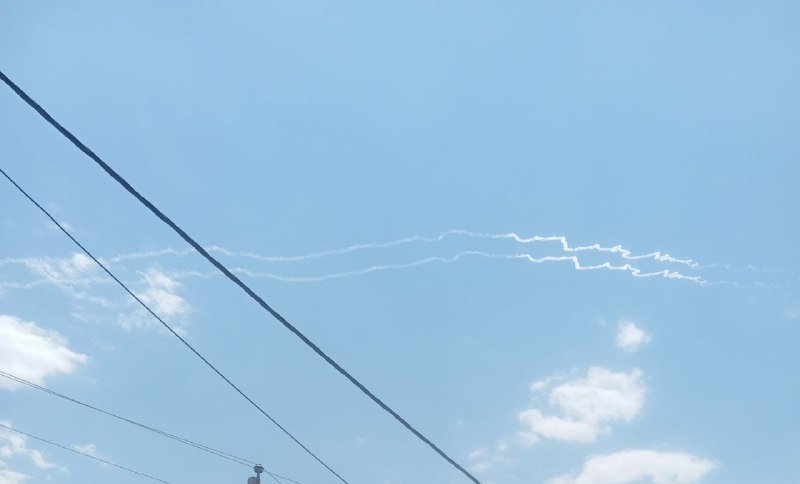
At 19:08 UTC on 13 July 2026, the Beirut-based outlet The Cradle Media flashed a two-line bulletin: explosions reported in Iran's southern port city of Bandar Abbas, with clashes simultaneously underway in the Strait of Hormuz. The post, mirrored on The Cradle's official Telegram channel, gave no casualty count, no attribution, and no confirmed cause. A second post from the same channel minutes later carried the identical wording. By 21:20 UTC, the X account @shaykhsulaiman, a chronicler of Iran-related security developments, posted "BREAKING: EXPLOSIONS IN SIRIK, BANDAR ABBAS," followed at 21:23 UTC by a one-word update: "BANDAR ABBAS."
What is verifiable at publication is narrow. Two distinct geographies, the port of Bandar Abbas and the adjacent Sirik district on the Hormuz coast, were named in initial reporting, alongside the strait itself. The scale, the cause, the perpetrator, and the casualty count were not. Iran's official media had not, as of the timestamps above, issued a confirmation. The Cradle is a Beirut outlet with documented ties to the Axis of Resistance media ecosystem; its framing, particularly on the Gulf, often diverges sharply from the Western wire line. Readers should weight the channel's reporting as suggestive, not dispositive, until corroborated.
The geography of the report
Bandar Abbas sits on the Strait of Hormuz at the north coast of the Persian Gulf, capital of Hormozgan province, and serves as the headquarters of the Iranian Navy's Southern Fleet, the Islamic Republic's primary maritime formation. The city is also the principal land-sea interface for the petrochemical, container, and bulk-cargo traffic that moves through southern Iran; the Shahid Rajaee port complex, immediately to the west, handles the bulk of the country's container throughput. Sirik is a smaller coastal town in the same province, roughly 130 kilometres east of Bandar Abbas, jutting toward the strait. Reports that name both locations in the same window are reporting two distinct impact zones, not a single event being re-described.
The Strait of Hormuz, named in the same bulletin, is the chokepoint. Roughly 21% of global petroleum liquids passed through it in 2024, by the US Energy Information Administration's standard measure, alongside a comparable share of liquefied natural gas. There is no overland bypass for most Gulf crude. Any sustained disruption at Bandar Abbas, whether to the port itself, to the petrochemical storage at Kharg, or to the naval formations deployed in the strait, propagates into global crude benchmarks within hours. The geography of the initial report is therefore not just Iranian. It is, on paper, the geography of a Brent price move.
What The Cradle's framing carries
The Cradle's choice to bracket a domestic Iranian incident with "clashes in the Strait of Hormuz" in a single banner is itself an editorial act. The framing implies a single operational theatre, rather than two separate incidents being confused in the early reporting. Regional outlets aligned with the Axis of Resistance, including Al Mayadeen and Al Masirah, have consistently treated incidents on Iran's southern coast and incidents in the strait as a continuum, linked to the broader confrontation with the United States and Israel. That framing should be taken seriously, not dismissed: it reflects how the Iranian security establishment itself tends to plan and posture.
It should also be tested. The same framing, applied uncritically to incidents over the past two years, has at times compressed domestic mishaps, foreign air-defence activity, and asymmetric attacks on commercial shipping into a single newsworthy object. A blast inside a petrochemical facility in Sirik, a malfunctioning munition in a Revolutionary Guard Corps exercise, an Israeli strike on an air defence node, and a US Navy boarding of an Iranian-flagged tanker would each, separately, generate the kind of report The Cradle filed on Monday afternoon. Without footage, attribution, or an Iranian confirmation, the bulletin is best read as a marker that something happened at the named coordinates, not as a verdict on what.
The counter-narrative from the Western wire line
Western outlets had not, by the timestamps on the source items, published independent confirmation of either the Bandar Abbas blasts or the Hormuz clashes. That absence is itself meaningful. Reuters, AP, AFP, and the BBC's Persian service maintain dense correspondent networks in the Gulf and at the United Nations in New York. The fact that none of those wires had cleared copy into the public record by 21:23 UTC suggests that the original report was, at that moment, sourced primarily to social media accounts and to a single regional outlet, and had not yet been independently verified.
Western coverage of past Hormuz incidents, particularly the 2019 limpet-mine attacks on tankers attributed to Iran-aligned actors, and the 2024 Houthi strikes that spilled into southern Iranian traffic, has generally arrived after a delay of several hours while confirmation was assembled from shipping trackers, satellite imagery, and US Central Command statements. The same delay pattern should be expected here. The relevant wait is not for Tehran to speak, which it may do selectively or not at all, but for an independent commercial-satellite pass over Bandar Abbas and the Sirik coast, and for the Lloyd's List Intelligence and MarineTraffic vessel-tracking data to register an abnormal pattern in the strait.
What the operational picture could look like
Three plausible scenarios fit the sparse reporting, each with different downstream consequences. The first is an internal incident: a petrochemical or munitions storage accident at a Revolutionary Guard Corps facility in Sirik, with the Bandar Abbas report either a misattribution or a separate smaller blast. Past incidents of this kind, including the 2020 explosion at Natanz and the periodic fires at petrochemical sites around Mahshahr, have produced loud initial reports that resolved into domestic accident narratives. The second scenario is an Israeli strike on an air-defence or missile site in the Hormozgan hinterland, part of the periodic tit-for-tat that has run since April 2024, in which case the "clashes in the Strait of Hormuz" framing reflects Iranian naval activity intended to raise the cost of any follow-on strike. The third is a hybrid scenario, in which an asymmetric attack on commercial shipping in the strait, attributed to Iran-aligned groups, has coincided with an unrelated domestic incident. All three are consistent with the bulletin The Cradle filed. None is confirmed.
The stakes, plainly stated
If the report holds up as a single coordinated incident rather than a coincidence of two unrelated events, the implications for oil markets are mechanical: roughly a fifth of global seaborne crude flows through a strait 33 kilometres wide at its narrowest, and any sustained closure would push Brent into territory the market has not priced since 2008. If it resolves into a domestic mishap, the market reaction unwinds within hours. The honest read at publication is that the sources do not specify, and that the next 24 hours of commercial satellite imagery, Iranian state-media confirmation, and US Central Command briefing material will determine which scenario was operational. Until then, the bulletin is a flare over the water, not a verdict on what set it off.
Wire provenance
This editorial synthesis draws on the following public wire/social posts:
- https://t.me/thecradlemedia
- https://t.me/thecradlemedia
- https://x.com/shaykhsulaiman/status/sirik-bandar-abbas
- https://x.com/shaykhsulaiman/status/bandar-abbas