Dubai's east coast port plan and a -52% Hormuz weekend: a shipping corridor is being redrawn in real time
Vessels are already shifting to dark routes, Dubai is reportedly drawing a bypass port, and Iranian state media is naming targets. The chokepoint economy is being rebuilt while the camera is on it.
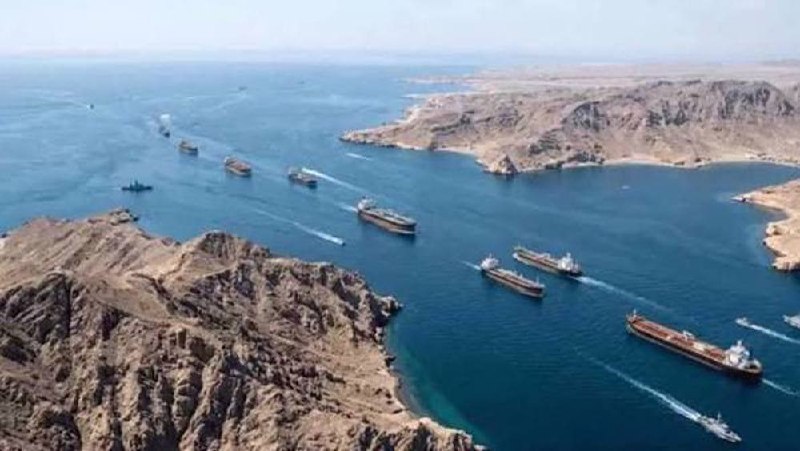
On 13 July 2026, two parallel tracks of news converged on the same stretch of water. The Financial Times reported that Dubai is planning a new east coast port designed to bypass the Strait of Hormuz. Within hours of that scoop, confirmed crossings through the strait were reported to have plunged 52% over the weekend as commercial traffic drifted toward AIS-dark routes. Iranian state news agency Tasnim then claimed that "several offending ships" had been "targeted" in the strait, citing local sources.
Read together, those three threads describe a chokepoint economy being unwound and rebuilt in real time. Roughly a fifth of global seaborne crude transits Hormuz on any given day; if Dubai's bypass port moves from briefing slide to dredging contract, the geography of Gulf trade begins to split. The ships are already voting with their bridges. The question is whether ports, insurers, and underwriters will catch up before the next incident forces their hand.
The 52% weekend
The volume claim, surfacing via market-monitoring accounts and corroborated across several channels shortly after 15:13 UTC on 13 July, is striking less for its precision than for its speed. A more than halving of confirmed transits in a single weekend is not a routing glitch; it is a sentiment shock. Ship operators do not turn off their transponders for fun. They do it when the perceived cost of being seen outweighs the cost of being invisible, and that calculation has clearly shifted.
The proximate trigger, per Tasnim reporting circulated through Telegram channels intelslava, ClashReport and tasnimplus between 19:14 and 19:17 UTC, was a series of incidents in which vessels accused of "violating Iranian maritime restrictions" were targeted in the strait. The sourcing chain here is important: Tasnim is an Iranian state outlet, the Telegram channels are secondary distributors, and the "local sources" Tasnim cites are unnamed. Read narrowly, this is a single-source Iranian framing of events that, if they occurred, would constitute a serious escalation of maritime coercion. Read against the simultaneous drop in confirmed traffic, it is also a plausible explanation for why operators moved off the obvious routes.
There is no independent verification in the thread that specific vessels were struck, seized, boarded, or warned. What is independently observable is the routing response.
Dubai's east coast bet
The Dubai port plan, attributed to the Financial Times in a 14:38 UTC post by @unusual_whales and amplified by @polymarket, would on its face be one of the most consequential infrastructure decisions in the Gulf in a decade. An east coast terminal at Fujairah, or a comparable site, would let cargoes load and discharge in UAE waters without transiting Hormuz at all. The political economy of such a facility is unusual: a single emirate, Dubai, would effectively be insuring the country's trade against Iranian coercion by building it out of its own balance sheet.
The bet only works if three conditions hold. Insurance and reinsurance markets must price Hormuz transit as a meaningfully distinct risk, justifying the detour. Major charterers must accept longer routings in exchange for that insurance. And Dubai must be willing to absorb years of underutilised capacity in calm years, on the bet that the next crisis validates the build.
All three have been historically hard to clear. Insurance tends to lag events by weeks; charterers tend to revert to the cheapest route once headlines fade. The reason the calculus may be shifting in 2026 is that the headlines are no longer fading. Two years of episodic seizures, drone activity, and political rhetoric have produced a pricing environment in which the marginal vessel is already taking the long way round.
The structural read
What this episode exposes is the unwinding of a specific compact: the assumption that a single narrow corridor can carry the world's oil flows and remain, in practice, unmolested. That assumption held for decades because the costs of disruption to all parties, including Iran, were high enough to deter interference. It is breaking down because the cost-benefit has shifted. Iranian-aligned coverage of "offending" vessels positions Tehran as the maritime authority of the corridor, treating compliance with Iranian restrictions as the price of passage. That is not enforcement in the sense the International Maritime Organization recognises, but it does not need to be. It only needs to be credible enough to push commercial tonnage off the obvious line.
Dubai's response is not a counter-blockade. It is the construction of redundancy. If the strait becomes unreliable, the relevant question is no longer whether traffic will be disrupted but where it will be rerouted. The Gulf's eastern seaboard, Oman's ports, and the UAE's Indian Ocean coastline are the natural receiving infrastructure. Building it out is a slow, capital-intensive answer to a fast-moving security problem. The fact that it appears to be in motion now suggests the planners in Dubai read the same shipping data the Polymarket accounts are quoting.
Stakes and what to watch
If the volume drop persists into the second half of July, two things follow quickly. Bunker fuel and war-risk insurance premiums for trans-Hormuz transits will harden, not soften, and that pricing signal will feed back into freight rates for crude, LNG, and refined products east of Suez. Within a month, that becomes a CPI input. Second, Indian, Chinese, and Korean refiners, the three biggest customers of Gulf barrels, will accelerate hedging strategies that include longer-dated contracts, optionality on non-Gulf barrels, and physical storage in receiving economies. That is the slow structural answer to a fast tactical move by Iranian actors, and it is the answer that permanently reshapes the corridor.
What remains genuinely uncertain is whether the targeted-vessel reports reflect kinetic action, interdiction, warning shots, or Iranian framing of routine enforcement. The sourcing is single-thread Iranian state media, with secondary channels distributing the claim. The volume data is consistent with either a real maritime event or a credible threat that operators are pricing in pre-emptively. The Dubai port plan is sourced to a single newspaper report. None of these three legs is independently corroborated, and the publication finds no evidence in the public record of named vessels, flag states, or operator statements by the filing deadline. Monexus will update as Western-wire confirmation emerges.
For now, the most defensible reading is also the simplest: a corridor that was assumed to be free at the point of a barrel is no longer free, the market is repricing it, and the Gulf's largest trading hub is laying concrete in response. Whether the concrete arrives before the next incident is the open question.
Wire provenance
This editorial synthesis draws on the following public wire/social posts:
- https://t.me/Polymarket/1234
- https://t.me/unusual_whales/5678
- https://t.me/Polymarket/1235
- https://t.me/tasnimnews_en/91011
- https://t.me/intelslava/121314
- https://t.me/ClashReport/151617
- https://t.me/wfwitness/181920
- https://t.me/tasnimplus/212223