After the Delhi riots verdict: what a single Intelligence Bureau family tells us about a wider wound
A Delhi court's acquittals in the 2020 north-east Delhi riots cases have reopened a question the establishment would rather leave closed: whether the state machine that lost control of those streets is being held to account at all.
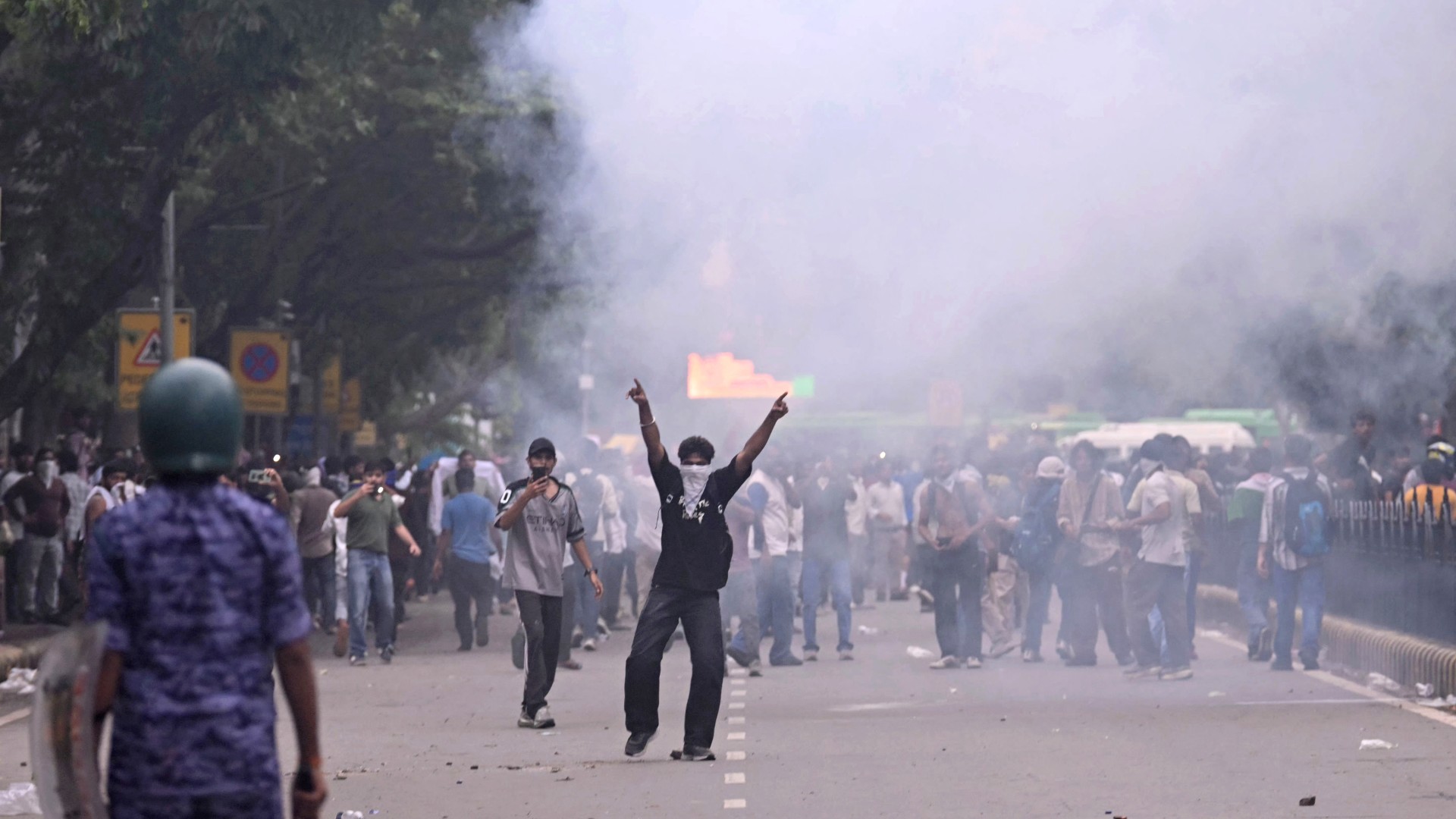
On 13 July 2026, a Delhi court delivered its verdict in a case that began five years ago on a single street in north-east Delhi. The case concerned the killing of an Intelligence Bureau (IB) staffer, Ankit Sharma, whose body was found in a drain near his home in Chand Bagh on 26 February 2020, the third day of the communal violence that tore through the district for six days and left 53 people dead. The Indian Express reported the family's reaction under the headline, "'Crossing that drain broke us': Intelligence Bureau staffer's family after Delhi riots verdict." The court acquitted eight of the nine accused; one was convicted. For a family that had placed its trust in the central intelligence apparatus and, by extension, in the courts, the arithmetic of nine charges and one conviction is not closure.
The IB connection matters because it inverts the political geometry of the riots. Most of the cases that emerged from February 2020 were read, at home and abroad, as a clash in which a Hindu-majority crowd acted against a Muslim minority, with police response widely criticised as slow and selective. Ankit Sharma was a Hindu IB employee, killed in a Muslim-majority pocket, allegedly by men identified by the prosecution as belonging to a specific community organisation. His case was, in that sense, the inverse of the dominant frame. It is also the case in which the state had the strongest possible reason to deliver: the victim was one of its own.
What the court actually decided
The Indian Express's account describes an 8-1 verdict in which a single accused was found guilty. The report does not enumerate the acquittal grounds in detail, nor does it specify which sections of the Indian Penal Code were applied. The framing of the family response in the report is unambiguous: the verdict is being read by the family as a failure of the system they served. The IB staffer's relatives told the paper that the process itself broke them before the ruling did.
The reporting gap is worth naming. Five years on, with the Delhi Police's special investigation cell having filed multiple chargesheets covering separate clusters of deaths, the published verdict trail is uneven. Newspapers have reported convictions in some matters and acquittals in others, with the IB staffer's case sitting at the more embarrassing end of the ledger for the prosecution. Until the court's full reasoning is published, the dominant read of the 8-1 split is that the evidence linking named accused to specific acts did not hold up to the threshold the court required.
The pattern the verdict sits inside
The 2020 north-east Delhi riots remain the most serious communal violence in the capital in three decades. The official toll was 53 dead; more than 200 were injured; homes, shops, mosques and schools were burned across Maujpur, Jaffrabad, Chand Bagh, Bhajanpura, Yamuna Vihar and Karawal Nagar. A Delhi High Court-appointed inquiry panel described the response of the Delhi Police as having been, in places, complicit by omission. The pattern since then has been one of slow, partial prosecution. Some cases have produced convictions; others, like the IB staffer's, have not. The cumulative signal to families on both sides is the same: the system can be moved, but it cannot be relied upon to move consistently.
It is that inconsistency, more than any single verdict, which is the political object here. The state that failed to prevent the violence in February 2020 is the state that has, in fits and starts, prosecuted it since. When the victim is a member of the central security establishment, and the outcome is eight acquittals to one conviction, the optics travel quickly. The Indian Express's choice of the family's quote about the drain is itself a framing decision: it centres grief, but it also centres the geographic specificity of a single act that the prosecution could not make stick.
Counter-claim and contested ground
Two competing readings of this verdict deserve to be put on the page. The first, favoured by civil-liberty groups monitoring the larger set of 2020 cases, holds that the IB staffer's prosecution was always politically weighted: built quickly, charged broadly, and never quite anchored in the kind of forensic chain that survives cross-examination. On that reading, the acquittals are not a failure but a course correction.
The second reading, which the family's own testimony in the Indian Express report supports, is that the failure is upstream of the courtroom. It is a failure of intelligence, policing and political management that allowed a senior IB analyst to be killed in a city where the IB itself is headquartered. If the state cannot protect its own personnel in the streets of the capital, the courtroom is being asked to compensate for a control failure that happened elsewhere.
Both readings have evidentiary weight. Neither resolves the other. The honest position is that the verdict tells us more about the gap between what the state promised in 2020 and what its institutions could deliver in 2026, than it does about any individual accused.
What the verdict does not settle
The reporting does not name the surviving victim's family beyond the IB staffer himself, nor does it identify the convicted accused. The court's reasoning has not been publicly summarised in the source material available. The number of total 2020-riot cases, their aggregate conviction rate, and the number still pending are not specified in the Indian Express dispatch.
Those omissions are not editorial failures; they reflect what is in the source. They are, however, the precise places where the political interpretation of the verdict will be contested in the days ahead. The wire service read will focus on the legal outcome. The political read will focus on the victim's institution. The families of the other 52 people killed will read both and ask why their cases are not on the same front page.
For a state that prides itself on the reach of its internal security apparatus, the question left standing after 13 July 2026 is not whether nine men were rightly tried. It is whether the apparatus itself has fully accounted for the week it could not control.
The desk framed this verdict through the victim's institutional affiliation rather than through the communal frame that has dominated most 2020-riot coverage; the inversion is the story.
Wire provenance
This editorial synthesis draws on the following public wire/social posts:
- https://en.wikipedia.org/wiki/2020_North_East_Delhi_riots
- https://en.wikipedia.org/wiki/Ankit_Sharma_(Intelligence_Bureau_official)
- https://en.wikipedia.org/wiki/Intelligence_Bureau_(India)