China demands open Hormuz as US Navy escorts tankers and Oman pushes a two-lane split
Beijing calls for the Strait of Hormuz to stay open to commercial shipping as the US military reportedly coordinated passage of around 20 vessels in 24 hours and Oman floated a two-corridor traffic split.
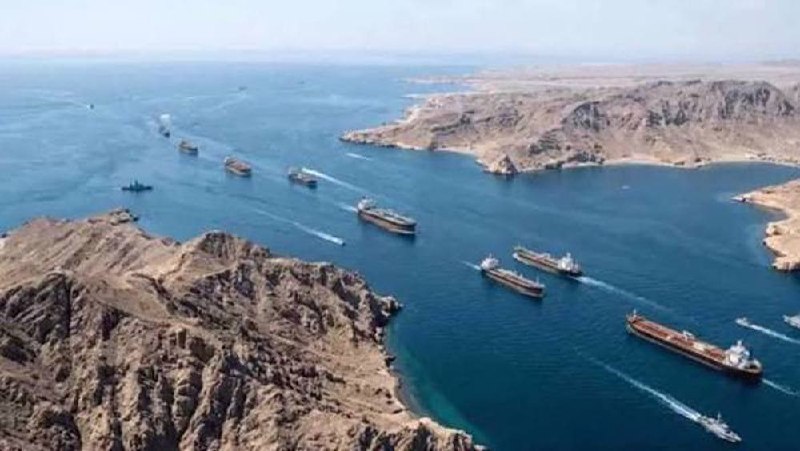
On 13 July 2026 at 11:29 UTC, a Chinese official call landed on the diplomatic wire: Beijing demanded that the Strait of Hormuz remain open and safe for all commercial vessels, a position circulated by the BRICS News channel on Telegram and consistent with China's standing opposition to any disruption of a corridor that carries a large share of the world's seaborne oil.
The statement is a counterpoint to two other moves in the same waterway within 48 hours. According to a 12 July report carried on the Polymarket account on X and attributed to Axios, the US military coordinated the passage of around 20 commercial vessels through the Strait of Hormuz in the preceding 24 hours. A day earlier, on 11 July at 19:02 UTC, Oman proposed splitting Strait of Hormuz traffic into two separately controlled shipping routes, a long-traffic-management idea that has resurfaced in Muscat at moments of regional tension. Read together, the three data points sketch a narrow chokepoint being pulled in three directions at once: a globalised demand that it stay open, a great-power guarantee to keep it open, and a littoral state's plan to redraw the lanes that run through it.
What China is signalling
China's posture is the same one its diplomats have repeated since the early years of the shipping crisis: the strait is an international waterway, the freedom of navigation is non-negotiable, and any attempt to weaponise the corridor against commercial traffic is illegitimate. By stating the principle publicly and on the BRICS wire rather than through a quiet MFA readout, Beijing signals two things at once. First, that it views the corridor as a global commons to be defended in language, not just an oil artery to be defended in hulls. Second, that it intends to be part of any conversation about a formal traffic-management arrangement, not a recipient of one.
The implicit stake is the share of Chinese crude imports that transit Hormuz and the share of Chinese-built and Chinese-chartered tonnage that moves through the strait in any given week. Beijing's public calls for "open and safe" passage are a way of pre-positioning itself as the voice of the customer in a transit dispute, rather than as a bystander to an American security guarantee.
The escort question
The Axios-sourced claim that US Central Command coordinated roughly 20 commercial transits in 24 hours is the kind of figure that, if confirmed in the operational sense, points to something more active than routine naval presence. Twenty escorted movements in a day is not a show-of-force transit by a single carrier strike group; it is a flotilla-level operation, the sort of thing navies do when they are quietly taking responsibility for keeping a lane open against a specific threat.
The natural counter-narrative is that the number is a soft one. "Coordinated" can mean anything from actively shepherding tankers through a contact zone to merely deconflicting AIS tracks and broadcasting presence to commercial operators who have asked for help. The Polymarket-relayed Axios report does not specify which. The ambiguity matters, because the difference between operational escort and maritime traffic control is the difference between a kinetic posture and a bureaucratic one, and markets price the two very differently.
What is not in dispute is that commercial operators are asking for help, and that an American naval task force is, at minimum, publicly claiming the role.
Oman's two-lane idea
Oman's proposal to split the strait into two separately controlled shipping routes is the most architecturally interesting of the three moves. It treats the chokepoint the way a civil engineer would treat a bottleneck on a motorway: not by widening it, but by separating the streams. Inbound and outbound traffic, or commercial and tanker traffic, would each be given its own corridor, presumably with its own traffic separation scheme, its own reporting cadence, and its own set of controllers.
The proposal is a recognition that the current one-lane system, in which a stressed regional security environment, a heavy commercial load, and at least one active harassment campaign share a single ribbon of water, is no longer politically sustainable. Splitting the routes gives Muscat a regulatory seat at the table, creates a natural interface for a regional Maritime Operations Centre, and offers a face-saving compromise between the US preference for freedom of navigation and any Iranian preference for tighter control of what passes its coastline.
The same proposal is also a long-running Muscat hobby-horse, and Iranian commentary on prior iterations has been cool. There is no source material in the wire indicating Tehran's reaction to the current version.
What the three moves add up to
Read in sequence, the Chinese statement, the American escort, and the Omani plan describe an emerging architecture in which the world's most important energy corridor is being re-engineered in real time, by three different hands, with three different theories of what the problem is. Beijing treats the strait as a global commons under political threat. Washington treats it as a sea-control problem under military threat. Muscat treats it as a traffic-management problem under design threat.
The structural fact underneath all three framings is the same: the old arrangement, in which a single traffic separation scheme, a coastguard on each shore, and a relatively thin US naval presence were enough to keep the lanes open, is being replaced by a layered one in which escort task forces, multilateral statements, and corridor redesigns are the new baseline. The cost of that layering is paid first by shipowners in the form of insurance, then by importers in the form of freight, and eventually by consumers in the form of pump prices, regardless of whose theory of the problem turns out to be right.
What remains genuinely uncertain is whether the three approaches are converging or competing. A formal two-corridor scheme endorsed in Beijing and tolerated in Washington would be a different world from a US-led escort regime that bypasses Muscat's planners. The wire over the next 48 hours will likely tell us which way the wind is blowing.
Desk note: Monexus is treating the Axios-sourced Polymarket relay as a tier-1 scoop pending direct confirmation, in line with the publication's standing Iran / US-Iran sourcing guidance. The Chinese MFA position is reported as a primary statement, not paraphrased through Western wire framing.
Wire provenance
This editorial synthesis draws on the following public wire/social posts:
- https://t.me/bricsnews