China's graduate glut meets the AI hiring wall
Record graduating classes are entering a Chinese labour market where entry-level white-collar roles, especially in tech, are being closed off by generative AI and software automation. The mismatch is structural, not cyclical.
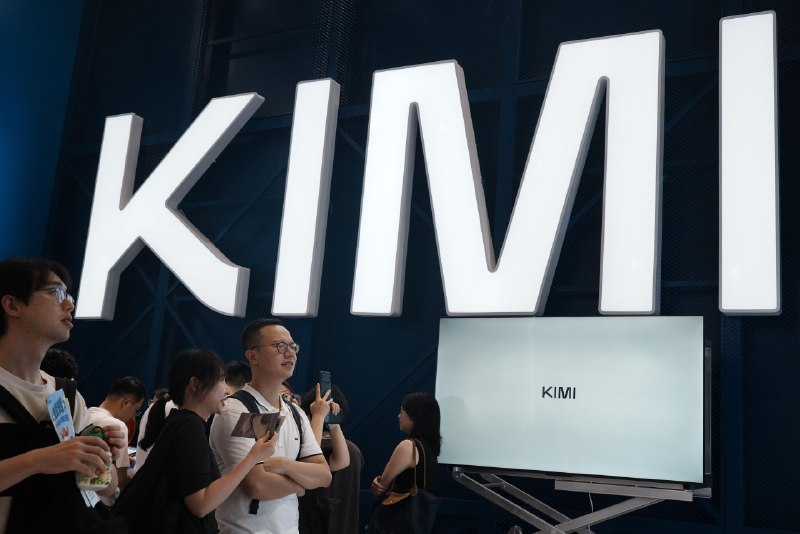
On 13 July 2026, weeks after China’s biggest-ever graduating cohort collected their diplomas, recruiters at campus fairs in Beijing, Shanghai and Wuhan reported the same problem: there are far more graduates than there are entry-level desks willing to take them. The crunch is concentrated in technology and adjacent white-collar work, where software agents and large-language-model tooling have absorbed tasks that, two years ago, would have been a junior analyst's first project.
The slowdown is structural rather than seasonal. Companies that pre-pandemic would have run structured training schemes for hundreds of fresh graduates are quietly running smaller classes, hiring by exception rather than pipeline. For the class of 2026, the phrase "AI hiring freeze" is no longer analyst chatter; it is the lived experience of a recruitment season that began with bulk applications and is ending, for many, with nothing on offer.
A bigger workforce, a thinner ladder
China’s higher-education expansion has produced a paradoxical labour market: a record stock of graduates and a shrinking intake at the bottom of the corporate ladder. Employers who once ran campus programmes as quasi-charity, absorbing thousands of graduates a year to build medium-term talent pipelines, are now hiring against a much narrower list of roles. The roles they are cutting are precisely the ones where automation has arrived first: routine coding, junior content production, test-case writing, first-pass translation, certain categories of financial reconciliation and front-line customer support.
That compresses the early-career funnel. The same firms still want senior researchers, experienced engineers and applied-AI specialists; many of the new positions are explicitly tagged "with AI toolchain" or "prompt engineering" or "model evaluation". For a fresh graduate without those skills, the job description effectively says "not you".
The counter-read: rotation, not collapse
Beijing’s official position, repeated in state-media briefings, is that this is a temporary rotation effect, the natural result of an economy shifting from low-end assembly toward higher-value services and advanced manufacturing. On that reading, graduates are simply landing at a different set of employers: new-energy vehicle plants, semiconductor fabrication lines, robotics integrators, shipyards, the build-out around electrification. The headline graduate-unemployment rate is, by design, less salient than the placement rate into these strategic sectors.
The Western framing reads darker: an economy whose tertiary graduates are over-produced relative to demand, where state capital has built universities faster than firms have built entry-level jobs, and where AI is now widening the gap. Both stories are partly right. What is harder to dispute, on either reading, is that the gap between what universities are producing and what employers are buying has widened this year in particular.
What AI is actually absorbing
The roles that are visibly contracting are not glamorous ones. They are the entry-points: junior software engineers, content moderators, test analysts, copywriters in advertising and e-commerce, customer-service intake, translation and localisation, basic financial-services processing. Software agents built on top of large language models can now do a credible first draft of much of this work, with a human reviewer further up the chain. The junior human, in this configuration, is a slot that has been deleted.
This is not a forecast. It is a live description of recruitment in 2026: enterprise clients rolling out internal AI tools, mid-tier consultancies trimming training-class sizes, platform companies in e-commerce and gaming scaling down their content pipelines. A graduate who, in 2019, would have walked into a routine job at a major internet company can no longer assume the door is open.
The structural frame
China’s situation is the world’s largest stress test of a question every advanced economy is now facing: when software absorbs the routine work that used to be a graduate’s first job, what does the first job become? In China the question lands harder than elsewhere because the graduate cohort is larger, the institutional expectation that a degree leads to an office job is deeper, and the safety net for prolonged job-search is thinner. Industrial policy can subsidise new factories; it cannot, on its own, restore the routine clerical and coding pipelines that AI is quietly eating.
On the policy side, Beijing has levers it can pull: vocational-track subsidies, retraining credits, public-sector hiring, faster residency reform for smaller cities that need young professionals. On the demand side, the absorption capacity of the new-energy, semiconductor and advanced-manufacturing sectors is real, but it is finite. Not every Chinese graduate wants to work on a battery line, and the country’s services economy is where most of the displaced clerical roles once lived.
Stakes, and what to watch
If the mismatch persists into the autumn hiring cycle, three things become worth tracking. First, the consumer story: graduate cohorts with delayed income translate into a softer housing and durables market, especially in tier-one cities where graduates have historically been a rental-demand engine. Second, the political story: parental expectations of a degree-to-desk pipeline are politically load-bearing in Chinese family life, and visible erosion there feeds broader anxiety. Third, the policy story: how aggressively Beijing chooses to backstop the cycle, whether by expanded public-sector hiring, by tightening quotas on the export of AI-driven productivity gains, or by letting the market rebalance on its own.
The defining tension of this graduation season is that the economy is, by most macro indicators, growing; it is the doorway in that is narrower. The graduates feel this immediately. The macro data, for now, captures it slowly.