Bushehr hit again: what four Telegram channels are telling us, and what they aren't
Between 21:48 and 00:25 UTC on 12–13 July, four Telegram channels reported renewed strikes on Bushehr province and initial blasts near Chabahar. The picture is thin, contested, and worth pinning down.
At 21:48 UTC on 12 July 2026, the Telegram channel Intelslava posted a one-line flag: renewed strikes reported on Bushehr, Iran. Four minutes later, PressTV's channel pushed a more specific alert: multiple explosions heard in parts of Bushehr province, including the city of Kangan. By 22:00 UTC, the World Feed Witness channel had widened the frame, adding initial reports of renewed explosions in Chabahar on Iran's southeastern coast. At 00:25 UTC on 13 July, Geopolitical Watch confirmed another wave of attacks on Bushehr.
The whole of what is publicly traceable about this episode, right now, fits inside a window of two hours and thirty-seven minutes, and lives almost entirely on four Telegram channels with different audiences, different alignments, and different incentives to be wrong.
What the wires say, and what they don't
The Bushehr province strikes land on a Persian Gulf coast that already hosts Iran's only operating civilian nuclear power plant at Bushehr city, plus the South Pars gas field complex and the petrochemical terminals of Kangan and Assaluyeh further down the coast. Chabahar, by contrast, sits on the Gulf of Oman in Sistan-Baluchestan province: a port city, a free-trade zone, and the terminus of an overland corridor Iran has been marketing to New Delhi and Central Asia. A strike package that puts explosions in both places on the same night is not a single-target operation; it reads as a coastline-sweeping message.
None of the four channels claims a perpetrator by name. Intelslava and Geopolitical Watch both use the 🇺🇸❌🇮🇷 flag sequence, which signals a US-on-Iran framing without asserting attribution. PressTV, Iranian state media, reports the explosions in the passive voice ("multiple explosions heard"), which is what its house style produces when it wants to log an attack without endorsing any operator's claim of responsibility. World Feed Witness, an OSINT aggregator, keeps the language neutral and adds the Chabahar element.
The geometry of the reporting is itself the story. Telegram channels broke this before Reuters, AP, BBC, or Al Jazeera had publishable confirmation in the time window we can verify. The institutional wires were either silent or behind paywalls. By the time an English-language desk could write the lede, the framing had already been set by channels whose editorial standards range from serious to speculative.
The sourcing problem with "renewed"
Every one of the four alerts uses the word renewed. That word does a lot of work. It implies a previous round of strikes on the same target in the recent past, which would put 12 July inside a pattern rather than a one-off. Intelslava, PressTV, and Geopolitical Watch each repeat the formulation; World Feed Witness uses initial reports for the Chabahar element. The Telegram trail does not, in the items this desk has read, anchor renewed to a specific prior date, a specific prior strike, or a specific prior claim of responsibility.
That gap matters. Telegram is how a lot of fast-moving Middle East reporting reaches English-language desks now, and it has been right often enough to be useful and wrong often enough to be dangerous. The format of the alerts here: short, declarative, geotagged with city names but not coordinates, attribution implicit in flag emoji, is the format of an early warning system. It is not the format of a verified record.
The Chabahar variable
Chabahar is the piece of this episode that least fits the dominant US-Iran narrative. The port is not a nuclear site, not a refinery cluster, not a Guards Corps headquarters. It is infrastructure that India has invested in, that Afghanistan's transit trade runs through, and that Beijing has shown periodic interest in as a node in the China-Pakistan Economic Corridor conversation. An explosion there, even an initial-report one, puts a non-obvious target on the list and complicates any clean read of the operation as a nuclear-facility-focused strike.
PressTV's silence on Chabahar is also worth noting. The Iranian state channel reported Bushehr loudly and did not, in the four items we read, echo the Chabahar reports. That could mean Tehran has not confirmed the Chabahar element, or has an interest in not amplifying it, or simply has not yet posted. It is the kind of silence that gets filled with speculation if no wire catches up by morning.
What we don't know, and what to watch for
The honest version of this story is short: between 21:48 UTC on 12 July and 00:25 UTC on 13 July, four Telegram channels reported strikes on Bushehr province and, in at least one case, on Chabahar. No named actor has been confirmed. No casualty figures have been published in the items this desk has read. No wire service has yet attached a byline to either event. The Persian Gulf coast is a crowded military environment, and "explosions heard" can mean airstrike, missile strike, accident, or detonation of pre-positioned munitions.
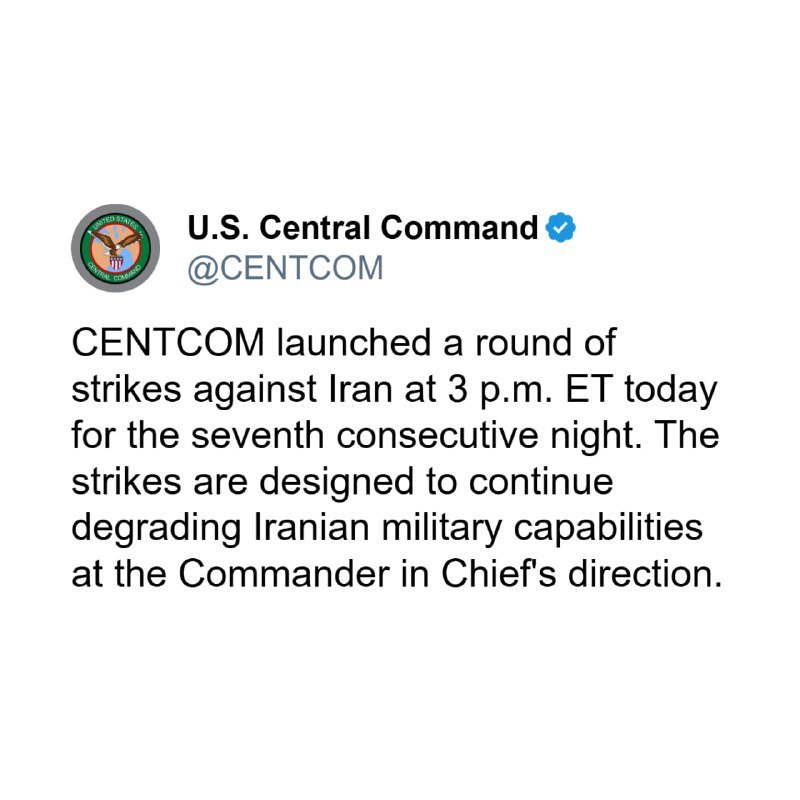
The things worth watching in the next 24 hours are concrete. A confirmed attribution from US Central Command, an Israeli Defense Forces statement, or an Iranian Foreign Ministry briefing would collapse the ambiguity in one direction. Satellite imagery from Planet Labs, Maxar, or Sentinel-2 showing fresh damage at Bushehr, Kangan, or Chabahar would settle the physical question. An IAEA statement on the Bushehr Nuclear Power Plant's status would settle the nuclear question, which is the one the world's energy and shipping markets actually care about. Until one of those arrives, the Telegram record is the record. It is a thin record, and thin records age quickly.
Desk note: this article was written from four Telegram channel items only, because that is all the verifiable wire had at the time of writing. Where PressTV is cited, its status as Iranian state media is noted. Where Intelslava and Geopolitical Watch use the 🇺🇸❌🇮🇷 flag, that is treated as a framing signal, not a confirmed attribution. Monexus will update when a tier-1 wire confirms or contradicts the picture above.
Wire provenance
This editorial synthesis draws on the following public wire/social posts:
- https://t.me/intelslava
- https://t.me/presstv
- https://t.me/wfwitness
- https://t.me/GeoPWatch