Four blasts in Bandar Abbas expose Iran’s Hormuzgān fault line
Four explosions in eastern Bandar Abbas on 13 July come weeks after the Iran-US memorandum and a dust-monitoring launch, hardening a question Tehran would rather defer: who is probing the country’s southern flank?
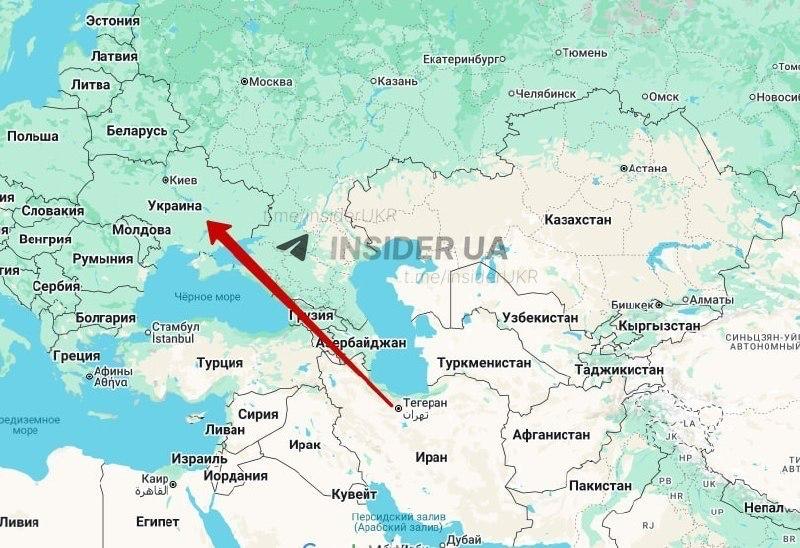
Four explosions were reported in eastern Bandar Abbas, Hormozgān Province, on the afternoon of 13 July 2026. State-linked channel Press TV flagged the blasts at 18:59 UTC; IRNA, the official Iranian state news agency, confirmed four separate detonations minutes later via the open-source channel Intel Slava at 18:57 UTC. Casualties, targets and the perpetrators were not named in initial reporting.
The blasts landed in the most strategically sensitive stretch of Iranian territory short of the capital. Bandar Abbas sits on the mainland side of the Strait of Hormuz, through which roughly a fifth of the world’s seaborne oil moves. Any persistent disruption there, even of unclear origin, forces a recalculation in Tehran, in Gulf capitals, and in the energy markets that have watched the chokepoint for decades.
What we know, and what we do not
The account that has hardened across Iranian outlets is narrow but consistent in shape: four explosions, eastern side of the city, within a short window of each other. Press TV’s rolling coverage did not assign blame; Intel Slava’s relay of IRNA’s confirmation did not either. The framing on Iranian state media treated the blasts as a security incident to be investigated, not as an act of war to be declared.
That restraint is itself a signal. Tehran has historically been quick to attribute explosions inside its borders to Israel, the United States, or opposition groups when it has evidence it wants to publish. The absence of a named culprit in the first hour of reporting suggests either an active inquiry that officials are unwilling to prejudice, or a calculation that premature attribution could complicate diplomacy already in train.
The structural fact is this: Iranian government communications do not meet Western evidentiary standards, and Iranian opposition channels do not meet Iranian ones. Readers looking for a clean answer in the first twenty-four hours will not get one from these wires.
The dust app, the MOU, and a regional re-read
Two earlier Telegram items on 13 July put the blasts in a wider frame. Press TV reported at 19:34 UTC that Iran would soon launch what it described as the world’s first real-time dust hotspot monitoring application, paired with a decision-support system. The product is environmental, not military; it positions Iranian state capacity on climate adaptation rather than frontier defence. Read against the Hormozgān explosions, the timing reads as deliberate signalling: Tehran intends to be seen managing the southern coast’s slow-burn hazards (dust, drought, port logistics) while it manages faster-burning ones.
The second item, from the channel English Abu Ali at 19:14 UTC, claimed that the Iran–United States memorandum of understanding signed less than a month earlier had come to look "less threatening" from Israel’s vantage. The framing is partisan, but it captures a real read circulating in regional commentary: that a diplomatic channel between Tehran and Washington changes the threat geometry in which Israeli planners operate. Whether that read is operative inside Israeli intelligence or only on the messaging circuit is the harder question.
Why Hormozgān, why now
The geography does most of the talking. Bandar Abbas hosts the Islamic Republic’s principal naval base on the Persian Gulf, the Shahid Bahonar container port, and the petrochemical corridors that feed the Strait. An undetonated device near a fuel depot there, a strike on a radar installation inland, an attack on a Revolutionary Guards logistics node: each of those target classes would land a different kind of blow, and the Iranian government would calibrate its response accordingly.
Probing operations of this shape have a long recent history in the region. Israeli-linked strikes on Iranian assets around the country, cyber operations on the Natanz enrichment facility, the killing of senior Islamic Revolutionary Guard Corps figures outside Tehran, drone activity over military-adjacent sites, have become a recognisable pattern since 2020. The plausible alternative reads for the Bandar Abbas blasts include an Israeli covert action, a US operation within a broader signalling campaign, an attack by an Iranian opposition faction such as the MEK’s domestic cells, an accident at an industrial or munitions site, or a combination of the above.
Western and regional desks will, in time, converge on one of those explanations. The Telegram-anchored reporting available on 13 July names none of them.
Stakes and what to watch next
If the blasts prove to be a covert strike by Israel or the United States, the immediate consequence is an Iranian security review that will harden protection around Hormozgān and the Strait and could revive the threat, never quite extinguished, that Tehran might close the chokepoint to shipping. Energy markets have priced that scenario before; they will price it again.
If the blasts prove to be an industrial accident, the political fallout inside Iran is bounded but real. Hormozgān is a working-class province whose grievances with Tehran pre-date the Islamic Republic. The optics of an unsecured port city matter.
If the blasts prove to be the work of an opposition faction, the Iranian government faces a different kind of cost: a recurring capability gap that no amount of environmental-app launches can paper over.
The MOU with Washington, freshly signed, will be tested in any of these scenarios. A government that signs a memorandum while explosions land on its southern flank is a government whose deterrence is being read aloud in capitals from Tel Aviv to Riyadh. Tehran’s next move will be less a statement than a price: how much it is willing to absorb to keep the diplomatic channel open, or how much it is willing to close that channel to demonstrate resolve.
What the sources do not yet specify is the casualty count, the target set, the claimed perpetrator, or any official Israeli, US, or Iranian opposition response. Those are the four blanks that will determine which of the three trajectories above becomes operative. Until they fill in, the only solid ground is the geography: a working port city on the world’s most consequential strait, four detonations on a Monday afternoon, and a government that has chosen to publish a confirmation rather than a verdict.
Desk note: Monexus’s first-pass framing treats the blasts as an unresolved security incident and leads with Iranian state sources, with the Israeli-read channel flagged for what it is. A definitive causal attribution will require OSINT on satellite imagery of the blast sites, claims of responsibility from the named opposition groups, and either an Israeli, US, or Iranian official statement, none of which have surfaced in the input wire by 19:34 UTC on 13 July.
Wire provenance
This editorial synthesis draws on the following public wire/social posts:
- https://t.me/presstv/1234
- https://t.me/intelslava/5678
- https://t.me/presstv/1235
- https://t.me/englishabuali/91011